3 months ago
23
3 months ago
23
The prime minister rang Kim Williams three times before he gave up trying to reach him and called Williams’ wife instead. Catherine Dovey, whom Williams calls “the bureau” because “she is the authority”, is the daughter of former Labor prime minister Gough Whitlam, so it wasn’t out of the ordinary that Albanese had her number.
The couple were in the car together. Williams was driving, so Dovey put the call on speakerphone. “The PM said, ‘Don’t you answer your phone any more, Kim? … I’ve rung you three times in the last couple of hours, and it’s gone through to voicemail.’ And I said, ‘Oh, I’m sorry,’ ” Williams recounts.
Albanese told Williams he wanted him to get to Canberra “right now”.
“I said, ‘Would you care to give me a hint why?’ and the PM said, ‘Let me put it this way, tomorrow morning at 8.15, I’m going to announce you as the new chair of the ABC and I think it would be a really good idea if you were standing next to me.’
“So I said, ‘When you put it like that, I’ll see if I can get on a plane.’ ”
“Well, you can always drive, mate,” Albanese replied.
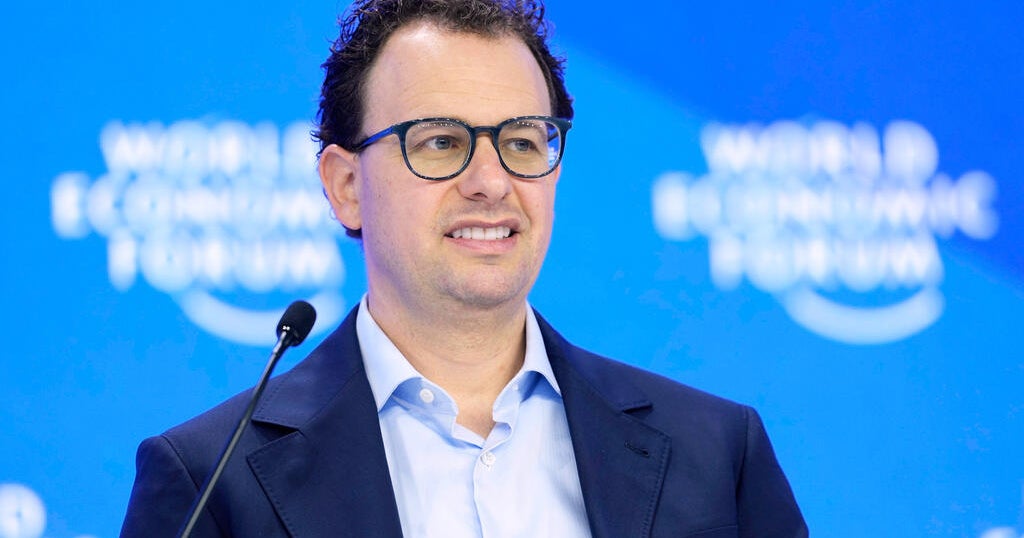
Apart from being the chair of the ABC, Kim Williams is, in no particular order, a clarinettist, a former Lego child prodigy, an amateur composer, an arts philanthropist, an experienced media executive, an oenophile, a book collector, a devoted swimmer, a sufferer of chronic pain, a prodigious reader and a passionate holder of opinions.
He once had a relationship with an opera singer. He suffers from two degenerative health conditions but hates taking pain medication. His first wife left him for the human rights lawyer Geoffrey Robertson and, in 2014, he was one of the first Australians to have his personal genome mapped.
Everyone who knows or who has known Williams agrees that he has a huge intellect, so big it looms over people at times. One aspect of this big intelligence is that Williams has a savant’s recall of dates and times, so he remembers without prompting the date Albanese announced his appointment – it was January 24, 2024.
Williams had initially declined an invitation by a headhunter to apply, even though, he says, “it was always a job I wanted.”
“I’ve been there twice before,” he says now, of the chair role. “I mean, you get to a certain time in life when you only have your name, really, and I said, ‘I’m not going to go through that again.’ ”
Not going through what again? “The public humiliation and the mis-description of what’s happening is so, so irritating, I don’t need that.”
He relented after his wife gave him a talking-to. A common theme of the Williams-Dovey union seems to be Dovey’s willingness to tell her husband when he’s being an idiot. “My wife said, ‘Oh stop it, don’t be so bloody stupid, Kim.’ She said, ‘You’ve always wanted to be there and you absolutely have to put your hat in the ring.’ ”
Williams was 71 when he received that call, and he had been circling the ABC his entire life – he first applied for the managing director’s role as a 30-year-old. “We agreed that Kim would be an asset to the ABC and [chair] Ken Myer advised Kim, ‘Later, come back later,’ ” recounts Wendy McCarthy, who was deputy chair at the time, working with the newly appointed Myer.
Since that early knockback, she says, “Kim Williams has always thrown his hat in the ring for any significant roles at the ABC,” adding, “Mostly, he wanted to be the MD or the chair. He’s always made it very clear he has a permanent love affair with the ABC. His recent appointment as chair confirmed and fulfilled that ambition.”
Says one ABC veteran, who has known Williams for decades, “He comes to the job too late in his life,” adding, “He should be the CEO, not the chairman, because he’s a managerial genius, and as chair, we have seen his instincts, at first, were quite managerial.”
The first time I contact Kim Williams with a view to writing this profile of him, he is in Canberra for the launch of a Mr Squiggle exhibition at the National Museum of Australia. It is something of a comeback for the puppet, whose pencil-nose transformed scribbles into drawings for a generation of children now in their 40s and 50s.
Mr Squiggle seems symbolic of the exquisite challenge Williams faces as ABC chair during a time of digital disruption, media fragmentation, short attention spans and political division; not to mention “the threat now posed by the dark, digitally enabled populist forces that are at war with civilised values and human freedom across the globe”. This is a threat Williams named, with characteristic force of language, in the 2024 Redmond Barry lecture, his first major speech after taking up the chairmanship.
Mr Squiggle is surely on the side of civilised values, but Williams’ job, among many others, is to work out how to honour the legacy of the ABC, Mr Squiggle included, while moving into the digital future. There is no doubt Williams has always wanted the job. But is he the man for this job, at this moment?
On taking up his role, Williams quickly made his strategic objectives known: a focus on hard news, home-made drama, documentary, arts and children’s programming, as well as a commitment to regional broadcasting. But Williams’ task is also existential: he must do everything possible to preserve the broadcaster’s impartiality in a time of heightened partiality; at a time when, he tells me, “all strands of human endeavour are seeing unprecedented turbulence,” especially the media. He is a renowned fuddy-duddy with the highest of highbrow tastes – he loves classical music, poetry and high-minded non-fiction, and his adoration of Radio National is well known at the broadcaster (he doesn’t like it to be shortened to the common nickname “RN”). He lamented in his 2014 memoir, Rules of Engagement, that “our society is descending into a vast vapid mediocrity that allegedly reflects the democratisation of information and the arts,” yet he must strategise to capture the young audiences who are abandoning traditional media, especially free-to-air TV.
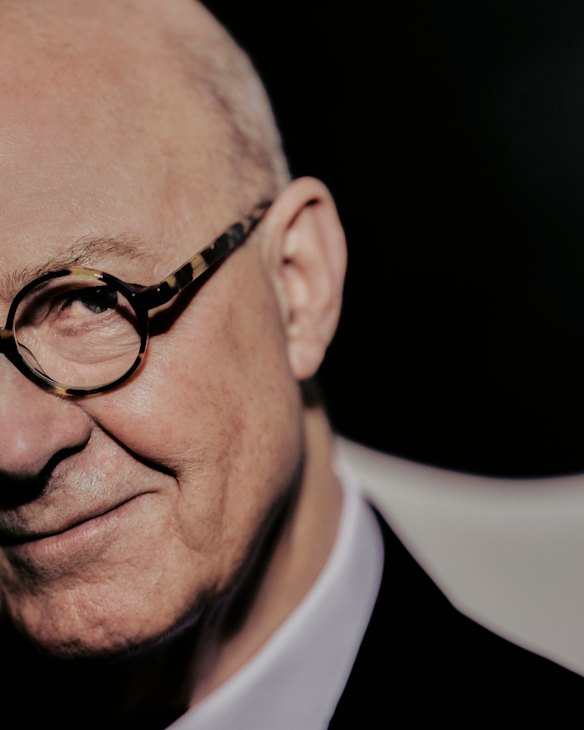
Says one ABC veteran, who is not a huge Williams fan: “The concern is that he’s too interventionist and he’s too elitist, and an ABC cast in his mould would risk losing even more audience.” They add, “He feels the ABC should be talking to people like him.”
But despite his patrician tastes, Williams is also deeply engaged with new technology, including artificial intelligence, which the ABC is deploying in a bespoke language model, Assist AI, used by its news department. Williams uses AI tools to train himself and even to help draft some speeches.
He has lived and breathed media disruption over his nearly five-decade career, and his most high-profile career failure – his departure from News Corp in 2013 – came after he had tried, amid great resistance, to haul its newspaper division into the digital 21st century. “I think we’re living in extremely dangerous times,” Williams says of today’s media environment. “We are in really quite serious, grave danger of going into a new kind of dark age, unless we are very responsive to the urgency of the need to promote and celebrate and share knowledge in ways that are compelling for our audience.”
He believes the ABC is essential, not just to Australian life, and to our sense of ourselves, but to the very preservation of our democracy – which makes his job very important indeed. “The ABC is the one publicly owned idea of the public square that our nation has,” he says. “I think the intensity of a lot of the reaction to the ABC is an indicator of how important it is to democracy.”
Having dispatched his Mr Squiggle duties, Williams meets me for our first interview in his office at the ABC studios in the inner-Sydney suburb of Ultimo. The room is spacious, walled with bookshelves and dominated by Williams’ large, two-sided desk, which is paired with an ergonomic chair and very much made for working.
I ask how Williams is feeling about this interview, which comes not long after he has been widely chastised for interfering with the ABC’s editorial operations on behalf of a comedian with the stage name of Austen Tayshus (on whom, more later).
‘I don’t have a groaning, super-pumped, conquer-the-world ego … I mean, I think I’m quite good in an argument.’
Kim Williams“I mean, look,” Williams says, settling in. “I’m a naturally shy person … and people say, ‘You’re not shy!’ and I say, ‘Yeah, I really … I’m very shy.’ But you learn to do a performative thing.”
Later in our conversation, Williams returns to this theme, telling me: “I don’t have a groaning, super-pumped, conquer-the-world ego.” He qualifies himself: “I mean, I think I’m quite good in an argument. And quite effective in prosecuting something I’ve thought about. But I’m not a beefy kind of brute.”
The question of Williams’ ego, and whether he is too forceful in asserting it, is something that divides the people I talk to about him, both within the ABC and outside it. In interviews with scores of people for this article, the complexity of Williams’ character was a constant theme.
Some (including me) experience him as thoughtful, kind and gentle. His oldest friend of more than 50 years, renowned arts administrator Mary Vallentine, says Williams is “incredibly steadfast to his friends and very principled as a person”, as well as “a very good listener”, albeit one who is “passionate if he’s on a track”.
Others say he can be brusque and arrogant, that he has been known to “tear strips off people” and show disdain for those he considers worthy of it. One ABC radio staff member says that “the last time Kim Williams found himself to be wrong was when he was about 12.” They say it is “almost Trumpian – these people who are so convinced of their own rightness”, but admit Williams is also a “great guy in a lot of ways” and “very affable”.
Another ABC staffer says, again anonymously, that Williams is “a pompous git” but also “amazing, super-smart and successful”. And yet another journalist who has dealt with Williams professionally says he “tries hard to come off as the smartest guy in the room”, while admitting Williams is incredibly well-read. An ABC long-timer has had his issues with Williams in the past, but says now: “I like him. He’s basically a good thing.”
Summarising the Williams CV is a Herculean task, and so it is fortunate that Williams has already done it in his 2014 memoir. The book is fulsome in some respects – there is a whole chapter devoted to his love of wine, including a list of fine wines he has enjoyed over the years – and coy in others. For example, he tells readers upfront that while his wife Catherine is “the solid mandala of my life”, “you shall read no more about her” as she is “a private person”.
A recurring theme of the book is his self-perception as an outsider. “I suppose in many ways this is about an oddball’s life – someone who has been an outlier,” he writes. Certainly, only a Kim Williams memoir could contain sentences such as, “One of the pleasures of living in Italy was being able to participate in the first performances of Façade by the famous English composer William Walton.” And only a Kim Williams memoir could depict a post-classical concert drinking session with the Russian conductor Valery Gergiev and ex-PM Paul Keating that ended at 4am.
Williams was born in 1952 into a much more prosaic scene. He was raised in the unprepossessing middle-class suburb of West Ryde, in Sydney’s north-west, where he lived in a red-brick three-bedroom with his mother Joan, father David and sister Candice.
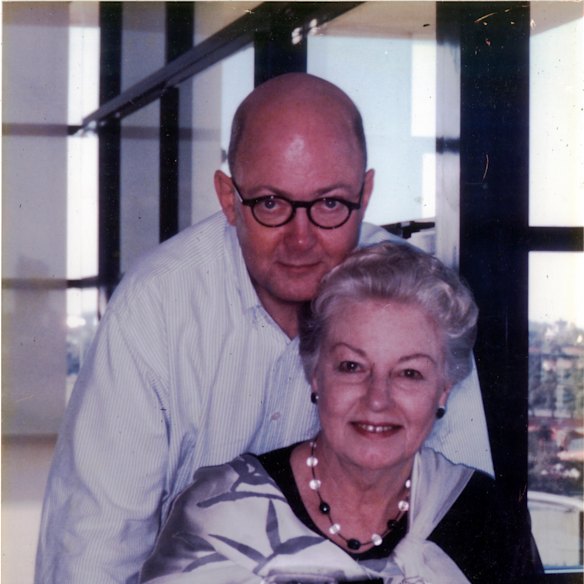
His father was a cold and “unusually selfish person”, Williams tells me. “I don’t think he really liked me,” he says. By contrast, Joan was devoted to her son, perhaps too much so – Williams says that when he began to have romantic relationships with women, he had to disentangle himself from his possessive mother. He called her “Jocasta” to his friends.
As a schoolboy at Marsden High, he was taught by Richard Gill, who would become a renowned music educator, and a love of music burrowed its way into his bones. He became an accomplished clarinet player, tutored by the likes of Donald Westlake and Peter Sculthorpe. On graduating high school, Williams won a Commonwealth scholarship and studied music at the University of Sydney.
In the early 1970s, Williams was a resister to the Vietnam War. He was fined $40 and risked an 18-month jail sentence when Gough Whitlam, his future father-in-law, was elected as prime minister and abolished all such prosecutions.
From his adolescence into his 30s, Williams composed music for clarinet and thought he might become a musician. Instead, armed with a music degree, he began a music-adjacent career in arts administration, first on the Australia Council’s Music Board and then at Music Rostrum Australia.
Then Williams had a formative stint overseas – in 1975, he moved to Italy to work with the Italian composer Luciano Berio and his ex-wife Cathy Berberian, a famous soprano, and with the Israel Chamber Orchestra, of which Berio was the artistic director.
During the Italy sojourn, Williams, then 23, and Berberian, in her 50s, began a passionate relationship. When it ended, Williams was bereft – not in a romantic or poetic way, but in a serious, clinical-depression way. He was hospitalised in Milan and then came home to Sydney in 1977 to recuperate. His old friend Mary Vallentine ran into him at Sydney airport on his return. “He was in a bit of a bad way,” she tells me. “That was probably the lowest I have ever seen him.” He rallied and would become the CEO of Musica Viva and then of the Australian Film Commission.
In 1983, he married the writer Kathy Lette – the bride confirms one attendee’s account that, at the wedding reception, she held up her ring finger and quipped, “This ring is not a tourniquet. It doesn’t mean I’m going out of circulation!”
And so it proved – Lette met the expat Australian human rights lawyer Geoffrey Robertson in 1988, when she appeared on his Hypotheticals TV program. Says one person who witnessed their coup de foudre: “You could see it across the table … you could see that was going to be the end of Kim as a husband.” It was, but the two remain firm friends. She describes him to me as “kind, compassionate, loyal, loving, perspicacious and above all, fun and funny”.
Luckily, Lette had already introduced Williams to Dovey – Dovey had been the witness at their wedding – and the two were close. “We continued as platonic friends for several years, and then one thing led to another.” (They married in 1998 and celebrate their 28th wedding anniversary this year.)
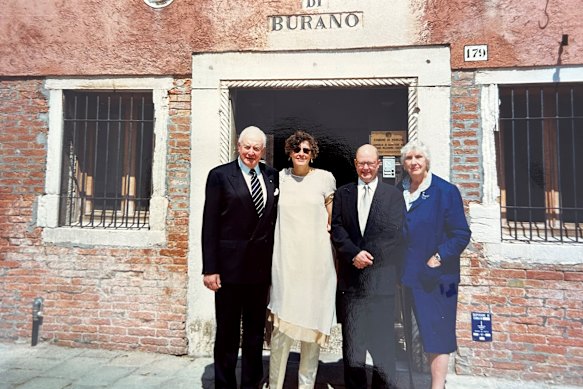
In late 1988, Williams became the boss of Southern Star Entertainment, a television production house, and in the same year, the foundation chair of the Australian Film Finance Corporation.
Then, in 1992, Williams made what he calls in the memoir his “major career mistake”. He took an executive role at the ABC as general manager, subscription services. “At that time the ABC was an enormously harsh and difficult place at which to work,” Williams writes in his memoir. “It was almost incapable of considering its audience as it was so mired in internal factions, divisions and industrial rigidities of the most arcane kind.”
In March 1995, he told the new managing director, Brian Johns, that he was leaving the ABC, at which point Johns offered him the role of his deputy and “potential successor”, Williams writes. “I declined and have occasionally wondered what might have happened if I had taken him up on that offer.”
Williams moved into the News Corp phase of his career, which began with great promise. He ran Fox Studios and then Foxtel, but the ABC still had one eye on him – his name was publicly touted to replace managing director Russell Balding when he resigned in 2006. But he was once again a bridesmaid, with Mark Scott appointed instead.
In 2011, Rupert Murdoch asked Williams to helm the jewel in the company’s Australian crown – the News Corp newspaper business, in which Murdoch was known to be greatly personally invested, and even more greatly involved. Williams tells me he had a conversation with Murdoch about who would really be in charge. He was assured that he [Williams] would be. “I said, ‘Rupert, this is rich with tears before bedtime.’ ”
The job lasted 22 months, at the end of which Williams says he told Murdoch: “It’s very clear to me one of us has to go.”
Murdoch chuckled.
I ask Williams why he took the job if he had a premonition it would end badly. “I should have listened to my inner voice much more acutely, and I didn’t,” he says. “I gave it a very, very good go, Jacqueline.”
I notice he is fiddling with the drink coaster on the coffee table, tearing a small sticker off it.
“But nothing,” he continues, gathering pace, “prepares you for when people are permitted to go behind your back and make all manner of representations to get their own way; when there’s a kind of licensed, feral quality to the enterprise, provided that you’re true to the one true king.”
Williams has famously never spilled the beans on the News Corp period of his career, even in his memoir, written not long after he resigned in 2013.
Former Sunday Telegraph editor Neil Breen, who is now national sports editor at Nine Newspapers, publisher of Good Weekend, was there during Williams’ tumultuous tenure. “A couple of the editors were instantly hostile to Kim,” says Breen.
Not long after he started, Williams had famously gathered all the editors from around the country to address them about his vision. His speech did not go down well. Breen says, “The editors were like, ‘This guy thinks he’s going to have power over us.’ He was trying to ‘alpha’ them, and it wasn’t going to cut it.”
Peter Tonagh worked with Williams at Foxtel and arrived at News Corp not long after Williams’ departure. Tonagh has also served under Williams on the ABC board and is the newly appointed chair of Nine. He counts Williams as a mentor and friend. “In my view, the only thing he did wrong at News Corp is he went too hard and too fast, without due respect for the heritage and DNA of the organisation,” he says.
Says Breen: “I believe he was tasked with modernising the newspaper business, and I believe that the editors weren’t ready to be modernised. They were intent on protecting hard copy circulation at all costs.”
The bitter irony for Williams is that his ideas about back-end integration between the News Corp mastheads, the need to move swiftly online and integrating Fox content into the newspaper business were all urgent strategic objectives that have been instituted since.
Williams says the 22-month period of his career wrecked his health. “It was the most difficult two years of my life. I aged markedly,” he tells me. “There are things in life where you surprise yourself and you think, ‘Why did I do that?’ ”
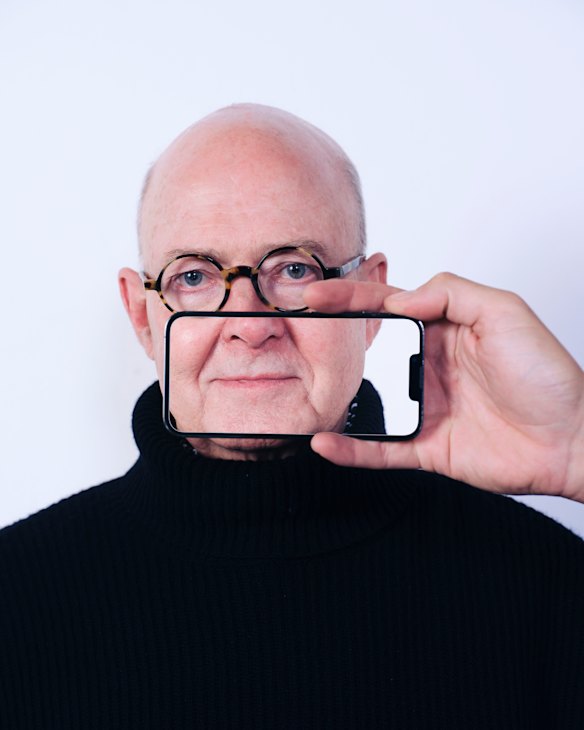
I ask him if it was an ego thing, in the sense that in taking the job, the perennial outsider was being accepted into the very bosom of the establishment. “I imagine that there were some subterranean things like that,” he responds, carefully.
“In life,” says Williams, “you meet people who have lots of feelings and people who give every appearance of having no feelings. I’m a lots-of-feelings person.”
It is our second meeting, but this time we are lunching in the relaxed atmosphere of Eleven Barrack, a smart, high-ceilinged, marble-columned, white-tableclothed brasserie-style joint in the Sydney CBD.
Williams, a regular, is greeted warmly by our waistcoated waiter. I leave the wine order to him – Williams and Dovey have a wine cellar containing thousands of bottles in their Eastern Suburbs home (one source tells me that Williams, whose salary is $219,767, “doesn’t live rich” but “he has a taste for very good wine”). Seated at a banquette corner table, we drink chablis from the Jura region in France and order entrées.
Williams tells me he knows that his emotionality “irritates” people. He knows he has a propensity to get carried away, something he says is exaggerated by the rare degenerative neurological condition from which he suffers. “Sometimes I simply can’t help it, I cry,” he admits. “It’s not about anger or fury. It’s about being unusually sensitive.”
Says one person who observed Williams lose his cool at a Foxtel meeting in 2007: “You could see him trying to contain his anger – it didn’t boil over but he got very intensely frustrated … over how he saw a particular issue and why couldn’t people see it the way he saw it?”
Former News Corp executive chairman John Hartigan (who Williams replaced in 2011) says he witnessed Williams’ “flashing temper” on multiple occasions in professional contexts. “I’ve never seen anyone with the venom he projects,” Hartigan says. “He seriously loses it. It must leave him so depleted.”
Says Williams in response: “I have always thought that people exaggerate how often they say they have seen me lose my temper because contrary to recitations, I do not lose my temper very often. When I do, it’s not pretty.”
Like many super-smart people, Williams is prone to melancholic rumination, which he deals with by working. “My solution to most things is work,” he says. “I find work a very good motivator and a very good antidote.”
He also uses work to distract from his chronic pain – his neurological condition requires him to attend hospital every two weeks. Additionally, he has a chronic degenerative condition in the base of his spine, which required spinal fusion surgery in 2012 and 2013. Sometimes, after he has an emotional outburst, he looks back at himself and thinks, “don’t be so ridiculous!”
An episode where Williams let emotion overrule reason was in his near-inexplicable intervention on behalf of Sandy Gutman, whose comedic persona is Austen Tayshus. In April 2025, the ABC’s Media Watch program revealed that Williams had personally lobbied producers at ABC local radio stations to feature Gutman, who was still promoting the 40-year anniversary tour of his 1983 hit record, the spoken-word single, Australiana.
According to Media Watch, various ABC regional radio stations did publicise his tour dates in a total of 11 different segments around the country. But when one station declined to feature Gutman, he went straight to the chair, who he had known only vaguely, according to both men, and decades prior. According to Media Watch, Williams intervened five times on behalf of the comedian.
About halfway through our lunch, I ask Williams about the reasoning behind that intervention. He begins with the preamble that he doesn’t want “to fan the flames of issues of very deep division in the community over matters to do with October 7, the Israeli response and what has happened in Gaza, and I think whenever people talk about it, it gets mixed into a miasma of other matters”.
With his savant’s recall for dates, Williams tells me he met Gutman in May 1998, when Gutman performed a role in a production that Baz Luhrmann created for the opening of Fox Studios, where Williams was chief executive at the time. He says, “Gutman was playing an Erich von Stroheim 1930s Hollywood part, as this middle-European director … doing it in a very lavishly exaggerated fashion.” (Later, I have to Google Erich von Stroheim: he was an under-appreciated yet visionary director of silent films.)
“I don’t know him. He’s not a friend, never has been a friend,” Williams says of Gutman. “My executive assistant begged me to ring him, to get him not to ring her again because he was really less than attractive in his personal representation,” he tells me. “He went on about the ABC being … and this is why it’s awkward to talk about because I don’t want to fan any flames. He said the ABC was profoundly antisemitic, and I was just focused on getting emotion out of the room.”
Williams did not mention any claims of antisemitism in his emails to ABC staff lobbying for Gutman, but instead, cited the comedian’s talent.
“I am, of course, essentially on [Gutman’s] side,” Williams wrote to the ABC’s director of audio Ben Latimer and head of regional rural and metro news, Donna Field. “How often would someone like Austen Tayshus be in New England? Strange attitude. I know he can be demanding, but he is talented.”
Gutman tells Good Weekend that Williams was a “mensch” to him and that Williams “helped me in every possible way he could”. He adds, “I made a comment to him that the ABC was biased against Israel. It was a general observation I made to Kim in passing.”
In May last year, The Sydney Morning Herald and The Age media writer Calum Jaspan reported that after making a few phone calls, “it became evident Gutman had used the accusation of antisemitism before when he does not get his way, as he is alleged to have done to Williams in August last year”.
In conducting interviews for this article, I also spoke to a former News Corp editor who said Gutman had levelled an accusation of antisemitism against him after he refused to hire Gutman for a party.
Gutman vehemently rejects claims he has sought to weaponise accusations of antisemitism. “That is completely erroneous, I would never say that to anyone,” he says.
Williams tells me that he “asked for questions to be asked as to whether [Gutman] had been listened to, and whether his representations were being treated seriously”. It was “no more than that, no instructions were issued, no advocacy for him was mounted”.
‘Be very precise in what you say. Be terribly thoughtful before you take action … And always look outwards in terms of how this will appear.’
Kim Williams“I was worried [Gutman] would ignite a huge public debate about antisemitism on the ABC,” he adds. “Which I happen to very firmly believe is utterly untrue and unhelpful to any kind of reasoned and civilised reporting and exchange and debate about issues of major consequence for our country.”
I ask him if he was anxious to stave off a News Corp campaign along those lines. “No, I couldn’t give a shit what News Corp says about me,” he says firmly.
I ask him what he learnt from what he now calls “that hideous business”. “Be very precise in what you say,” he tells me. “Be terribly thoughtful before you take action. Do not act in haste. And always look outwards in terms of how this will appear, in order not to be misunderstood. It was a very stern reminder for me.”
Media Watch host Linton Besser tells me Williams “co-operated fully, to his enormous credit”. He says, “I can’t think of another organisation in Australia or anywhere else that would allow such independent reporting on itself, and that’s to the credit of the chairman.”
The issue of antisemitism, and perceptions thereof, is a particularly tender one for Williams because he has a profound, longstanding engagement with Judaism, to the extent where it has even been reported he converted to the religion, although he tells me this isn’t true. “I have a continuing, distinct empathy with the spirit of Jewish religious practice and ethical precepts.”
In 2013, when Williams was at News Corp, he gave a speech to the Australia-Israel Chamber of Commerce in which he described himself as a “lifelong, dedicated supporter of the state of Israel”. I ask him if his engagement with Jewish spirituality has affected how he perceives the objectivity of news coverage of the Israel/Gaza war.
“I don’t have any dilemma bifurcating the Netanyahu government completely away from my very deep engagement with, and respect for, Jewish humanism,” he tells me. “I don’t think [Netanyahu] is part of that very long, deep history. I think he is an aberrant creature … I think he’s frankly an aberrant creature in the history of Israel.”
He checks himself. “But that’s a very inappropriate thing for me to say and I shouldn’t really be saying it.”
When Williams commenced in his role, he made clear his views about activist journalism at the broadcaster. “If you don’t want to reflect a view that aspires to impartiality, don’t work at the ABC,” he told the Fourth Estate podcast in March 2024.
But Williams’ former colleague John Hartigan thinks while “he has put a stake in the ground about perceived bias at the ABC, I am not sure he’s addressed it”.
I ask Williams about what the ABC journalists I know ruefully call “News Corp disease” – defined as the preemptive fear of a News Corp campaign or other public scandal resulting from one’s reporting.
He replies, “I think when institutions like the ABC have been under serial attack for a very long period of time, they can understandably become fairly self-focused, and unusually sensitive to criticism, and [they] embrace a very defensive sort of posture which I think is wholly wrong. I think the solution in all things is to do better work.”
Says ABC broadcaster David Marr: “Kim is not the least bit afraid of Murdoch, and the days of being belted around by lobbyists are over. It’s a big shift at the ABC.”
Williams, of course, has been in the belly of the beast that now attacks him.
According to Williams, Murdoch, at least when he knew him, was “a much greater asker of questions than an offerer of absolutes and opinions”. He adds, “But I think if you stop surrounding yourself with people who are genuinely contrarian … and offer real argument, all people are terribly vulnerable.”
He has himself faced criticisms of overactive editorial control. The Sandy Gutman incident was one such overreach. He also put noses out of joint when he told staff in August 2024 that he wanted to see more hard news in place of “lifestyle” stories in the ABC’s output.
One ABC long-timer says he “started off thinking he was great for the ABC … but now I think he’s over-weening in his role”. He adds, “He was very prone to making his opinions known about particular programs. He would grab this person or that, and say, ‘I didn’t like that program’ … It’s not a family business, that’s not the role of the chairman.”
He was also criticised by some for refusing to apologise on behalf of the ABC to journalist Antoinette Lattouf, who was illegally sacked in December 2023 as a casual radio presenter, at the apparent behest of then-chair Ita Buttrose.
The transition between Buttrose and Williams was “not a happy handover”, according to sources. Soon after Williams took over as chair, his managing director David Anderson announced his resignation, and there was a months-long power vacuum before his replacement Hugh Marks began in March 2025.
One on-air broadcasting talent says that “because of the obedient hierarchy at the ABC … Kim was expressing views about the kind of broadcasting he liked, and people were madly commissioning.” They add, “When Hugh came along, he put a stop to all of that.”
Marks tells Good Weekend that during the period of transition between former MD David Anderson and himself, “in those circumstances, the chair is called upon to do more”. Marks adds, “Since I have started, we have acknowledged the different functions and we each respect the roles the other does. Kim will always be a passionate advocate and he’s always going to have opinions and so he should, as the chair of the board.”
Anderson says he loved working with Williams, albeit for a short 11-month period. “He is intellectually curious, he has a very analytical approach, he interrogates data and information,” Anderson tells me. Did he ever feel that Williams overstepped into editorial interference? “No, I did not.”
One measure by which Williams is an objective success as chair is in his securing of federal government funding. Under his chairmanship, the Labor government has won back $42.8 million in funding that was cut by the former Coalition government, Williams says. The government has also allocated $50 million to the ABC for Australian-made documentary, drama and children’s programming.
Says 7.30 presenter Sarah Ferguson: “He’s not stopped for one day in seeking funding for the ABC. I don’t think anyone has been as assiduous as him in that respect.” She adds, “He’s got our back, and that’s the job.”
As our lunch comes to an end, I ask Williams how he is feeling now about this profile. Is he worried?
“Of course I am,” he says. “You make yourself vulnerable to another person, and you try to respond accurately and openly and not to be manipulative … and it makes you even more vulnerable.”
We finish our coffees and ask for the bill. Has he thought about what he might do after his chair role ends? “No. I haven’t given any thought to that,” Williams says.
Our lunch finishes late – we have talked for more than two hours. We say goodbye on George Street. He walks toward the light rail stop. He’s going back to the ABC office – he still has more work to do.
Read more profiles from Good Weekend:
- ‘Feared, respected and disliked’: The private powerbroker who has Lachlan Murdoch’s ear
- Exploitative and callous, or excellence and innovation? The man who wants athletes to push their bodies to the limit
- Never in her wildest dreams did Ita imagine her career would go the way it did
Get the best of Good Weekend delivered to your inbox every Saturday morning. Sign up for our newsletter.