3 months ago
14
3 months ago
14
Opinion
November 10, 2025 — 7.00pm
November 10, 2025 — 7.00pm
Opinion pieces from local writers exploring their suburb’s cliches and realities and how it has changed in the past 20 years.
See all 53 stories.There’s a good chance you’ve never known anyone who lives in my tiny suburb. Well, before now. At last count, we had just 794 residents, making us even smaller than Melbourne’s other pocket inner-city suburbs like Gardenvale, Ripponlea, Cremorne and Travancore.
But you probably know of it, if for no other reason than our busy train station, a junction you’ll pass on the way to Belgrave and Glen Waverley, Alamein, and Lilydale.
There’s a lot more going on here than you realise. Think of the tunnel between the West Gate and the Monash Freeway. The inner-city golf course, which is one of Australia’s busiest. The harbour under Citylink. The Boulevard, constructed as part of a public support project during the Great Depression, is now a green corridor beside the Yarra River. The oasis of the Melbourne Uni Horticultural Campus. This is Burnley.
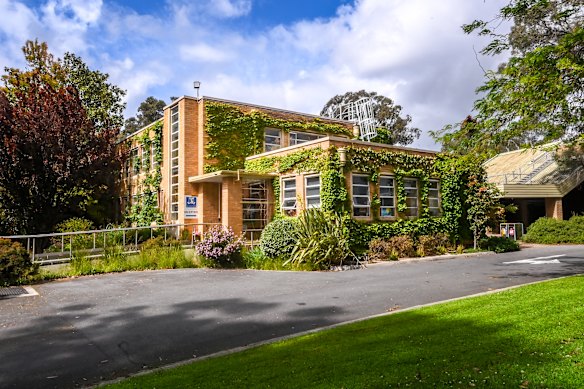
The Burnley Gardens, in the University of Melbourne. Credit: Justin McManus
Burnley is the little “sister” to Richmond. We share the same postcode – 3121 – but Burnley shrank in the 1990s. Was that because it was less fashionable than trendy Richmond? Burnley is now a tiny pocket with a handful of streets bounded by the Yarra to the east and south, Burnley Street to the west and the Swan St railway line to the north.
In the early days of European settlement, Burnley was a true working-class suburb with stone quarries, factories, and an abattoir on Burnley Street that stayed active until the ’80s. It was considered the ideal location for a slaughterhouse as all the muck could be drained into the river, and the site was notorious for its smell and the flies.
Horses were agisted on paddocks near the river, ready to cart Loys soft drink to homes across the city. Before construction of the MacRobertson Bridge in 1934, the Twickenham ferry escorted people across the Yarra from Burnley to Toorak, and there was even a tea house on the Burnley side where people came to picnic.
Today’s Burnley is many things to many people – a place to work, live, or study, or to pass by on their way to the city. The abattoirs are long gone, workers now pour into the new 12-storey Australia Post building over the road in Richmond and the Botanicca business park, or stay at Element, a 4-star hotel, that is definitely in Burnley, despite marketing itself as “Richmond”.
I moved here in 2005, to a street of paired houses built for pickle factory workers in the 1920s. I had lived in Richmond for 20 years and was enticed by a place that seemed less congested and constrained, with its green corridor and access to the Yarra.
I’m still surprised by the sense of space here, so close to the city. A favourite tree is an ancient river red gum that sits majestically by the river. It is a regular haunt for young tree climbers, and I wonder if the old tree minds being clambered up and tangled by ropes. Nearby, you’ll see black cockatoos, grey-headed flying foxes, magpies, currawongs, lorikeets and wattlebirds.
The Burnley Gardens are another local escape, even though they are little-known and difficult to find. Open to the public 24/7, they are tucked away within the heritage buildings of the Melbourne University campus on a remote bend in the Yarra and accessed via Burnley Boulevard. Created in 1863 for horticultural research and teaching, they contain over 1000 species of plants and have some of the inner city’s oldest trees.
Loading
Being only four kilometres from the CBD, we are blessed with bus, train and tram options. Cross Mac Rob and you’re in Toorak, the Swan St Bridge and you’re in Hawthorn, or hop on the freeway for the peninsulas. Or best of all, cycle the main Yarra bike trail and enjoy being in bushland by the river.
There are downsides to living here. For a start, Burnley doesn’t have shops. We need to head to Toorak, Richmond or Hawthorn for that. But we do have café Serotonin, opposite the Golden Square. Also, if you can find a parking space in Burnley, you’ve hit the jackpot. Off-street parking was not part of the build back in the 1920s and there are not sufficient street bays to accommodate residents.
Burnley needs more housing, as does all of inner Melbourne. High-rise apartments along the rail corridors remain a possibility. So, the YIMBY versus NIMBY debate is a constant. The Burnley Maltings held “the Silo Project” two years back, which creatively highlighted the six grain silos and the industry. The site is now under construction as a 35-apartment conversion.
As is true everywhere, nothing stays the same in Burnley, but my suburb has retained its heart. Community is found in the Golden Square Bicentennial Park with its annual Easter egg hunts and Christmas parties dating back 35 years.
Loading
Much of Burnley’s beauty and heritage can be credited to the work of locals. The most prominent was Ron Pinnell, an actor who appeared in classic Australian TV shows such as The Sullivans, Prisoner, Homicide and Neighbours, as well as Dr Who. Pinnell was an expert at playing the baddie, but was just as adept at saving heritage homes. He loved to perform – he could recite or sing just about any Australian poem or song upon request, and particularly loved finding an audience in Yarra Council meetings. Many residents remember Pinnell for his tireless work in achieving heritage overlays around the Golden Square and his habit of alerting potential homebuyers that altering the architectural character of newly-purchased houses was not negotiable. We have a plaque dedicated to him in the Golden Square rotunda.
Pinnell played a key role in turning the space left from the demolition of Burnley Primary School into the Golden Square park. You’ll find locals with dogs and kids in tow in the gardens, with its elm “fairy tree”, with a little red door at its base and a letter box so children can post a letter at Christmas. The elm is so large and old that in summer the branches and leaves hang down to the ground, ensuring a space where magic can happen.
Kathy Watty is a retired oncology nurse and Burnley resident.
Most Viewed in National
Loading