3 months ago
17
3 months ago
17
Hundreds of public servants quit their jobs. They kept being paid
Around 500 public servants continued to be paid years after their positions were terminated, and one employee received almost $300,000 in overpayments from the NSW government, a report has found.
An audit into 40 state agencies identified failures in payroll management led to 481 terminated employees from a single agency being paid in the last financial year – some of them had resigned as far back as 2018.
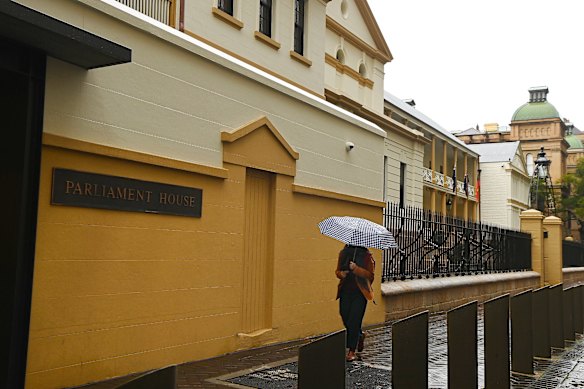
The overpayment involved one government agency that has not been identified. Credit: Kate Geraghty
Six cases were directly investigated in the audit, which found a total of $429,000 in overpayments were made, including one ex-employee who continued to be paid more than $295,000 from 2021 to 2024. The auditor-general’s report did not identify the agency.
“Underpinning these overpayments were the delays in the notifications of termination, leave and errors in processing,” the report said. “The agency is taking reasonable steps to recover the overpayments.”
When asked to name the agency involved in the overpayment of wages, an Audit Office spokesperson said the purpose of the report was to draw attention to significant risk areas to help all agencies improve, and would not provide further information.
Loading
“Weak controls over access to employee master data and the offboarding of terminated employees from payroll systems and as signatories on bank accounts can elevate the risk of salary overpayments, fraud and misappropriation of cash,” the report said.
The audit found “ineffective oversight” of grants in one agency, missing conflict-of-interest declarations in others, and inadequate fraud risk assessments which “can lead to fraud or corrupt activity going unnoticed or unchallenged”.
It also flagged widespread use of contingent workers – a labour force engaged by government agencies through a third-party supplier, supposedly for short-term contracts rather than on a long-term basis – for many years, including 227 who had been in their roles for more than five years.
One agency had a contingent worker engaged for 15 years.
Some contingent workers are paid salaries beyond those received by senior executives: there were 17 contingent workers paid more than $550,000 in the last financial year, and an additional 37 were paid more than $400,000.
“While justification for these salaries may be reasonable due to specialist skills, detailed assessment and market evaluation should be performed,” the report found.
Wages and employee-related expenditure is the biggest cost of the NSW government. When Labor took office in 2023 it scrapped the cap on public sector wage increases.
The latest state budget projected employee expenses to cost $50.3 billion in 2025-26, and increase by 3.7 per cent annually to $56.2 billion in 2028-29.
The Morning Edition newsletter is our guide to the day’s most important and interesting stories, analysis and insights. Sign up here.
Most Viewed in Politics
Loading