3 months ago
25
3 months ago
25
In the annals of idiotic things that people have done in the name of TV entertainment, few names loom larger than Jeremy Clarkson, Richard Hammond, James May and Andy Wilman. Their greatest hits reel includes dropping a ute from the top of a tower block, nearly killing Hammond in a dragster crash, getting chased out of Argentina by a violent mob and driving cars painted with provocative slogans through America’s deep south.
That last name might not be as familiar as the others, who for the better part of 20 years fronted the long-running car shows Top Gear and its spinoff The Grand Tour. But even if you’ve only seen a single episode from the hundreds of hours of TV they’ve made, Wilman’s name may resonate.
“Mr Wilman” was one of the running gags of Top Gear and Grand Tour. He was named and discussed but never seen — in much the same way as Maris, the highly strung, hypochondriac wife of Niles Crane in the sitcom Frasier.
Each week, “Mr Wilman” would deliver an envelope to the show’s presenters. Inside the gold envelope — or later, the SMS that pinged on Clarkson’s phone — were instructions for that week’s challenge. One sensed that this Wilman was a shrewd producer who dreamed up wicked, absurd situations for his presenters to grapple with — and, in keeping with the show’s tone, miserably fail at.
In his breezy new memoir, Mr Wilman’s Motoring Adventures, Andy Wilman reflects on the highs and lows of making those juggernaut shows, working with the mercurial Clarkson and a 30-year career filled with a disproportionate number of headlines and pop-culture moments.
With a remarkable memory for people, details and the intricate machinery of TV-making, he also paints a first-hand picture of the shifts that have taken place in the TV business.
Even if one’s tastes don’t run to non-woke, middle-aged white men behaving like prats, Top Gear’s influence cannot be overstated. It was a line in the sand of factual TV, the point at which it shifted from straight-to-camera information to infotainment. It was fast, irreverent and anything-goes, a variety show that seamlessly blended nerdy car reviews with junk-yard jalopies, A-list celebrities hanging loose, pranks and the genuine chemistry of the three presenters.
At its peak, Top Gear had a live, Sunday-night audience of 7 million in the UK alone. It spawned live arena shows, countless local versions (two in Australia alone), magazines and books. When Top Gear spectacularly blew up in 2015 (more on that later), the presenters and most of the crew moved to Amazon to make The Grand Tour and another hit show, Clarkson’s Farm.
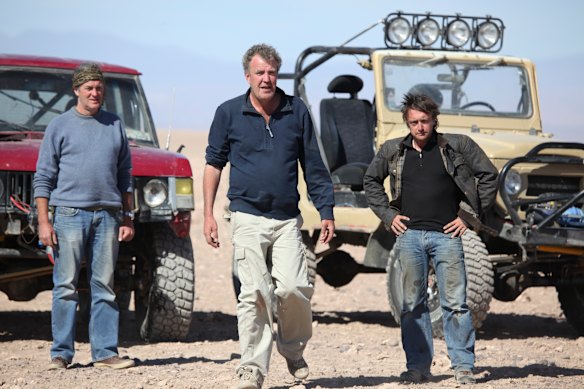
Wilman was behind many of the show’s wackier challenges to presenters James May, Jeremy Clarkson and RIchard Hammond (seen here in 2009).
Wilman grew up with Jeremy Clarkson, and attended the same boarding school. He undertook Russian studies at university but failed the intelligence test for joining the foreign services. Their paths crossed again when Wilman, then working in motoring journalism, was invited by Clarkson to join him at the BBC. Those coming to the book hoping to find dirt on the divisive Clarkson will be disappointed. He depicts Clarkson as whip-smart, strongly opinionated and impatient, “a bombast who struggled with complex machinery such as cutlery”.
Tasked by the BBC in 2000 to refresh Top Gear, Clarkson and Wilman got to work. “We started out as a car show,” he recalls now. “ And by accident, and that’s a very important thing, I think, as to why we survived for so long, is by accident. You realise the chemistry between the three [presenters] is so good. They are doing things essentially to amuse themselves as the show morphs and changes and becomes more entertaining. But there’s no plot, no plan to do this.”
TAKE 7: THE ANSWERS ACCORDING TO ANDY WILMAN
- Worst habit? Singing the same line from a song over and over again. (And I always get the line wrong.)
- Greatest fear? Being served mushrooms at an Australian dinner party.
- The line that stayed with you? The very mischievous advice to would-be writers from Elmore Leonard: “When you’re writing, leave out the bits that people won’t want to read.”
- Biggest regret? Not sticking with being in a band
- Favourite book? Utopia Avenue by David Mitchell.
- The song you wish was yours? Gimme Shelter, by The Rolling Stones.
- If you could time travel, where would you go? Back to my mum’s childhood, and protect her from bad people.
There were also some unconventional instincts at work. Wilman remembers watching nightly news reports about war in Afghanistan, but what struck his journalistic brain was how many men and weapons could be packed into the back of a Toyota HiLux. Always a HiLux, “the Taliban company car”.
From that came the challenge to destroy one, culminating in placing one on the roof of an imploding tower block. The more Clarkson, Hammond and May screwed up, the more ridiculous the challenges, the more viewers watched.
The lifeblood of his shows has always been the chemistry of the presenters, Wilman says. He likens each new season of a show to a band returning to the studio to record a new album. “We have to refresh our own content because you’re never going to do it by refreshing the contestants or the presenters. So the burden is on us to keep coming up with stuff, and I think that keeps you on your toes. It keeps you insecure, and it’s probably why we lasted so long.”
Like the HiLux, which — 20-year-old-spoiler alert — outlasted several attempts on its life, Wilman and his three musketeers survived the implosion of Top Gear after Clarkson was fired by the BBC in 2015 for allegedly assaulting a producer. (The book sidesteps the exact details of the incident; Wilman says he wasn’t present and that the producer and Clarkson have agreed to never discuss it.)
Courted by Amazon and Netflix, they decamped to Amazon, a courtship which comes across as both comical — would it be an infringement of the BBC’s copyright if James May uttered his trademark sigh “cock” in a new show? — and breathtaking. As a sweetener, Amazon said each of the presenters could make a show of their own choosing.
Clarkson suggested a show about daily life on his farm Diddly Squat, an idea that even he was sceptical about.
“They were like, ‘Oh, Christ, really, is that going to be worth watching?’ But they had to accept it. Different executives would go, ‘can you try and convince him to do something else?’ So I rang him. I was like, can you feel the knives in your back … there’s a lot of people at Amazon trying to talk you into doing something a lot more exciting. And he was like, I don’t blame them. I’m with them. I am crapping myself about this thing.
“He was worried it’s going be as boring as hell. But what we didn’t see coming was that cast. Because that was the lightning in a bottle. The cast were as amazing as they were, and none of them were auditioned. And they’re all TV gold.”
One of the breakout stars of Clarkson’s Farm is the now 27-year-old local farmer Kaleb Cooper, who is currently in Australia filming Kaleb Down Under for Amazon. Either Cooper is a better actor than he appears, or he genuinely doesn’t know who Clarkson is, such is the nature of their odd-couple pairing on Farm.
Wilman won’t be drawn on speculation that the coming season will be the last. Despite its phenomenal cost — reportedly $US275 million for the first three seasons — season four was the biggest show for Amazon in the UK, with an average audience of 4.4 million.
He says the book was a happy accident, the result of Clarkson mentioning in one of his Sunday Times columns that Wilman was the keeper of the memories. “Penguin rang me on the Monday and went, is it true? And I said, Yeah. And then they went, ‘right, would you like a ghostwriter to do it? And I was like, f--- off, ghost writer. Get out of here.’
“I did virtually all of it from memory and then set off, I guess, like one of our films, not knowing where it was going to go. I know what I knew, what ground I had to cover, but I didn’t know how I was going to say it. And it made me think about what we’ve done, what we’ve meant, what twists and turns have come along the way. How did we feel about the BBC, about each other?
“There are so many fans on the forums after we put the last [Grand Tour episode] out … thanks for the entertainment, you meant so much to us, or you got me through a tough time, or I remember introducing my son to your show, we’d watch it together. We definitely got under people’s skin, as though we were kind of a little part of their lives.
“And if we were fortunate enough to be able to have that effect on people, then this book is a bit of a companion piece, a bit of a keepsake, you know, alongside the episodes to say this is what was going on behind the scenes. This is what we were thinking. So it all dovetails sweetly, in the end, the purpose and the outcome.”
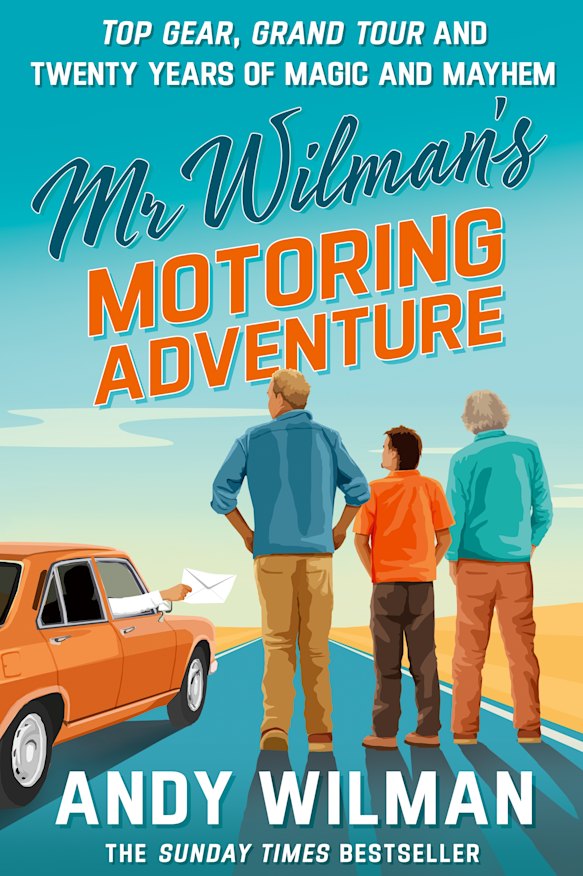
Mr Wilman’s Motoring Adventure is published by Penguin Books on January 20.