1 month ago
6
1 month ago
6
Opinion
October 24, 2025 — 5.00am
October 24, 2025 — 5.00am
Anthony Albanese has been underestimated by his opponents for his entire political career.
The question now is whether, after the prime minister’s triumphant meeting with US President Donald Trump this week, the federal opposition is finally going to wake up to itself and change tack.
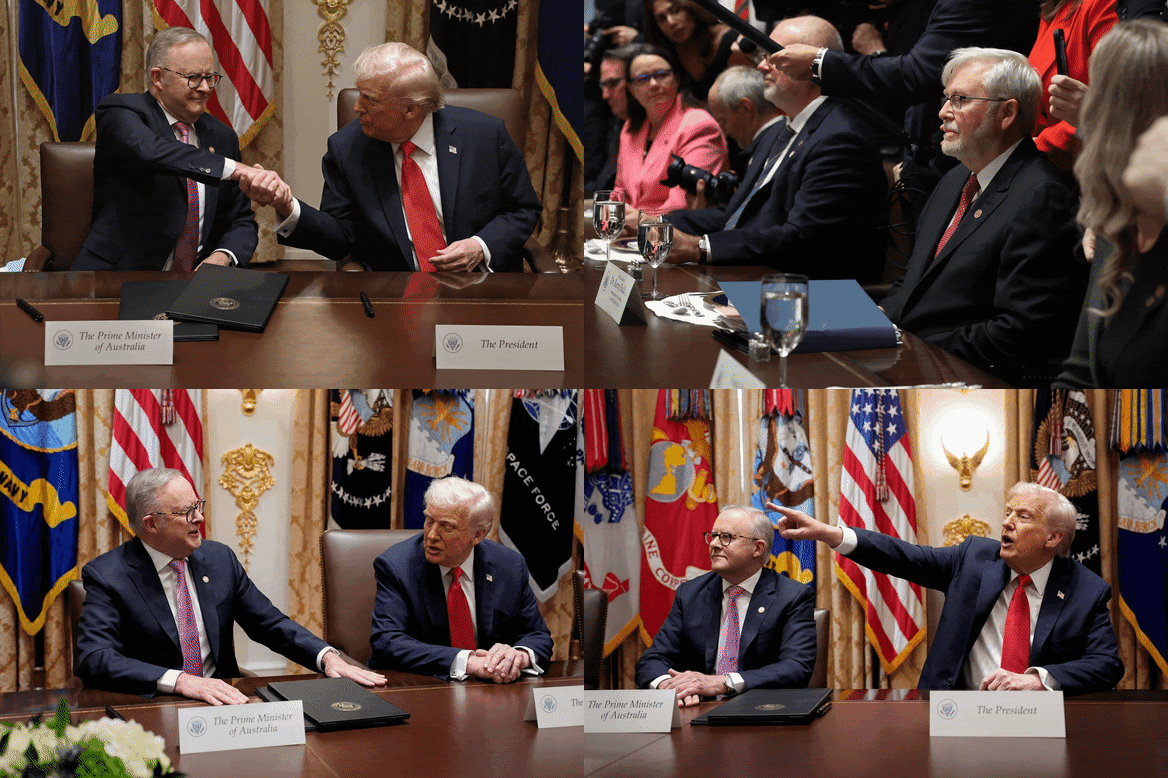
Trump and Albanese meet in the White House.Credit: Getty Images
Because its current approach is not working.
In Washington, Albanese secured the vocal and enthusiastic support of Trump for the AUKUS submarine deal. That endorsement was the No. 1 goal for the Australian government, and it was met.
It is still not clear how the United States will ramp up production of Virginia-class submarines from the current level of about 1.2 subs per year to the required rate of about 2.3, but Australia has already handed over $1.6 billion to expand US production lines. The new submarine maintenance facility being built in Perth will keep more subs from the US fleet in the water for longer, partially ameliorating the current maintenance backlog.
Loading
Trump and Albanese inked a multi-billion dollar critical minerals deal that has China, the world’s dominant producer of these minerals and which is squeezing America’s access to them, squarely in its sights. These are actual projects with funding attached, rather than a vague agreement and good feelings.
Albanese didn’t get everything he wanted. He sought tariff relief for Australian exporters, who are currently paying a 10 per cent tax (and 50 per cent if they are exporting aluminium or steel to the US) but this request was knocked back. Work on this will continue.
The meeting also put to bed a particular pain point in the US-Australia relationship – if you believe what conservative commentators and the federal opposition have argued over the past nine months – which is the ongoing presence of Kevin Rudd as ambassador to Washington. (The US has still not sent an ambassador to Canberra, a fact no one asked the president about).
After initially appearing not to know who Rudd was or even if he was in the room, Trump, with just a hint of a smile at the corner of his mouth, flicked the former prime minister with a casual “I don’t like you either, and I probably never will”.
When you watch the exchange it is instantly clear – with Albanese pointing and laughing, a grin on Trump’s face and laughter rippling through the room – it was a light-hearted moment after the prime minister and president had met privately in the Oval Office for 30 minutes. Albanese made a point of singling Rudd out for praise afterwards and highlighted his crucial role in stitching together the critical minerals deal.
Loading
Which brings us back to Sussan Ley and her initial response to the Washington meeting. Expectations for the meeting were about as low as it was possible for them to be. So after its widely hailed success, what did she say? That Rudd’s position was untenable and that he had to be recalled. It was a call so distant from the reality of what had happened that it was hard not to wonder if the opposition leader had been watching another press conference in a parallel universe.
Proving the point, former Liberal prime minister Tony Abbott and current Liberal backbenchers Jane Hume and Andrew Hastie – both of whom are no friends of Ley, admittedly – contradicted the current opposition leader and praised the outcomes (and the Labor government) within 24 hours.
Ley, like her predecessor Peter Dutton and so many other members of the Coalition, dislikes Rudd and has long underestimated Albanese.
When Albanese won in 2022, many in the opposition ascribed the win to an “it’s time” factor and to public dislike of Scott Morrison. Since Albanese’s victory in 2025, many in the Coalition are making a similar mistake and ascribing the landslide win to dislike of Dutton and a poorly explained policy offering.
Albanese grew up in council housing with a single mum crippled by her arthritis. He worked and helped run the household from an early age. He became the first member of his family to go to university, fly on a plane and more. He joined Labor and then the minority Left faction in NSW and worked his way up to being the deputy secretary of the NSW Labor Party, a thoroughly lonely job in a division dominated by the Right faction.
Albanese has been an outsider all his life and it is the psychology of the outsider that has shaped his approach to politics for more than three decades.
Ahead of the meeting, the view inside government for months was that Trump, the ultimate dealmaker, had to be handed a win. Critical minerals were identified as the obvious choice. There was a degree of luck in the timing – the meeting’s delays allowed more time to prepare the deal, and then China’s toughened line on rare earth minerals helped – but that is part of politics.
Headed into the meeting, Albanese didn’t get spooked by criticism that he hadn’t met Trump. Over and over again, he said it would happen soon. The pair spoke four times on the phone and met briefly in New York and, the prime minister has told colleagues, Albanese felt a rapport building with Trump in those phone calls.
Albanese learnt from Malcolm Turnbull’s fiery phone call with Trump in 2017, over a refugee swap deal that Turnbull had agreed with the president’s predecessor Barack Obama. Trump hated the deal. Rather than suck up to the mercurial president, Turnbull held him to the contract – as a detailed leak of the conversation later made clear – and it worked.
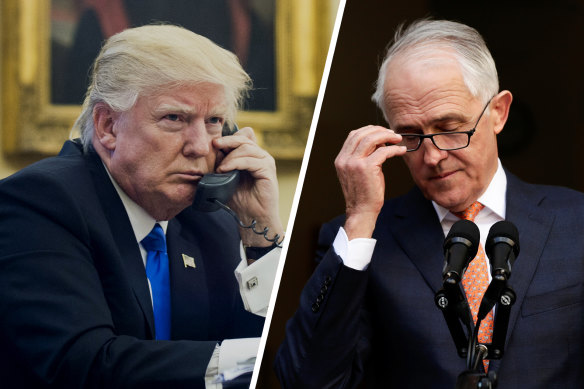
Albanese learned from Malcolm Turnbull’s fiery phone call in 2017 with Trump over a refugee swap deal. Credit: Bloomberg, Alex Ellinghausen
The prime minister shares Turnbull’s view that Trump respects strength. And Albanese felt that the fact that he had just won a commanding victory in the May election and increased his majority in the second term – which doesn’t usually happen, as Trump knows – helped too.
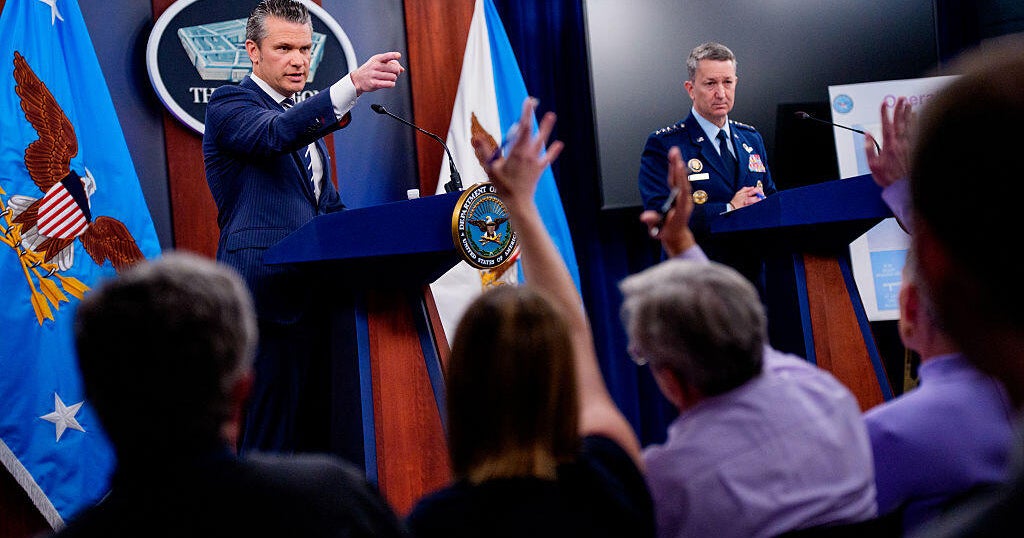
In part, that’s why Albanese rejected a call from US War Secretary Pete Hegseth for Australia to increase spending on defence to 3.5 per cent of GDP. The prime minister stood up for Australia, rather than kowtowing. Albanese told colleagues his objective wasn’t to spend money to meet an arbitrary target, but to spend it on the assets Australia needed to defend itself. A slew of defence spending promises on new capabilities have been made in recent months.
One source close to the prime minister summed up his mentality like this: “We are not leaners, we are serious players. We aren’t the biggest economy in the world but we matter.”
And if the meeting went to hell, as happened to Ukrainian President Volodymyr Zelensky in his meeting with Trump earlier this year, people would understand that the US president was an unpredictable character.
That same source adds, “the feedback we had is that this is regarded as the most successful meetings Trump has had, full stop”.
So while Albanese triumphed and Trump got his deal, the lesson for Ley is rather different: sometimes, if you have nothing constructive to say, it’s best to say as little as possible.
James Massola is chief political commentator.
Most Viewed in Politics
Loading