3 months ago
12
3 months ago
12
When Loveness Tsitsi Mauwa began working in a NSW hospital, a colleague gave her advice that has stayed with her for over a decade: “If you want to progress in this place, you have to be young, Caucasian and beautiful.”
The Zimbabwe-born nurse already had years of work experience in NSW and Western Australia, but it was a pattern she witnessed repeatedly after arriving in Australia over 20 years ago.
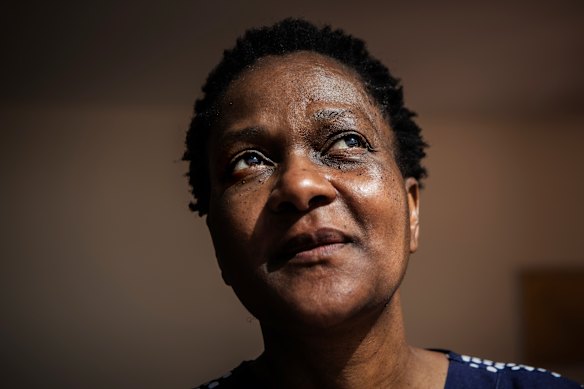
Loveness Tsitsi Mauwa emigrated from Zimbabwe 25 years ago and says that, while patients and colleagues are mostly used to seeing diverse faces in our hospitals, many are still uncomfortable with diverse staff in leadership positions.Credit: STEVEN SIEWERT
“There was no career growth … even young nurses that I had mentored would get the opportunities, and I wouldn’t,” said Mauwa, who eventually pivoted her career to teach the next generation of nurses. “I just couldn’t seem to break the glass ceiling.”
Two-thirds of NSW nurses and midwives from culturally or linguistically diverse backgrounds say they have been direct victims of racism at work, according to a survey of more than 3000 nursing union members released on Wednesday.
One in five said they had been verbally abused or insulted, and 18 per cent said they had been racially harassed. One in 10 said they had been subjected to name-calling by patients, clients or colleagues.
“This report is yet another example of how racism is a public health emergency that must be met with the same urgency and seriousness as any other threat to life,” said race discrimination commissioner Giridharan Sivaraman.
Loading
More than 80 per cent of nurses or midwives who reported a racist incident said they received no support following the incident, while 70 per cent did not report the incident to management at all “due to a lack of confidence in the system”.
“For some respondents that meant leaving their job, or their profession entirely, because of the lack of action to address racial abuse and discrimination,” said NSW Nurses and Midwives’ Association assistant general secretary Michael Whaites.
The survey included union members working across the private, public and aged care systems. One-third of the survey’s 3200 respondents were from culturally and linguistically diverse backgrounds.
The issue of racism in NSW hospitals was brought into sharp focus in February when two Bankstown Hospital nurses were captured on video bragging about killing and refusing to treat Israeli patients.
“That type of behaviour in a hospital or a health service setting is not something that is acceptable in any way, shape or form,” NSW Health secretary Susan Pearce told budget estimates last week.
Thousands of people joined anti-immigration rallies across the nation on Sunday, where speakers called for a five-year pause on migration and protesters chanted “send them back”.
Mauwa said people were allowed to express their views and opinions but those demanding a halt to migration “hadn’t really thought about the healthcare system”.
“Most hospitals actually have more migrant healthcare staff than other white-Caucasian [staff] on the floor,” she said.
“If all the migrant healthcare workers were to leave, I think the Australian healthcare system would be in dire straits, really, because we are so reliant on migration to fill the gaps.”
In a 2024 survey of NSW Health employees, 7.2 per cent of nursing and midwifery staff reported experiencing racism at work, a slight reduction from 8.3 per cent the previous year.
A NSW Health spokesperson said all forms of discrimination were unacceptable, and the agency was expanding cultural competence and anti-racism training for staff.
Start the day with a summary of the day’s most important and interesting stories, analysis and insights. Sign up for our Morning Edition newsletter.
Most Viewed in National
Loading