3 months ago
17
3 months ago
17
The English countryside is dotted with places to put on your bucket list. Towns steeped in history, with Roman ruins, medieval castles and Gothic abbeys. The kind you want to visit before you die. Guildford is not one of them.
Located in Surrey, about an hour outside of London, Guildford boasts the rolling natural beauty of the Home Counties and some architectural vestiges of its past as an Anglo-Saxon stronghold but, mildly charming aesthetics aside, there’s not much going for it. That I found myself heading there on a train from Waterloo was something of a happy accident.
I had come to the United Kingdom on a pilgrimage that many book lovers take at some point in their lives. My destination was Hay-on-Wye, the Welsh border town famous for having the world’s highest concentration of antiquarian bookstores. There, a reader will likely have their best chance to encounter some of the greatest books ever written in their earliest forms. Leather bindings. Hand-stitched spines. Deckled edges. Paper as delicate as gossamer, stained with time. For many of us it’s akin to a religious experience. Like having a window into creation.
I planned my trip around the annual Hay-on-Wye festival, when the town fills with thousands of book lovers, crowding its streets, running its pub taps dry and inflating its hotel prices. In the past the festival has attracted the likes of Salman Rushdie, Haruki Murakami and Margaret Atwood. Bill Clinton was also spotted there. As was Desmond Tutu. I, for one, could think of nothing worse and was determined to avoid it. Better to go a month later, when I could enjoy being in the quiet presence of any number of books I’ll never afford without having to battle the frenzied hordes.

Sitting in my brother’s London flat, I flicked through the various articles he’d pulled out from the dailies about the recent festival. For the most part there was nothing surprising. Fawning travelogues. Celebrity sightings. Even the odd picture of a book. But one small piece stood out. A sidebar that seemed to buck against the hagiographic trend. There, beneath a small headshot, was an interview with someone else who didn’t like the festival. In fact, he didn’t like Hay-on-Wye at all. Charles Traylen, the last of the great antiquarian booksellers. In a world filled with delightful oddballs, each with their own literary kinks, none possessed the sheer eccentric verve of this (at the time) almost centenarian. I knew I had to meet him.
Born in Cambridge in 1905, Charles Traylen left school at 14 and, after a stint repairing bicycles, found work with Galloway & Porter, a local rare-book firm. Over the course of almost 20 years he rose from eager apprentice to savvy wheeler dealer in his own right. But as the clouds of war began to gather, Traylen knew it was time to move on. There was little hope for upward mobility in Cambridge, especially after he spurned the affections of Mr Porter’s daughter, and so he made what would become a fateful move to Guildford.
There he was offered the position of manager at Thorp’s, a major player on the rare-book scene. Traylen and old man Thorp often butted heads, the latter being rather conservative in his approach and Traylen quickly proving himself something of a maverick. Their opposing strategies somehow yielded spectacular results. By war’s end, however, Traylen’s position became untenable. The two parted ways and Traylen opened his own shop, with brazen aplomb, directly across the road from Thorp’s.
There was no better time for Traylen to go it alone. The postwar years heralded a new golden age of rare-book selling. A generation of readers were dying, and their collections –first editions, obscure volumes and entire sets – became the subject of fierce bidding wars at estate sales. Traylen clued on early that the real winners were the auction houses, so he banded together with his competitors to cool the market. They stopped bidding against one another, instead horse-trading over beers at the pub and then divvying up the spoils.
Traylen, true to his working-class roots, thought it unjust that the big-city fat cats should be the main beneficiaries of this roaring trade. It was collusion, yes, but they were democratising the market. The campaign was so successful that the auction houses lobbied the government to strengthen the Auctions (Bidding Agreements) Act. Still, Traylen’s business grew and in 1959 he bought the historic Castle House, which served as his base from then on.
The more I read about Traylen, the more I knew I needed to make the trip. At 93 he was only available by appointment, so I picked up the phone and called. As luck would have it, he could see me the following day. I postponed my plans for Hay-on-Wye and booked a ticket to Guildford.
Castle House was not far from the train station, so I decided to walk and get a feel for the town. A peculiar hodgepodge of modern development, classic red bricks and stone retainer walls tell the story of England’s uneasy stumble into modernity. Split through the middle by the River Wey, there’s an abundance of greenery and parkland. It was, I thought, the kind of place I’d describe as quaint, if only because dull seems uncharitable. Arriving at Castle House, I understood Traylen’s choice to stay in the town. It was unassuming, and a welcome break from the furious pace of his life in the golden era.
I knocked and, after a brief wait, the door was opened by an elegant older woman. She welcomed me in and led me to a large room made cosy by an antique desk, leather armchairs and overflowing bookshelves lining every wall. “Sorry,” she said. “Charles might still be a while. He’s down the pub with some friends.” She rolled her eyes, smirked and turned to leave. “Please feel free to look around.”
I sat in awed silence. There I was, alone in the holy of holies, surrounded by first editions of some of the greatest works of English literature. I couldn’t stand, didn’t dare go near them. Then, the sound of keys jangling, and a lock turning. Charles Traylen had arrived.
Impeccably dressed in pleated slacks and a cardigan, his white shirt buttoned to the collar and shoes perfectly shined, Traylen had a puckish air that belied his age. His face had sunken somewhat into itself but his cheeks flushed pink and his mischievous grin spoke of a man still thoroughly enjoying life. “I’m terribly sorry,” he said, his accent still inflected with the vestiges of his working-class childhood. “I’ve just been visiting the church. Had to say my prayers.” He shuffled closer and sat himself in the chair opposite me. “Well,” he began. “How can I help you?”
For the better part of an hour we talked about books we loved, the changing nature of the trade and how he hoped to be selling books well past his hundredth birthday. He regaled me with stories in which he single-handedly rescued lost literary treasures. A bookish Indiana Jones. As we chatted, he directed his wife to pick various volumes from the shelves to show me. Books he thought I might like. It was a masterful display of salesmanship, the subtle weaving of potential purchases into casual conversation.
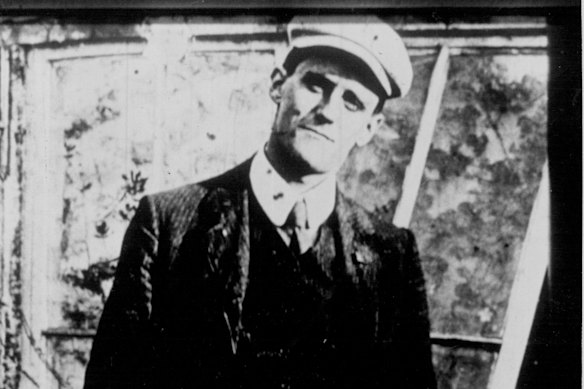
“See that one,” he said, pointing to a first edition of James Joyce’s Dubliners. “When I was a boy I sold pencils to James.” He spoke with such conviction, such conspiratorial glee, that it didn’t occur to me to question the timeline, or the geography.
Nor did I have the heart to tell him that my interests skewed strongly towards the continental European. Or that I couldn’t afford most of what he was offering me. Eventually I settled on a lovely, leather-bound collection of stories by Edgar Allan Poe. Traylen seemed excited by its illustrator in particular. It was, he assured me, a very fine purchase. I tried not to think about a quote I’d read in one interview: “First, get rid of the junk.”
Charles Traylen died in 2002, aged 96. He wouldn’t recognise today’s rare-book trade, mostly consigned to online sales, devoid of its former charm or opportunities for his kind of radical stunts. I imagine he’d have hated it.
As I write this, the illustrated Poe still sits on the desk beside me. It has been my writing companion for almost three decades. I’ve never bothered to check how much it’s worth. But I often look through it and think about my time with Traylen, and how sometimes the true value of a book lies not in the story it tells but the stories we can tell about it.
The Booklist is a weekly newsletter for book lovers from Jason Steger. Get it delivered every Friday.