3 months ago
34
3 months ago
34
This week’s fiction reviews have an unintended theme: a “how to” list for everything from marriage to goblins. Non-fiction titles this week, meanwhile, range from art to politics and wisdom.
FICTION PICK OF THE WEEK
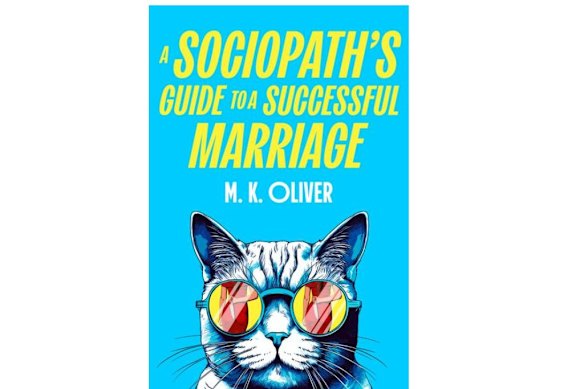
A Sociopath’s Guide to a Successful Marriage
M. K. Oliver
Hemlock Press, $32.99
Carnivorous courtesy among the British upper middle-class? Common as mustard. Rarer to find a total sociopath lurking behind the mask. Lalla Rook, however, is just that – an upwardly mobile wife and mother who’ll kill without compunction to achieve her dream of the perfect life. To Lalla, that means another baby and admission to the poshest private school available for her six-year-old daughter. And she aspires to kick two capitalist goals, fast-tracking her husband’s career in finance, then using the dosh to move house from her Edwardian villa in Muswell Hill to a Hampstead address of greater prestige and exclusivity. A Sociopath’s Guide to a Successful Marriage opens with Lalla having stabbed a man to death in her home. She keeps up appearances – even hosting a children’s party in the aftermath – while plotting to eliminate evidence and dispose of the body. Will all go according to plan? M.K. Oliver’s black comic crime doesn’t exactly cover fresh ground: the suburban mother as psycho-killer has been around at least since the John Waters film Serial Mom (memorably starring Kathleen Turner), but this take has a delicious, cynical gleam that’ll leave readers smirking. It has been optioned already for a TV series.
How to Kill a Guy in Ten Dates
Shailee Thomson
Atria Books, $34.99
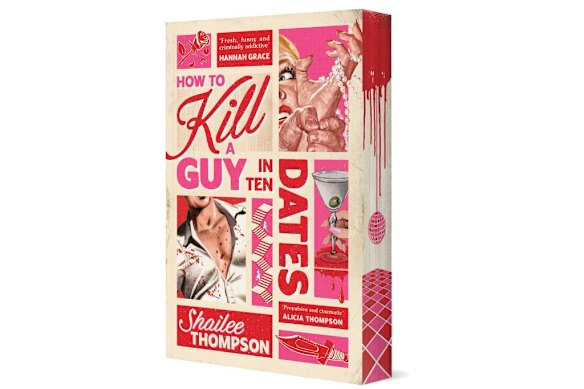
Fans of romance and slasher horror should make a beeline for Shailee Thomson’s How to Kill a Guy in Ten Dates. It takes place at a speed-dating event. Film buff Jamie Prescott is nervous and a little jaded and frankly, her expectations are low. They’re not so low that she anticipates one of her dates winding up dead, his throat slashed after a sudden blackout. Being in a live-action version of a Scream movie wasn’t part of the deal. Faced with a room full of romantic hopefuls, including a deranged killer and many potential victims, Jamie must survive, armed with whatever is to hand, using her extensive knowledge of the horror genre to avoid making rookie slasher errors. Distracting her are hot guys, more than she would’ve imagined. Keeping her focused? One of them might be the killer. Lethal stabfest. Hot guys. LETHAL STABFEST. As the body count climbs, it’s plain the murderer might be a suitor driven by obsessive desire. Thomson’s genre mash-up is overlong but given its pop-cultural passions and its attunement to the anxieties of contemporary dating, I don’t think readers will care.
How to Commit a Postcolonial Murder
Nina McConigley
Fleet, $32.99
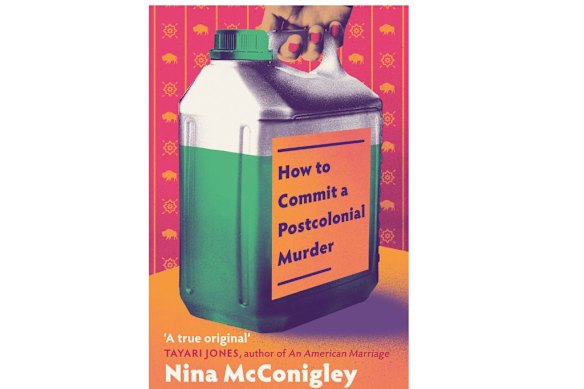
Murder acts as a unifying principle in this unusual novel. Sisters Georgie Ayyar and Agatha Krishna are growing up in Wyoming in the 1980s, and they haven’t hit puberty when Vinny Uncle and his family arrive from India to live with them. They will kill their uncle, Georgie admits from the outset, and Agatha is happy to “blame the British”. Why the children commit the crime – and how they plan to get away with it – are the questions that linger. Nina McConigley writes a fragmentary narrative, braiding episodes of dissociation with iconic cultural memories from the era alongside children’s games and media aimed at tweens. This presses a bunch of ’80s nostalgia buttons and serves as compelling and convincing way to dramatise the effects of childhood trauma. It also leaves plenty of room for unreliable narration that keeps the reader guessing about truths behind what we’re being told. Vivid and accessible storytelling belies the subtleties – of social and historical power relations, as well as of character and the psychological complexity of shared trauma and sisterhood – McConigley manages to coax from it.
How to Lose a Goblin in Ten Days
Jessie Sylva
Orbit, $24.99
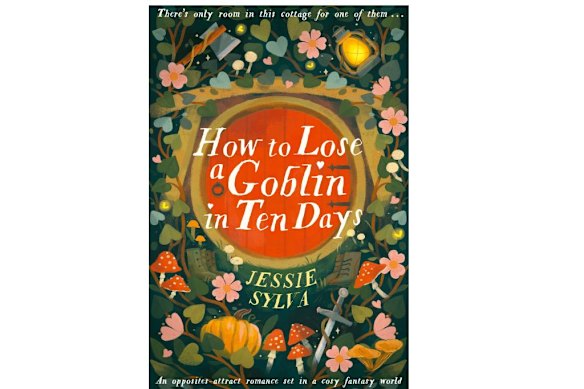
And the prize for the oddest “How to” fiction title this month goes to How to Lose a Goblin in Ten Days. Look, this one is a romcom aimed at fantasy nerds. If you don’t know what a halfling is, read no further. For genre enthusiasts, though, Jessie Sylva’s novel is super cute fantasy-race-crossed romance, with halfling Pansy and goblin Ren cohabiting in unlikely circumstances. When the two diminutive characters inherit the same woodland cottage, neither will budge from asserting their right to live there. Whoever leaves first will forfeit their claim, and a comic cultural clash awaits the odd couple as they drive each other up cottage walls, trying to stick it out. Inevitably, they fall in love, and when a (much taller) menace appears, threatening their new home and their respective communities, Pansy and Ren must band together to drive it out. It’s a fun, if a bit one-noted, fantasy romcom that should appeal to the Dungeons & Dragons crowd and other fantasy geeks – a generation ago that would’ve been a very niche market - nowadays, it’s rather mainstream.
Capitalists Must Starve
Park Seolyeon
Tilted Axis Press, $29.99
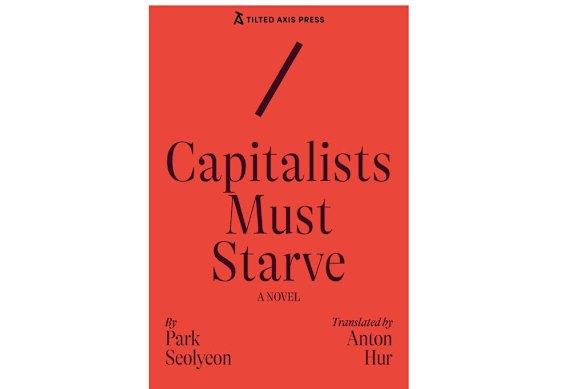
This historical novel from Park Seolyeon (A Magical Girl Retires) takes on the short life of revolutionary Kang Juryong, a heroine of the Korean labour movement in the first half of the 20th century. Juryong is promised to 15-year-old Choi Jeonbin in an arranged marriage when she is only 20 herself. After her husband joins the revolution against the Japanese occupation of Korea, she travels with him to Manchuria, where she is chosen for a secret mission to smuggle arms to the Liberation Army. Jealous of her zeal and success in the movement, Jeonbin sends his wife home (where he thinks she belongs) but after her husband’s untimely death, Juryong’s transformation into a revolutionary becomes complete. She joins workers in the satanic mills and factories of Korea’s emerging industrial sector, organises a notable protest and lends her support to the rebellion. Bold and spare and atmospheric, there’s an understated epical quality to Capitalists Must Starve that would make it a strong contender for cinematic adaptation.
NON-FICTION PICK OF THE WEEK

Oggetti
Bruno Leti
Readings, $39.99
The catchcry of the early phenomenologists – among other things, a philosophical attempt at finding transcendent meaning in the concrete – was “back to the things themselves”. It could also be the catchcry of Bruno Leti’s homage to Giorgio Morandi (1890-1964), who painted simple, everyday objects (oggetti) that highlight the extraordinary in the ordinary. In response to the master, Leti has put together a collection of photographs and paintings in the style of Morandi, and the result is a beguilingly simple, but intriguing exploration of “ordinariness” that often invests everyday objects with the luminosity that characterised the master’s work. Subjects range from a plain green Murano bottle, a sea urchin and the artist’s favourite spatula to the cricket ball used in the 1982 Writers versus Artists match at which captain Fred Williams announced that he was dying (I played in the match the following year). And they’re all beautifully reproduced in this hardback volume, which is something of an objet d’art in itself.
The Kids’ Guide to Speaking Your Mind
Dr Matt Agnew
Allen & Unwin, $26.99
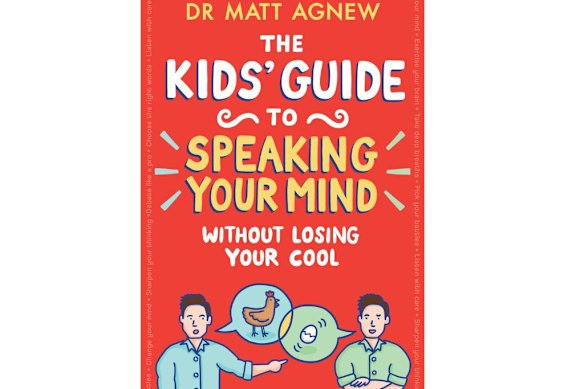
In many ways, Agnew (astrophysicist, AI expert and media “edutainer”) has written a timely lesson on tolerance. It may be directed at “kids” – teenagers, mostly – but it has contemporary resonance for the so-called “adult” world. His goal is to instruct young people in the elusive art of having a discussion/argument without losing their cool. And key to this, via an examination of nature and nurture, is recognising that people are, yes, different, with all sorts of different views. Everyone is convinced they’re “right”. This, of course, has always been the case, but what has radically changed things is the advent of the internet and social media, especially in spreading polarising or extreme points of view. Not to mention misinformation and nonsense. In the days of the Hyde Park Corner orator, only a few people heard. Today, the possibility of coming up against views we feel strongly about (emotionally and intellectually) has skyrocketed. All the more reason for the much-needed class in clear-thinking and scientific method that follows. But, in this fitting handbook for our times, he never speaks down to his class.
Hated By All the Right People
Jason Zengerle
Scribe, $36.99

Thankfully, right-wing-cum-far right political commentator Tucker Carlson is not the household name in Australia that he is in the US. All the same, this study – in which Carlson is emblematic of the deeply disturbing state of contemporary American politics – creates a portrait of what you might call an interesting case, especially in regard to Carlson’s on again/off again relationship over the years with Donald Trump, whom he nicknamed the “Big Orange”. In many ways Zengerle, a politics writer for the New York Times Magazine, who knew and respected Carlson in his early days, has written something of a lament for a once talented journalist who – via a string of cabal news TV programs (he was sacked by Fox in mysterious circumstances) – became the voice of MAGA and adopted what Zengerle calls “noxious” views along way. He is, for example, a big supporter of Viktor Orban’s authoritarian regime in Hungary, complimenting the president at a dinner in Budapest that he was “hated by all the right people” . The implication being that Carlson himself enjoys that privilege. A biographical dissection of Carlson’s progress, as well as an adept examination of what Zengerle calls “the unravelling of the conservative mind” that has clear relevance here.
How Will I Ever Get Through This?
Dr Lucy Hone
Allen & Unwin, $34.99
When Dr Lucy Hone outlines ways of overcoming grief, she’s not just drawing on her professional expertise, but on what she learnt from her own struggle with deep, personal tragedy. Her guide, built on her popular TED talks, to navigating your way through a BFT (Bloody F*cking Thing), comes in two parts. First, questions that people ask her, the most common being the eponymous one, and questions she asks them – about knowing their strengths and who their 3am person is. Yes, it’s a thing. But, although she may be dealing with those dark nights of the soul and the grief that comes to everyone, when (to quote Scott Fitzgerald) it is always three o’clock in the morning, her message is decidedly upbeat, always emphasising that we are far more resilient (a key word) than we know. Plain speaking and full of down-to-earth strategies for overcoming, say, exhaustion – and getting through the BFT.
Wisdom Takes Work
Ryan Holiday
Profile Books, $34.99
When Hercules famously stood at the crossroads, he faced the offerings of two goddesses – the life of indulgence, or virtue (courage, justice, temperance and wisdom). He chose the latter, and Ryan Holiday’s study (the fourth in the series) looks in some detail at just what the whole Stoic notion of wisdom entails. He readily concedes that it’s the most elusive of virtues, one that, ultimately, can only be “approached”. But although he’s dealing with lofty themes, the writing – examining varying shades of wisdom – contains a fair swag of pithy, often cliched maxims, such as “We can get wiser … but never get wise … wisdom is not comfortable” . There’s no doubting his enthusiasm, and to his credit he does, as the title says, emphasise the role of hard work involved in this somewhat daunting enterprise. But this is popular philosophy with a happy-clappy ring.
The Booklist is a weekly newsletter for book lovers from Jason Steger. Get it delivered every Friday.