2 months ago
43
2 months ago
43
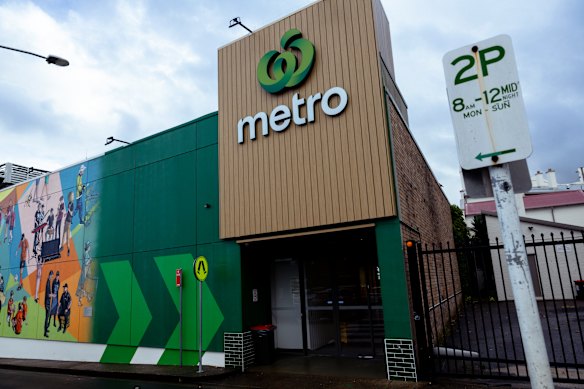
There was more than just outrage when, in 2023, residents of inner Sydney’s Alexandria realised Woolworths was planning to turn their suburban supermarket into a “grab and go” Metro outlet.
It was a clear signal of the trend that has been splitting Sydney and Melbourne in two, changing the way Australians on each side of the border shop for essentials, and crucially, how much it costs them.
The Alexandria site doesn’t look like many Metro stores: it is big, squat and monotone, sitting like so many other full-service Woolworths stores within a complex that also houses a chemist and a Dan Murphy’s in a largely residential area.
So it was no surprise when leaders of the Alexandria Resident Action Group hit the newspapers and the airwaves to protest. Politicians got involved: Lord Mayor Clover Moore wrote to the then-chief executive of Woolworths, Brad Banducci, urging him to reconsider. Woolworths offered up its then-head of Metro stores, Justin Nolan, at a town hall to assuage unhappy locals.
“Yes, we didn’t tell you about why we were doing this, and I absolutely acknowledge that and apologise for that,” Nolan told a room of angry residents in September 2023.
The confrontation could have happened almost anywhere in the country. Australians are obsessed with their local supermarkets, with proximity and variety sometimes enough to dictate decisions as significant as where they look to buy the family home.
After all, it’s estimated we spend more than $150 billion a year on groceries, as well as countless hours walking the aisles, contemplating dinner menus for everything from school night meals to family Christmas feasts.
The confrontation in Alexandria that night, during which locals queued up one by one before the microphone to berate Nolan, mattered little. In the end, Woolworths pushed ahead with its original proposal: the supermarket became a Metro.
The Alexandria Woolworths, as with many more of the brand’s locations, now looks quite different to the traditional suburban supermarket: as with Coles, in-store butchers and seafood counters have largely been phased out, instead offering packaged meats and increasingly, prepared meals that can be easily reheated. Prices, in general, are higher.
But more than two years on, residents in Alexandria have learnt to live with the change.
Vanessa Knight, who convened the community group against Woolworths in 2023 but still does her top up shopping at the Metro, is resigned to its presence. “That’s a corporate decision they’ve made … Do I agree with it? Not necessarily,” she says.
“They locate themselves in areas where there’s not much competition and there’s a higher disposable income.”
Knight has a point.
Over the past decade, these smaller format inner-city stores have swelled to nearly 140 Woolworths Metro and Coles Local stores across the nation. Their number has more than quadrupled from seven years ago, when Woolworths had about 30 and Coles had none.
Guiding the trend is a stark geographical line. As the two dominant supermarkets continue expanding across the country, and as the multibillion-dollar ASX-listed companies feel the competitive pressure to squeeze more out of their customers, a clear pattern has emerged.
Higher incomes and property prices around a store are key indicator of whether it will be full service or smaller, according to historical and current store data compiled by this masthead that maps each supermarket’s strategy in Sydney and Melbourne. And that is undermining a key expectation Australians have come to have of the supermarket duopoly: that people pay about the same for their groceries regardless of postcode.
Going Local
In 2018, Woolworths Metro stores were overwhelmingly located in inner-city neighbourhoods, where real estate is at a premium and more shoppers are likely to be buying fewer items more frequently.
At the time, the Metro branding strategy was new and its future unclear, after the final outpost of Woolworths’ short-lived Thomas Dux premium grocer experiment shut in 2017.
However, by 2026, the list of Metro stores had exploded.
As more of these stores sprouted across Australian cities, a “Woolworths Metro line” has emerged. In Sydney, the line runs from Parramatta’s south-east to Maroubra as new stores opened, were converted, or acquired from independent grocers.
The Metro line is most evident in Sydney’s inner city, inner west, eastern suburbs and north shore. While it tapers off in the northern beaches, wealthy postcodes such as Mosman and Avalon have hosted Metro supermarkets since 2018.
In Melbourne, a Woolworths Metro line has emerged from Ascot Vale north-west of the CBD, running to south-east suburbs such as St Kilda and Caulfield South.
Metro stores are dotted throughout Melbourne’s inner-city districts, including sought-after postcodes like Brunswick North and Clifton Hill.
Melbourne’s west has been largely spared Woolworths Metro stores, with the exception of a store opened in Yarraville and a standard supermarket in Williamstown that was converted in 2018. The Metro line tapers off past Hawthorn, with only traditional Woolworths supermarkets north and west of the suburb, as the demographics quickly turn to be dominated by lower average incomes, higher levels of socioeconomic disadvantage, and higher levels of new migrants.
Coles Local, which first launched in Melbourne’s eastern suburb of Surrey Hills in 2018, years after Woolworths, follows similar yet starker geographic trends.
Today, Coles Local in Melbourne remains largely a phenomenon of the eastern suburbs, after typical supermarkets in St Kilda, Glenferrie Road Hawthorn, and Camberwell were among those converted; so too have standard Coles stores in inner-city suburbs of Fitzroy and South Melbourne.
In contrast to Woolworths, no CBD stores in Melbourne are branded Locals.
At the end of last month, Coles opened a new Local store in Glen Iris, in the same location that previously housed independent grocer Leo’s Fine Food, which specialised in gourmet offerings.
It represented the effective enveloping of yet another independent brand at the hands of the Coles and Woolworths duopoly, which has also vanquished brands including Bi-Lo and Franklins.
With less competition from smaller players, the differences between individual Woolworths and Coles stores has become more noticeable.
Coles opened its first Sydney Local store in 2020 after the store in the affluent Rose Bay – home to waterfront residences, a seaplane airstrip, and the exclusive Catalina restaurant where Rupert Murdoch is known to dine when in town – was converted. The company has since expanded to a similar, yet smaller, footprint across Sydney when compared with Woolworths’ Metro line.
Standard, full-offering Coles premises in Manly, Avalon, Chatswood, North Sydney, Birkenhead Point, Pagewood, Earlwood and Concord have all been converted to Local branches, with a Coles Local on York Street in the CBD the only example of a new store opened.
To former competition and consumer watchdog chair Allan Fels, the expansion of Local and Metro stores serves as a defensive tactic.
“There is a consumer demand for the smaller, faster outlets of the sort they have,” Fels says. “If they weren’t in that field, the competition would nibble at the edge of their main business, and also open the door for a new competitor to get in and do that and, ultimately, one day, set up big supermarkets.”
Growing their store footprint in population-dense suburbs means enhancing market share and buying power, Fels adds. “Why not grab parts of it for themselves? That will deter new entry.”
Local v Metro: Not the same
The smaller store rollout hasn’t always been an immediate success. In one notable incident, Woolworths opened a Metro outpost directly underneath its full-sized Double Bay supermarket in 2019, called “The Kitchen”, with shoppers seemingly opting to ride the escalators one level up to avoid the more expensive prices charged at street level. That store has since shut and the ground floor space has been repurposed.
Meanwhile, Coles’ smaller-format store has undergone several iterations: “Coles Express” debuted across more than 150 Shell petrol stations in 2003, which forced the supermarket to rebrand existing CBD stores to Coles Central. Then, when it introduced Coles Local in 2018, the chain began retiring the Coles Central banner to avoid confusion.
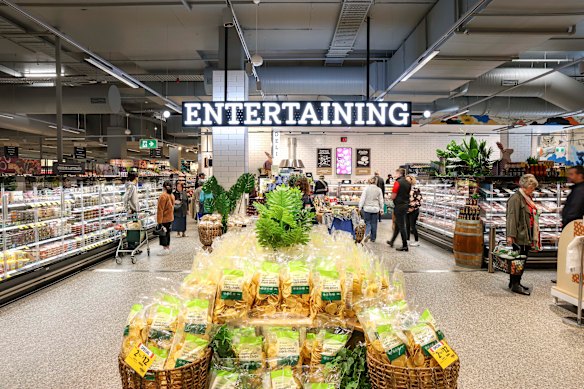
A Woolworths Metro, which is about a quarter (600 square metres) the size of a typical supermarket (2500 square metres), stocks less than half the number of products (about 10,000 compared with 28,000). Designed for the midweek top-up rather than the full weekly shop, it sells more items by the unit, which means fewer opportunities to make savings by buying in bulk.
There is a price premium: Woolworths Metro groceries often carry a mark-up of between 5 and 15 per cent, but differ between stores as each can set its own prices. A comparison shop conducted by this masthead for a beef stroganoff recipe that serves four found shopping at a Coles Local will cost nearly $20 more.
Retail consultant Trent Rigby – who has previously worked at Coles – suspects private-label products are the first to go. “So even where the shelf price matches, you might not find the Woolworths own-brand option. You’re stuck paying more for branded,” he says.
Metro stores are often benchmarked against convenience stores, not other supermarkets. If you live in Sydney’s Alexandria, your closest grocery stores are Metro stores in Alexandria, Park Sydney Village, and IGA Alexandria. The closest full-sized supermarket is just over two kilometres away. “That’s not really a convenience offering,” says Rigby. “It’s the only option.”
Woolworths declined to provide a list of Metro supermarkets or stores that had been converted. This masthead compiled data by scraping store lists from website archives, as well as records from Retail and Fast Food Workers Union branches. Historical data was mapped alongside each company’s current store network.
Despite being rivals, Coles and Woolworths have diverging strategies to their smaller-format inner-city stores.
Woolworths has pitched Metro as an alternative to a convenience store in densely populated locales like train stations, stocked with food that can be eaten on the run.
“Ready meals, microwave meals, things that can be turned around on the spot, fresh juice, coffee machines, they’ve played around with all those formats,” says grocery industry consultant and Ranged executive director Mark Roestenburg, who was part of the founding team of Coles Local.
Gemma Koo, the head of Coles Local, says her stores are not trying to be everything to everyone. “You have to tailor your smaller store to the culture, the rhythm of the neighbourhood,” Koo says.
She denies that Coles Local stores were designed to be more expensive than typical supermarkets.
“Coles Local is about personalisation of offer, not premiumisation,” Koo says. “It doesn’t mean we’re bringing in more expensive things, it means that we’re bringing in something that’s important to that community.”
For instance, popular local bakeries might be brought in as suppliers, or areas with stronger Asian or Mediterranean demographics will see a wider range of those products, she says.
It’s true that there is no price mark-up at a Coles Local, but its focus on pricey offerings – things like mochi, macarons and mini gelato bars – means that the cost of shopping there skews higher. And this masthead’s stroganoff comparison shop showed Local stores sometimes do not stock the most affordable budget option for common products.
Value for customers includes solving their problems, Koo says, pointing to a greater range of convenient meal offerings.
“We definitely don’t intentionally remove budget options. Actually, we review our ranges extremely regularly to ensure key brands, especially value brands like [Coles] Simply are well represented,” says Koo.
A Woolworths spokesman says the company operates its Metro stores in convenient locations to cater to customers buying snacks and meals or a few items on the way home.
“Metro branded stores are individually designed to meet customer needs, and have a locally tailored range of products that is continually updated based on local community feedback,” the spokesman says. He says the stores also have trading times tailored to their local areas, and are used to trial new products.
“This means there can be variations within the Metro store network,” he says.
Smaller, faster, better, stronger
Planting smaller stores in dense residential areas also serves another purpose: faster delivery. Online orders now make up 13 per cent of Coles’ sales and nearly 17 per cent of Woolworths’. Assets from the failed rapid grocery delivery start-up Milkrun have been absorbed by Woolworths, propelling the delivery of more than 40 per cent of orders within two hours.
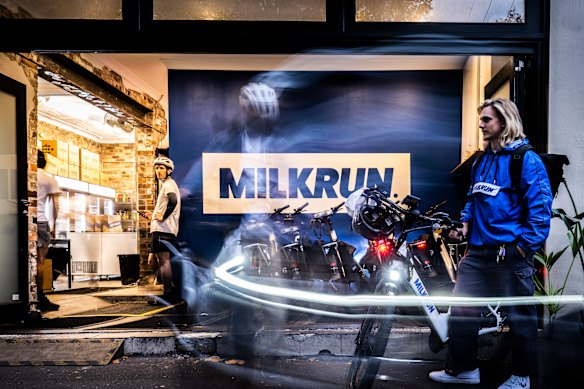
“If Woolies is delivering from a Woolies Metro to the apartment above, that’s a lot easier,” says grocery consultant Roestenburg. “Those distribution points set them up really well for e-commerce … Where this fight will be fought in the next three years is in the under-two-hour delivery.”
Competitors are watching the growth of Metro and Local closely. Australia’s supermarket “oligopoly” shifting to smaller grocery stores puts it in greater competition with players like IGA. “A local strategy is often copying the local IGA,” says IGA parent company Metcash executive general manager of merchandise Estella Young.
“The reality is that a supermarket chain naming a branch of stores ‘Local’ says that what IGA does really well, and what makes it special, is worth trying to compete with, right? Because ‘local’ is kind of our thing,” she says.
But the economics of running a Metro or Local store is harder due to higher leasing and operating costs, which is what Woolworths blames for higher prices.
“It’s hard to make a small-format store successful,” says MST Marquee consumer analyst Craig Woolford. “It’s harder to get the staffing and the sales ratio right. The success is really sensitive to the sales outcome; typically a shopper has other alternatives.”
By the end of the year, Coles will have 39 Local stores, and has plans to open South Australia’s first Local store by the end of the year. Last Friday, it opened a new Local store in Melbourne’s affluent suburb of Glen Iris, which includes a liquor aisle.
Grocery consultant Roestenburg expects the supermarket to grow the fleet of Local stores, or convert existing supermarkets.
“The whole reason Coles Local came about is because Coles bought the [Surrey Hills, Victoria] site and then realised that it was probably wrong for a full-size store,” he says.
“When they get to these refurb stores, they’ll be looking at them and going, actually, if Coles Local existed when the store first launched, it would have been a Local.”
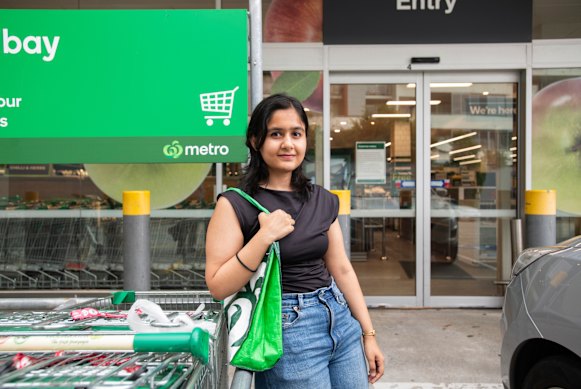
Back at Woolies Metro Alexandria on a recent Thursday night is Medha Setia, who is contemplating how the price of baked goods at the shop is noticeably higher.
The 20-year-old international student has lived in the suburb for two-and-a-half years, and while she has noticed prices are more expensive than at a full-line supermarket, she believes the Alexandria Metro is cheaper than the prices at the Woolworths Metro Park Sydney not far away, and as such, finds the Metro branding confusing.
“I don’t really get why this is a Metro – it’s quite big and it doesn’t have a cafe built in like the others do,” Setia says.
But, like so many others, she still shops there.
The Business Briefing newsletter delivers major stories, exclusive coverage and expert opinion. Sign up to get it every weekday morning.