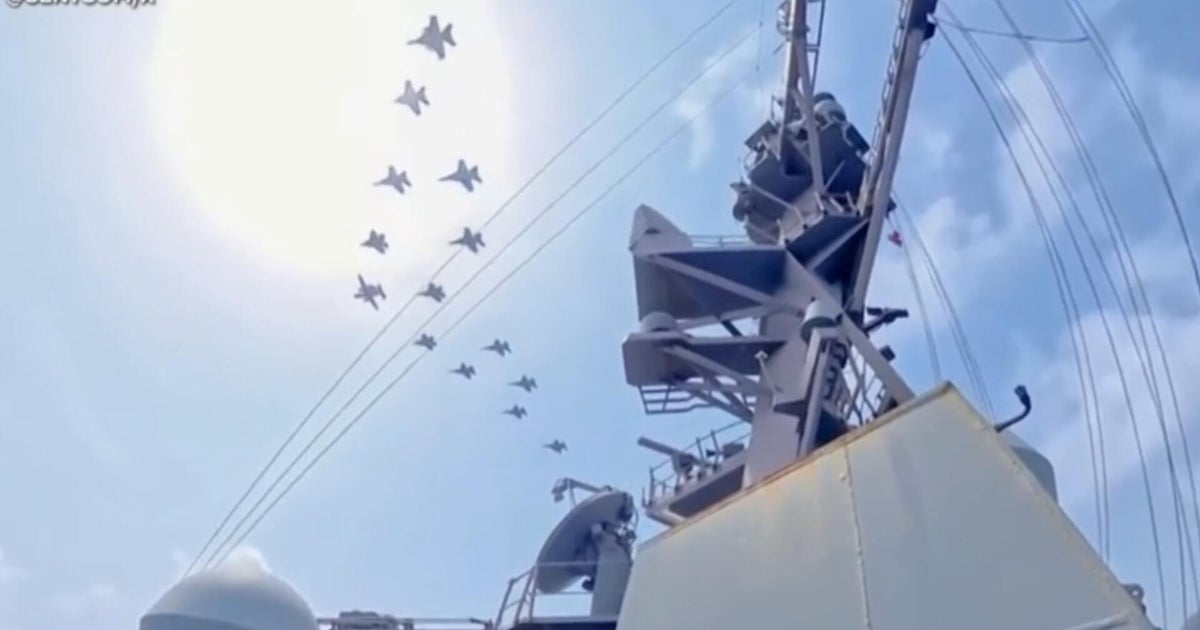
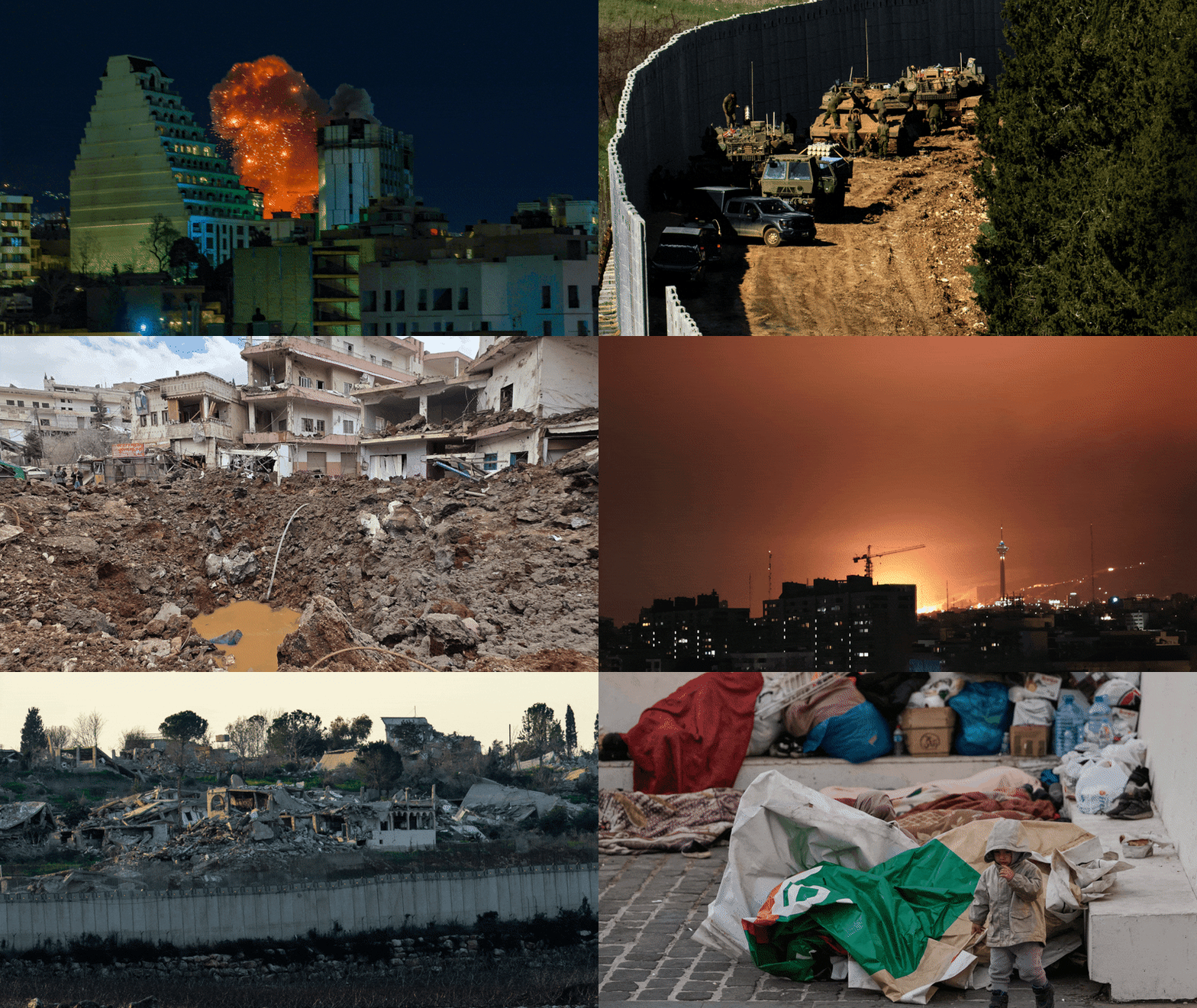
As the war enters its third week, U.S. military officials say 6,000 Iranian military targets have been struck, including ballistic missile sites and air defense systems and that Iran's navy has been rendered, quote, combat ineffective.
Yet Iran continues to maintain its stranglehold over a tiny elbow of water called the Strait of Hormuz.
It is the only route connecting oil rich countries in the Persian Gulf to the rest of the world, a crucial 21 mile wide waterway for a fifth of the world's oil.
Normally, 130 commercial ships pass through it every day.
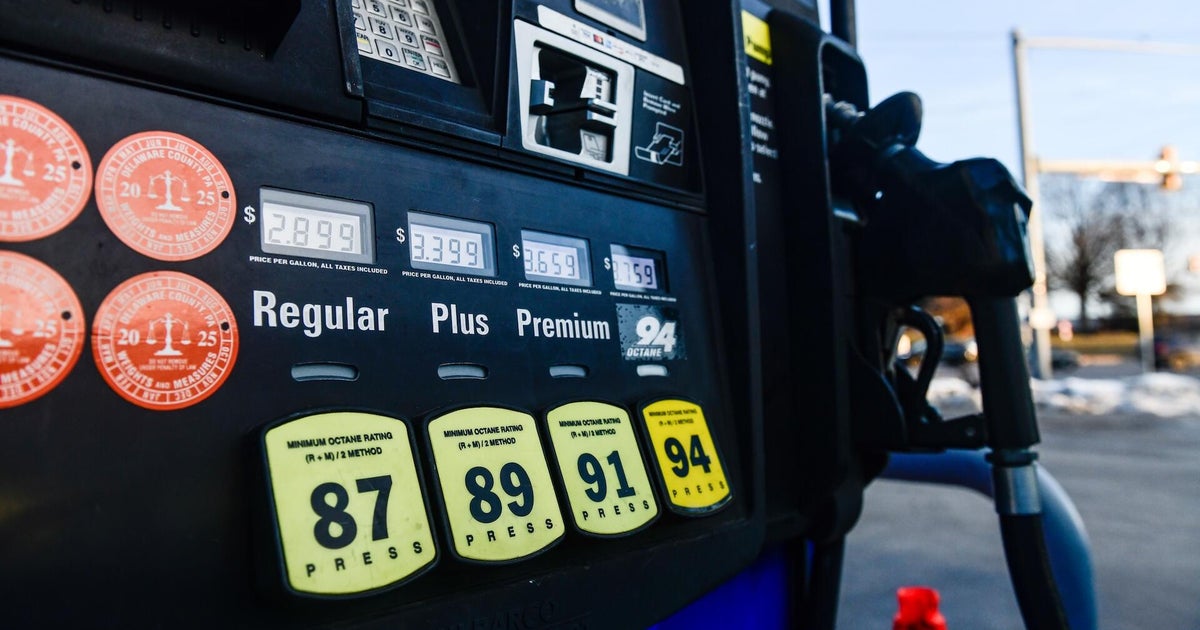
But on Feb. 28, when Israeli and American jets began dropping bombs on Iran, and Iran retaliated, those ships ground to a halt, spiking American gas prices. It is an unprecedented closure of one of the world's most vital choke points.
And that is where we begin tonight, the Strait of Hormuz, where an estimated 20,000 crew members are stranded and under attack.
This was the scene this past Wednesday in the strait.
A Thai cargo ship was struck by a projectile from Iran, setting the ship on fire, and trapping members of the crew.
It is one of the few ships that has attempted to cross since the start of the war.
Most others have been at a standstill in the waters surrounding the strait, with the constant sound of drones, and scenes like this all around.
Cecilia Vega: At what point did you look at the situation out there and say, "It's too dangerous. These ships should not sail through this strait"?
Silke Lehmköster: That was very early and very quickly Iran already said that they would attack any vessel that is passing through the Strait of Hormuz. And this was the moment when we called off.
From her operations center in Hamburg, Germany, Capt. Silke Lehmköster oversees a 300 vessel fleet for the German shipping giant Hapag-Lloyd.
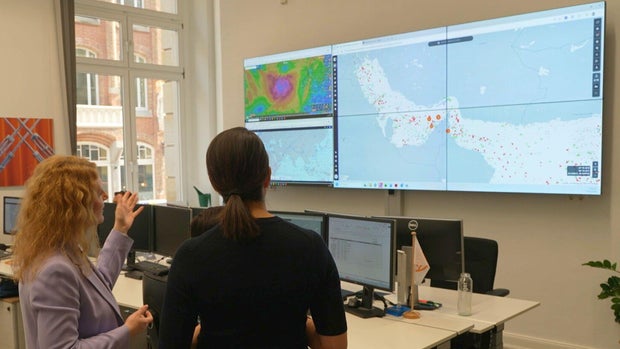 Capt. Silke Lehmköster and Cecilia Vega
60 Minutes
Capt. Silke Lehmköster and Cecilia Vega
60 Minutes
Cecilia Vega: So hundreds if not thousands of ships sitting-- hovering outside the Strait of Hormuz right now.
Silke Lehmköster: Yes. And they're all waiting basically to go inside, to go around the corner.
Cecilia Vega: It's at a complete standstill.
Silke Lehmköster: Yeah, this is a standstill.
Six of her cargo ships carrying furniture, electronics, clothing — anything you might have in your home — were headed toward the strait as the war broke out.
This is the message they heard from Iran's Revolutionary Guard, broadcast over their ship radios: "From now on, all navigating through the Strait of Hormuz is forbidden."
Cecilia Vega: So you heard this message from Iran and took that seriously.
Silke Lehmköster: Yes.
Capt. Lehmköster ordered her crew not to proceed. Today, 150 men sit trapped as the war rages around them.
Cecilia Vega: What were they seeing out there?
Silke Lehmköster: Drones flying by. Of course, they also saw explosions, um--close to the port, a lot of smoke.
Cecilia Vega: They saw explosions close to the port.
Silke Lehmköster: Yes.
Cecilia Vega: That must have been terrifying for them.
Silke Lehmköster: It was.
And they are not alone. Roughly 700 ships are currently sitting in the Persian Gulf, including 400 oil tankers holding 200 million barrels of oil. That's enough to fuel Japan for two months.
This is Capt. Lehmköster's view of the war now: day and night she and her team keep watch — those orange dots are their ships.
The men on board have been ordered to stay below deck as much as possible.
Cecilia Vega: How often are you able to have communications with the crews out there?
Silke Lehmköster: Sometimes the communication is difficult because-- satellite phone is-- interfered as well. But we are in constant communication with our crew.
 Capt. Lehmköster
60 Minutes
Capt. Lehmköster
60 Minutes
Her biggest fear: what's happened to many other ships, like these two oil tankers off the coast of Iraq struck by Iranian explosives and set ablaze in the Persian Gulf.
One was American owned.
Crews had to be rescued by boat. The next day, scorched vessels were seen drifting in the water
Since the war started, there have been 16 confirmed attacks on ships in and around the Persian Gulf. Iran has claimed responsibility for several of them. At least eight crew members have been killed.
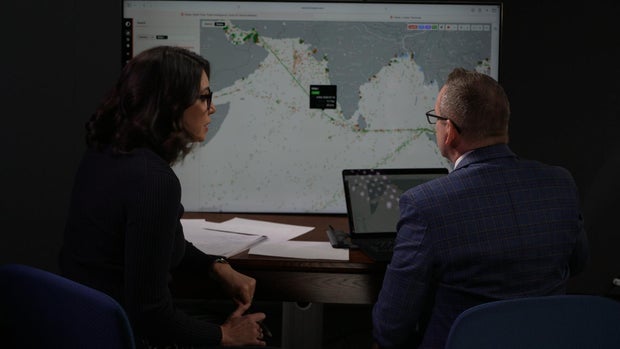
Matt Smith monitors ship activity in the strait as an oil market analyst for Kpler, which tracks global trade and shipping. He made this timelapse showing how quickly ship traffic moved around the bend of the strait in the days before the war.
Matt Smith: So on a normal day you see about 100 or so ships that pass through there. When the bombing started with Iran we saw it drop to about 70. On the Sunday we saw it drop-- into the teens, and then since then it's just one or two tankers that are passing through there every day.
All those red and green arrows represent oil tankers that haven't moved for the past two weeks.
Cecilia Vega: Fair to say this is a very expensive parking lot?
Matt Smith: It is a very, very expensive parking lot. That's right.
The few ships that have moved are mostly from one country: Iran
Matt Smith: And you can see that Hilda's loaded with Iranian crude.
Cecilia Vega: Hilda is an Iranian vessel?
Matt Smith: Yes, an Iranian tanker--
Cecilia Vega: Loaded with Iranian crude.
Matt Smith: Two million barrels. And with all of that Iranian stuff is-- typically heading to China.
Cecilia Vega: That oil is going to China?
Matt Smith: Yeah.
 Cecilia Vega and Matt Smith
60 Minutes
Cecilia Vega and Matt Smith
60 Minutes
And this past week, Smith and his team made a surprising discovery: that Iran has exported, daily, 100,000 more barrels of oil than it did before the war, most of it going to China. Smith says nine Iranian oil tankers have traveled through the Strait of Hormuz by turning off transponders that reveal locations.
Thursday on Iran state TV, the first public statement from the country's new supreme leader was read - saying, quote: "The leverage of blocking the Strait of Hormuz must continue"
Cecilia Vega: Choke point---a fair description?
Bob McNally: "Choke point" understates it. This is the mother of all choke points. Imagine your heart has one artery taking that lifeblood to the rest of your body. And that is what the Strait of Hormuz is.
Bob McNally was an energy adviser to President George W. Bush during the Iraq war who now advises clients on oil and gas markets. Last year, he made a prediction:
Cecilia Vega: You saw this coming?
Bob McNally: Absolutely. My team and I wrote a m-- big report. And-- we're not surprised that, if unmolested, Iran would be able to make Hormuz unsafe for that lifeblood to flow. We're not surprised at all.
Cecilia Vega: Would you have advised President Bush to go through with these strikes?
Bob McNally: Yes. I believe– um that what President Trump is doing in terms of defanging the Iranian regime is principled, courageous, and correct. Totally support the goal. If I were advising him on how to achieve the goal, I would emphasize the need to manage the oil and gas market implications. And that means making sure from day one we are attacking Iran's ability to do what it has done for some 12 days now, and may apparently do for an entire month.
Cecilia Vega: Did they do that?
Bob McNally: I don't know.
Cecilia Vega: Do you have concerns based on what you've seen so far?
Bob McNally: Yes.
In the United States, gas prices have increased by more than 65 cents per gallon since the war began, the fastest weekly spike in 10 years.
Bob McNally: The all-time high for the most consumers have ever paid for gasoline was in the summer of 2022, after Russia invaded Ukraine. It was a $5 per gallon average. Um if we don't open up Hormuz soon, I can see us making new records.
Cecilia Vega: We could be looking at the highest gas prices ever paid in this country?
Bob McNally: If we don't open Hormuz to the free flow of traffic, yes.
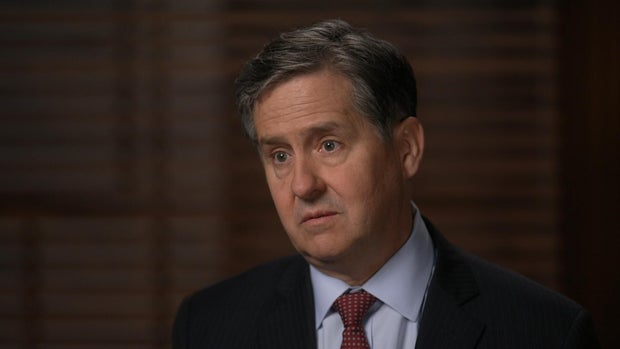 Bob McNally
60 Minutes
Bob McNally
60 Minutes
It's not just gas prices. The cost of jet and diesel fuel has risen 25% and, as a result, higher plane tickets and grocery prices are expected to follow.
Bob McNally: The gasoline we pay for at the pump, the price of that gasoline is set in a global oil market a supply disruption anywhere leads to a price spike for consumers everywhere, including here.
Cecilia Vega: We're seeing this trickle down effect?
Bob McNally: We are. So when that mom in Des Moines goes to the store to buy food for her family, that food-- was grown with and transported by oil. And, as those producers and growers of food react to and absorb these price increases, they'll be passed along to the consumer, to that mom in the store.
Cecilia Vega: So what's happening at the Strait of Hormuz today affects the entire supply chain?
Bob McNally: It does.
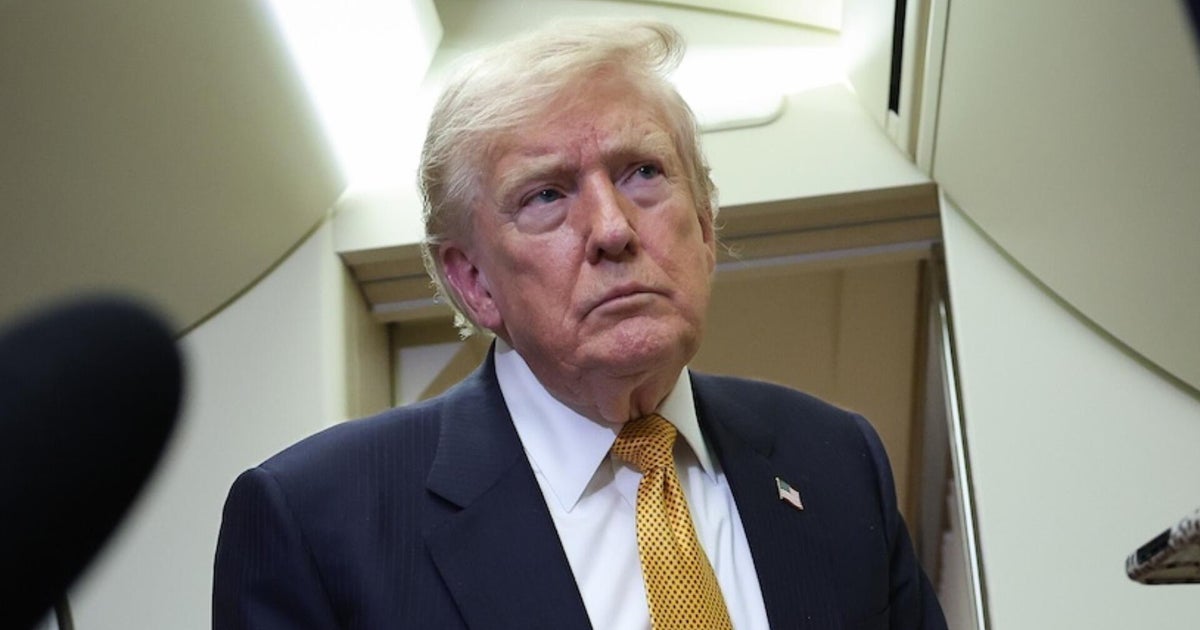
President Trump: "The straits are in great shape. We've knocked out all of their boats. They have some missiles, but not very many. I think we're in very good-- we're in very good shape."
Despite President Trump's assurances this past Wednesday - the reality is most ships remain too wary to cross.
In recent days, U.S. Central Command took out 30 so-called "mine layers," boats believed to be used by Iran to deploy mines in the shipping lanes of the strait.
The president said the U.S. would help cover the cost of risk insurance as a way to reassure nervous ship owners, and suggested the U.S. Navy could offer escorts for protection, though it is unclear when that will happen as the Navy is currently busy fighting the war.
Captain Lehmköster is still not letting her ships move through the strait.
Cecilia Vega: Would more insurance help?
Silke Lehmköster: You cannot insure the life of a seafarer. So more insurance would not necessarily help. We'd rather have the escorts.
Cecilia Vega: Has a U.S. Navy escort been offered?
Silke Lehmköster: No.
To move more oil onto the global market, this past week, the Trump administration announced it will temporarily lift sanctions on Russian oil that had been meant to punish Moscow after its invasion of Ukraine.
Thirty two countries, including the U.S., also plan to release 400 million barrels of oil from the strategic reserves, the world's emergency supply — a process expected to take at least three months.
Bob McNally: I've worked in the White House during an energy crisis. There are no policy solutions to a prolonged closure of the Strait of Hormuz.
Cecilia Vega: You're saying there's not much a White House, a president, can do to stop this--
Bob McNally: No.
Cecilia Vega: --bleeding?
Bob McNally: You open up the toolkit, and the tools in there, the options range from marginal, through symbolic, to deeply unwise. Escorts are a sideshow, strategic stock releases are a sideshow.
Cecilia Vega: Gas tax holiday?
Bob McNally: Gas tax holiday, sideshow. You gotta restore the flow of the Strait of Hormuz.
Cecilia Vega: Even if the White House, President Trump, declared an end of this war today tomorrow, is there any guarantee that Iran would open up the strait and it's back to business as usual?
Bob McNally: No guarantee. It's not like there's a big gate that swings open in front of the Hormuz and Iran locks the gate. So all Iran has to do is demonstrate every day, every other day that it has the means and the ability to-- th-- attack ships in the strait, and that will be enough.
And those attacks continue, including on this ship Thursday. Remember the orange dots Captain Lehmköster was monitoring in the operations center back in Hamburg? Two days after our interview, one of her six cargo ships stuck in the Persian Gulf was struck off a port near Dubai.
The ship caught fire. No crewmembers were injured.
Cecilia Vega: What needs to happen in order for you to get on the radio to your crews and say, "Go. It's safe"?
Silke Lehmköster: We would need really-- an end of this escalation-- so that there are no drones, no missiles, no whatsoever flying. And that there's a clear message from-- from everyone that they will stop.
Yesterday, President Trump called on other countries, including China, to send ships to help secure the Strait of Hormuz, saying, quote "this should have always been a team effort." This morning, Iran's foreign minister said its military decides which countries are allowed to pass through the strait.
Produced by Lucy Hatcher and Jessica Kegu. Associate producer, Eliza Costa. Broadcast associates, Marcos Caballero and Erin DuCharme. News associate, Julia C. Doyle. Edited by Michael Mongulla.
In: