3 months ago
36
3 months ago
36
Small-town crime, a will-they-won’t-they romcom, a history of modern fatherhood and more, our reviewers survey this week’s fiction and non-fiction releases.
FICTION PICK OF THE WEEK
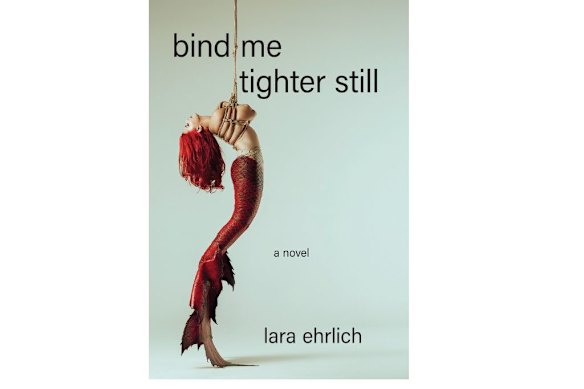
Bind Me Tighter Still
Lara Ehrlich
Red Hen Press, $29.99
In The Little Mermaid, Hans Christian Andersen told a gruesome tale of a mermaid who mutilates herself to take to land. Lara Ehrlich gives a fascinating feminist echo to that bleak fairytale with Bind Me Tighter Still. The novel focuses on a siren who likewise migrates from the sea. Ceto is the youngest of her siren sisters and has fled a submarine world of untamed hunger. She has set up shop at Sirenland, a gaudy marine-themed amusement park that features women in mermaid costumes. No one knows Ceto is the real deal, and the novel’s central conflict comes from the relationship between Ceto and her teenage daughter Naia. Ceto is strict and protective of Naia, as she tries to ensure that nothing can draw her away from Sirenland … and Naia begins to resent it. When the corpse of a young woman is found at a siren show, though, a concern for Naia broadens as all the performers and Ceto’s precarious sense of home come under threat. Ehrlich has concocted a moody and playful liberation of fairytale and Greek myth, centring motherhood and feminine desire.
On the Edge
Kate Horan
4th Estate, $34.99
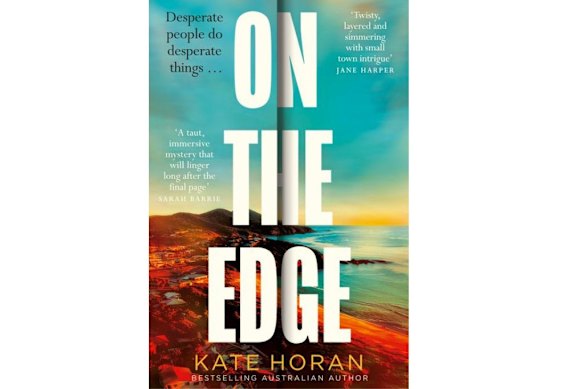
Kate Horan’s On the Edge is suspenseful small-town crime from the author of The Inheritance. It focuses on a homecoming that will draw its heroine, Nel Foley, into shining light on a darkness that lingers hidden in the present day. Sixteen years ago, Nel’s best friend at high school, Maddie Marshall – the only child of a prominent politician – was found dead on a beach in the town of Carrinya. Nel was the last person to see her alive. She remains tormented that the high-profile case was never solved, even though she left Carrinya long ago to become a GP in the big smoke. Returning to Carrinya at her father’s sudden death, Nel is reminded of Maddie’s fate when she meets Sophie Warner, a local married to Maddie’s former boyfriend Ryan. Convinced that Ryan murdered Maddie, and has progressed into domestic abuse and coercive control, Nel sets about trying to solve a cold case with a dangerous perpetrator. Horan’s prose takes more shortcuts than in her debut, with style sacrificed to storytelling in a well-constructed crime novel full of twists, rumours, and a sense of urgent mystery.
A Disappearing Act
Jo Dixon
HQ, $32.99
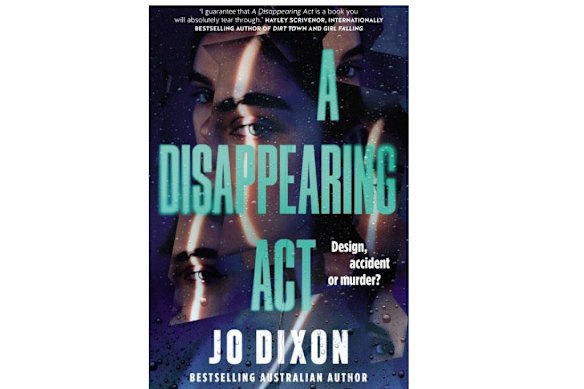
Four Gen X women who lived together in a boho warehouse in 1999 are reunited decades later at a remote holiday house in Tasmania. Architect Sarah wants to buy the warehouse she lived in with Poppy and Xanthea, but needs help from Marnie Elliott – now a wealthy, bestselling author – to make it happen. So, Marnie invites them all to reconnect, though she has an ulterior motive for her actions – she’s hiding from a public scandal that’s soon to erupt, brought on by choices she made long ago. The nostalgic gathering soon turns tense, with shadows of youth intruding on middle-age, and when Marnie vanishes into a wilderness none can survive unequipped for any length of time, a desperate situation emerges. Has Marnie fallen victim to misadventure, or something more sinister? Dixon reveals the present through Sarah and the events of 1999 through Marnie, in a cunning device that illuminates their respective characters, while allowing the author to time revelations and lend dramatic shape to the dance between past and present. It’s in the vein of Liane Moriarty, with friendship and rivalry between women, damaging secrets, and the pressure to belongdriving the psychological tension.
The Tangled Web
Tea Cooper
HQ, $34.99
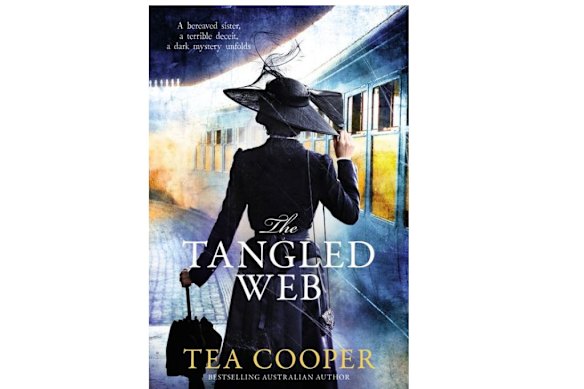
With The Tangled Web, Tea Cooper continues her prolific and popular historical fiction, venturing this time into the horrors of 19th century surgery and the mystery of haemophilia, known at the time as the “royal disease” for its association with the male descendants of Queen Victoria. It’s 1892 and, through coded clues left in her favourite book, Viola becomes convinced that her stepfather, surgeon Elias Sinclair, is responsible for her haemophiliac brother Sebastian’s death. Disguising herself as a boy, she tracks down a homeless youth who might be the only one with the evidence she needs to prove that Sinclair has committed heinousexperiments in the name of medical science. Her quest draws on the assistance of a Dickensian cast (including a band of urchins who wouldn’t be out of place in Oliver Twist) some of them at grave risk if Viola cannot put an end to the doctor’s villainy. Theatre nerds will appreciate the nods to Shakespeare’s Twelfth Night, in another diverting addition to Cooper’s extensive catalogue of commercial period genre fiction.
Love, Al Dente
Jenna Lo Bianco
Macmillan, $34.99
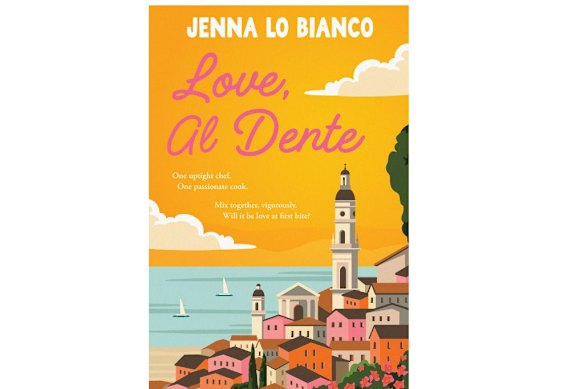
Foodies, romantics and lovers of all things Italian may enjoy Jenna Lo Bianco’s Love, al Dente, a tale spurred by the closure of an Italian restaurant during Melbourne’s pandemic lockdowns. Chef Alessio Ranieri hangs up his hat after his business folds and, vowing never to cook again, begins to research his family history. His Nonna migrated to Australia without talking of the life she left behind, and Alessio heads to her hometown in southern Italy, hoping to learn more about his origins. The apartment Alessio rents is directly above Trattoria dei Fiori, a restaurant run by free-spirited cook Francesca following her father’s recent death. Francesca and Alessio are charmed by one another. As it happens, she needs his help to enter (and win) an annual pasta contest between four restaurants in the town square. Francesca isn’t above fibbing to bring Alessio into her clan, and amid the sun-drenched delights of local cuisine and culture, his own vow to never cook again starts to crumble. A sensual “will they, won’t they” romance with simple, strong flavours, and contorni of culinary competition and finding family amid the Italian diaspora.
NON-FICTION PICK OF THE WEEK
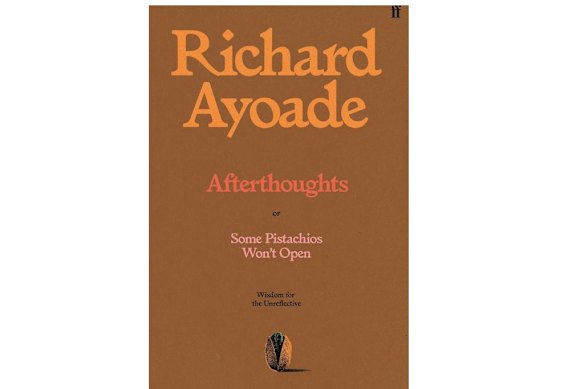
Afterthoughts. Wisdom for the Unreflective
Richard Ayoade
Faber, $24.99
There’s no shortage of books offering words of wisdom. For comedian, actor, writer and director Richard Ayoade, such maxims are irresistible fodder for jokes, a chance to turn received wisdom on its head: “Imagine what life would be like if God hated us.” While some of his provocations get their punch from shock value, the best are like a knife so sharp the victim doesn’t know they’ve been stabbed. “Simply put, racism places unnecessary parameters on one’s misanthropy. Why limit your hatred?” There’s also plenty of silliness such as “The roof of the mouth doesn’t keep it from getting wet” and “Every time I go to the toilet I think, ‘Really? Again?’” Some of his offerings fall flat – “Chocolate, especially when melted, reminds us of the thin line between food and diarrhoea” – but generally, Ayoade hits home, often by unsettling received assumptions. For my taste, his most memorable pearls are the most philosophical, and not even funny. “Thoughts search us out, but we are nowhere to be found.”
Fathering: An Australian History
Alistair Thomson, John Murphy, Kate Murphy & Johnny Bell, with Jill Barnard
MUP, $39.99
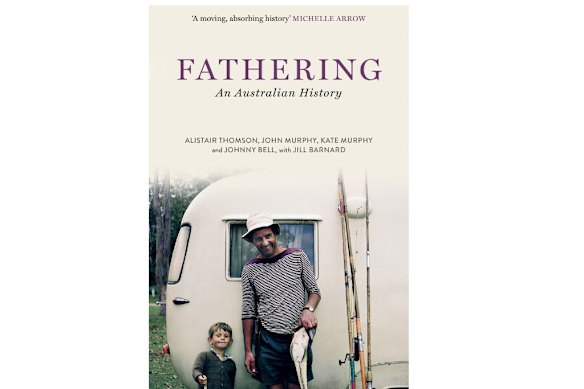
The “new” father. The “sensitive new age guy”. The “blokus domesticus”. Has he eventuated? Calls for changes to fathering, which began in the interwar years, have met strong resistance. In the early decades of the 20th century, when men were often working long hours or permanently absent, there was a push for fathers to be more engaged with their children, an expectation renewed after WWII and intensified in the 1970s under the influence of second-wave feminism. Yet even with increased childcare, the principle of pay equity and the flexibility of working at home, family dynamics have not shifted dramatically. This in-depth work offers men’s first-person experiences of fathering combined with historical overview and analysis. It’s an ambitious project, sensitive to the diverse experiences of fathers, while alert to the social constraints that have limited men’s ability to adapt. For some experts, our most promising role model is Bandit, the blue heeler from Bluey, now celebrated as the modern, hands-on dad.
Strangers
Belle Burden
Penguin, $36.99
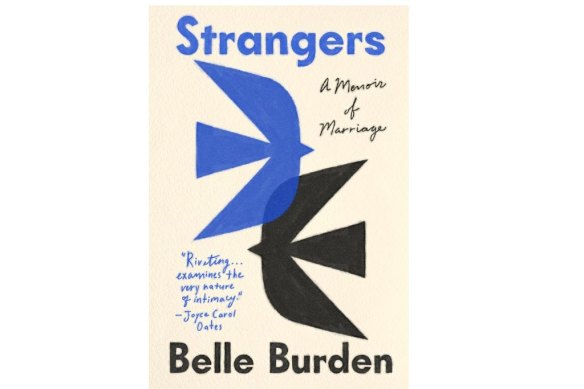
Each year a pair of ospreys returned to a nest on the property owned by Belle Burden and her husband, James, on Martha’s Vineyard. The birds’ constancy was comforting to both of them; an emblem of what they had strived for, having come from families destabilised by death, divorce and financial ruin. For 20 years, Burden thought she and her husband were happily married – until she discovered he was having an affair. Suddenly, he up and left her and their children, saying he wanted a divorce and refusing to explain his decision. In spare, lucid prose Strangers tells of the shock of this revelation and the years that followed, with flashbacks to when they first met and fell in love. In one sense, the memoir is driven by the mystery of why James has behaved as he did. But it’s Burden’s struggle to endure with dignity her entitled, gossipy milieu and rebuild her life that holds our attention and gives the tale its backbone.
Straya Day
Matt Murphy
ABC Books, $36.99
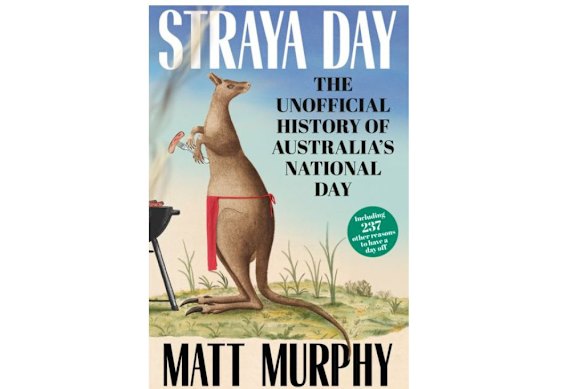
When centennial celebrations for the arrival of the First Fleet were being organised in 1888, a proposal to involve representatives of the Aboriginal community was brusquely rebuffed by NSW Premier Henry Parkes. “What? And remind them we have robbed them?” As Matt Murphy points out, we are the only country with a national day that celebrates “the colonisation of an already occupied territory”. This book had its genesis in the debate over whether the First Fleet “arrived” or “invaded”. As a compilation of disparate events that occurred on January 26 from 1789 to the present, it offers up 237 other things the date could be remembered for. It’s a quirky idea, possibly aimed at a student audience, as a way of inspiring discussion about the arbitrariness of official history and what gets left out. Along with serious entries about the Waterloo Creek Massacre and the Rum Rebellion are less weighty items on the acclimatisation of ostriches and a report on what trout eat. A curious mix of the consequential and the wacky.
The First Albanese Government
Edited by Michelle Grattan, John Halligan and John Hawkins
UNSW Press, $49.99
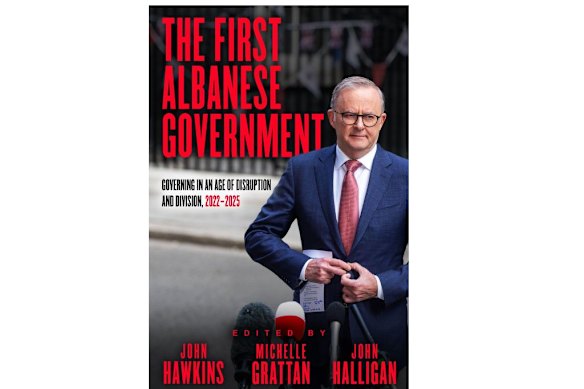
“Solid, if cautious, performance but can do better” is basically the report card on the first Albanese government, as assessed in these essays. Brendan McCaffrie puts it this way: “Rhetorically, the Albanese Government wanted to be a government of reform, but on almost every important issue the party pursued incrementalism or produced underwhelming actions.” Many of the essays document the discrepancy between what was promised and what was delivered – on housing, NDIS, the environment and Indigenous affairs. But there is also recognition of what has been achieved, particularly landmark reforms in industrial relations and the public service, which had been ‘traumatised’ and severely undermined by the previous Morrison government, says John Halligan. While dispassionate and measured, these rigorous analyses of the government’s performance also express disappointment tempered by cautious hope that the party’s second term will see bolder action.
The Booklist is a weekly newsletter for book lovers from Jason Steger. Get it delivered every Friday.