3 months ago
17
3 months ago
17
This week’s books range from topical outback noir to romcom and even “mumcom”, a history of Indigenous healers, help for doomscrollers and tips on ageing well.
FICTION PICK OF THE WEEK
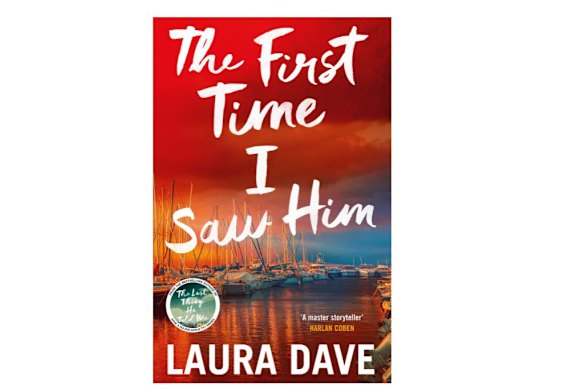
The First Time I Saw Him
Laura Dave
Century, $34.99
Laura Dave’s 2021 crime thriller The Last Thing He Told Me shot to the top of The New York Times bestseller list and the sequel is no less a white-knuckle ride. It opens five years after the events of the first novel. Hannah Hall and her stepdaughter Bailey are living in LA and Hannah’s husband Owen – seeking to protect the two from a murderous criminal syndicate hunting him down – seems to have removed himself from their lives permanently. Or has he? Mob boss Frank Pointe will use any connection to find and kill Owen – a man who he feels betrayed him – and Hannah and Bailey soon find themselves in mortal danger again after Owen makes coded contact, a lawyer is murdered and the fragile detente Hannah and Bailey brokered with the syndicate ends. It was a day the women saw coming, and they’re prepared for a do-or-die globetrotting-chase thriller. With safe houses and other elaborate machinations in place, the family on the run keeps one step ahead of the crime family, choosing a battleground as the climax looms. Readers should be just as gripped by this taut, suspenseful sequel as they were by the first book.
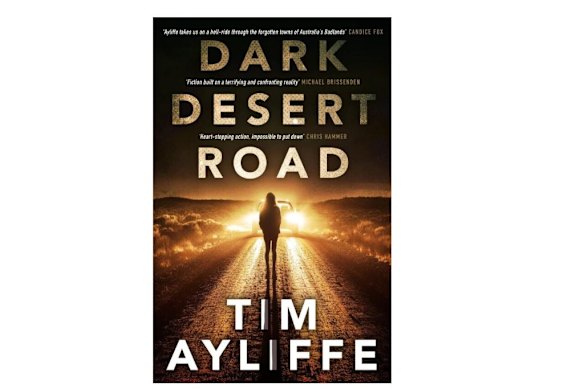
Dark Desert Road
Tim Ayliffe
Echo, $34.99
An evil twin trope and extremists from the sovereign citizen brigade both venture into Tim Ayliffe’s Dark Desert Road, the latest addition to the burgeoning genre of outback noir. Kit McCarthy is a cop (though technically, she’s on leave as her role in a violent arrest is being investigated). Her twin sister Billie followed their father into a life of crime. It’s been more than a decade since Kit has seen her sister. Billie’s sudden re-emergence comes in the form of an urgent message claiming first that she has a son, and second that someone’s threatening to kill her. Soon, Kit is on the road through drought-stricken rural NSW, where she discovers that Billie has been living among SovCits – a group of furious separatists planning to wage war on a system they refuse to recognise as legitimate. Add an outlaw bikie gang to the mix and the risk of a terrorist attack rises precipitously. It’s up to Kit to enter the violent and unpredictable world of the paranoid fringe, find Billie and rescue her child, while preventing the worst from happening. Ayliffe works headline-grabbing social problems – invoking the conspiracist movement behind the Desi Freeman case – into the tried-and-true blueprint of a thriller, delivered with maximum dust and derangement.
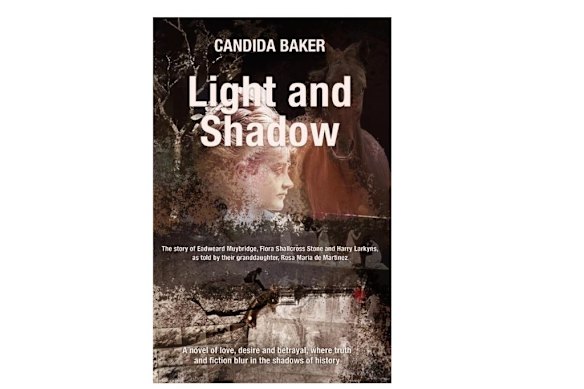
Light and Shadow
Candida Baker
Popcorn Press, $34.99
A sensational 19th-century murder trial lies behind this modest and meditative historical fiction. In 1874, English photographer Eadweard Muybridge shot and killed his wife’s lover, Major Harry Larkyns, only to be acquitted on the grounds of justifiable homicide. His much younger wife, Flora, died not long after, leaving behind a son, Florado, whose paternity was disputed and who lived in the shadow of social stigma and parental abandonment. Our narrator is Rosa, Florado’s daughter, who is determined to trace her family’s dark past, while finding comfort in the wilderness of the Australian high country and in horses. (The latter seems to be a family trait – Muybridge was a luminary in the history of the moving image, capturing the first of a horse galloping.) An eventful imaginative engagement with historical fact, Light and Shadow takes in three generations against backdrops from the arid frontiers of the American West and Mexico to the untamed bush of the Snowy Mountains. A lingering sense of male violence and shame, and the toxic consequences of repressive attitudes to women’s autonomy and sexual desire, emerge but the narrative focuses more on the slow and unpretentious and process of healing than the notorious killing behind the story.
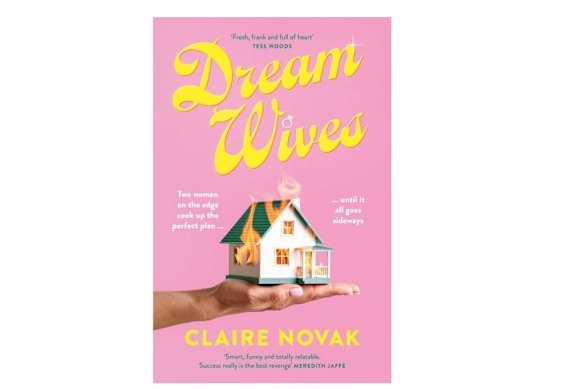
Dreamwives
Claire Novak
HarperCollins, $34.99
Claire Novak is the nom de plume of two established writers – prolific novelist Catherine Jinks and former Sydney Morning Herald journalist turned children’s author Alexa Moses. They’ve joined forces for a book that mixes bracing feminist comedy with a gentler ode to the solace and solidarity of female friendship. When housewife Katrina is abandoned by her husband, she’s left heartbroken and strapped for cash. Enter her old friend Michelle Redlin-Wu, who has just lost her job while caring for her ageing father. That society relies on unpaid and undervalued domestic and care work (largely performed by women) is a feature of patriarchy, not a bug. Katrina and Michelle hit upon a way to market and monetise such labour by starting Dreamwives – a business that offers housewife services taken to extremes (sex not included). Will their new enterprise succeed? The comedy rides high on a freewheeling, chaotic sense of social satire. It pokes fun at male entitlement while flirting with romcom and is undergirded by the strong bond between female characters.
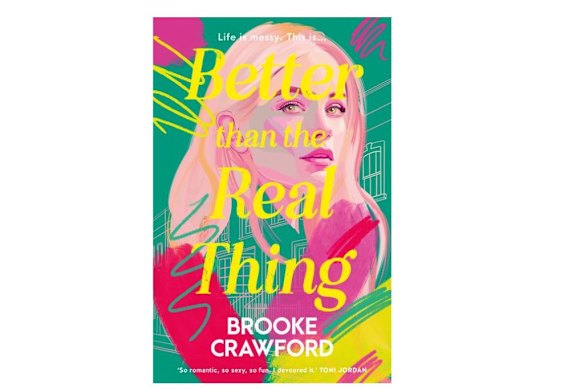
Better than the Real Thing
Brooke Crawford
HQ, $32.99
Escapist romance awaits readers of Brooke Crawford’s Better than the Real Thing. Melbourne teacher Netta Phillips has a sunny authenticity, despite plenty of reasons to be melancholy. She’s kicking 40, has struggled with fertility issues, her long-term relationship has just blown up, and she can’t afford her mortgage. When she finds the childhood journal of a brooding musical celebrity, Morrison “Mo” Maplestone, she’s determined to keep the secrets it contains out of the tabloids. The intensely private Mo offers to fly Netta to London to deliver it to him personally and pay a large sum for the diaries. Netta is sorely tempted – she could keep her apartment and afford IVF with the money. Only trouble is, she has vowed never to go to the UK again after what happened there in her youth. When she and the brooding idol Mo do finally meet, there are serious challenges to pursuing romance. Despite a few cheesy beats and a wildly implausible plot device, Crawford’s romcom features likeable characters facing realistic intimate problems, and has a grounding emotional maturity.
NON-FICTION PICK OF THE WEEK
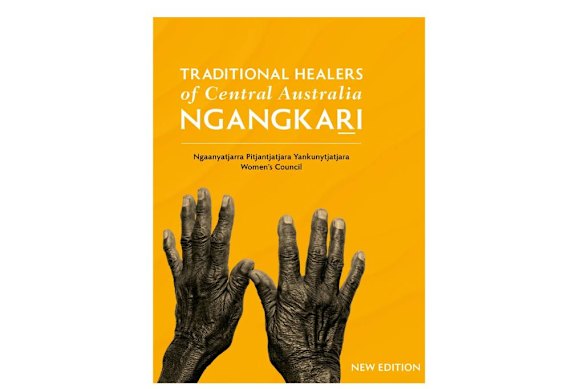
Traditional Healers of Central Australia: Ngangkari
Ngaanyatjarra Pitjantjatjara Yankunytjatjara Women’s Council
Magabala Books, $64.99
When Peter Mitchell was a boy in Warakurna, his people were still living the old way of life, chasing goannas and spearing rock wallabies and bandicoots. There were no houses and no hospital. When someone got sick, the ngangkari – traditional healers – would lay their hands on them and “extract the sickness”. Or they would send their eagle spirit to search for and restore the lost spirit of the patient. Mitchell’s grandfather and brother were healers, and they passed their powers on to him. Healer Betty Ngurrpuly talks about this force as “an openness, a sixth sense”. The mapanpa – sacred tools – live inside the healer’s body and work through their hands. This beautifully produced book draws the reader into the little-known world of the ngangkari, who now work alongside Western health practitioners. Some of them are also painters and their exquisite art tells of their life and work. Complementing these images are haunting photographs from the healers’ past and present, capturing the seismic changes that have taken place in their lifetimes.
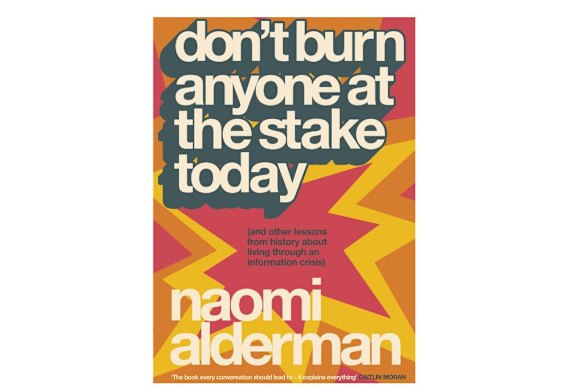
Don’t Burn Anyone at the Stake Today
Naomi Alderman
Fig Tree, $39.99
We mightn’t burn people at the stake these days, but doctrinal disputes still turn lethal. Naomi Alderman canvases some big ideas in this volume of essays about how the symbolic realms of writing, printing and the internet have radically changed societal values and behaviour. Writing, she suggests, made possible new models of reality expressed by great religious figures and thinkers such as Buddha, Moses, the Greek philosophers and Confucius. But it also destabilised the old oral order. One consequence was that elders, once valued as keepers of knowledge, were usurped by the disembodied written word. Alderman’s thesis – that we can better understand the information crisis we are living through by reflecting on the disruptions of the past – is thought-provoking, if a bit too sweeping at times. While her focus is largely on the dark side of these technologies, she finds hope in the way they have also helped us overcome the turmoil they unleashed.
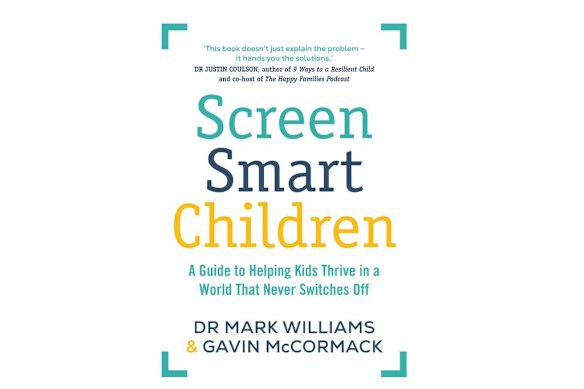
Screen Smart Children
Mark Williams & Gavin McCormack
Simon & Schuster, $29.99
“Australians spend nearly 17 years of their lives on their phones.” Your first impulse might be to reach for your phone to share this awful statistic, along with a Munch scream emoji. After reading this book, however, you might choose to tell your child about it while walking with them in the park, star gazing or playing a board game. As a cognitive neuroscientist, Mark Williams knows a thing or two about the impact of digital screen exposure on young brains. This knowledge informs the practical advice the authors offer about helping children have a healthy relationship with their devices. Their primary message is that parents must model what this relationship looks like. They argue that the social media ban for under 16s is an opportunity for families to reset their interactions and foster a “deep sense of belonging, inclusion and respect.” Playful in tone, fun and easy to read and full of useful counsel, this guide takes the angst out of helping children get screen smart.
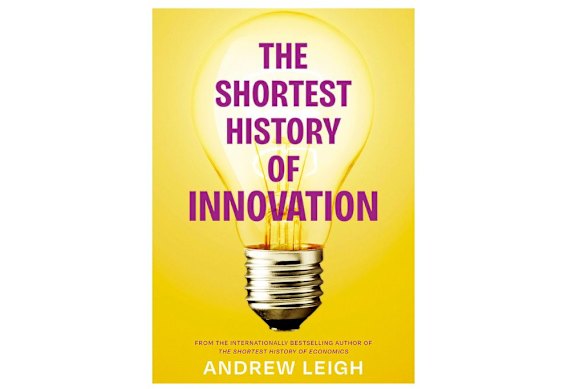
The Shortest History of Innovation
Andrew Leigh
Black Inc. $27.99
Long before the tech bros made us captive to their toys, evolution came up with some pretty impressive innovations. Like life on earth. But that’s a big story to pack into a short history, and Andrew Leigh has wisely kept his focus on human ingenuity. While society has sold us the cartoon version of the singular genius or flashbulb moment behind great breakthroughs, Leigh points out that the reality is much more complex. Most major inventions are borne of “hard work, frustration, necessity” and are the result of the three Ts: tinkering, teams and trade. Not to mention dumb luck. Along with innovations such as the wheel, microscopes, vaccinations, railways and aeroplanes, Leigh highlights the easily overlooked things that make a big difference to the quality of our lives, such as buttons, nails, novels and pianos. He also reminds us that the neoliberal axiom that innovation is the child of private enterprise is a myth. Governments have “stood at the centre of major technological leaps”, especially during and after wartime. Leigh’s astute analysis is the linchpin holding together this whirling carousel of human creativity.
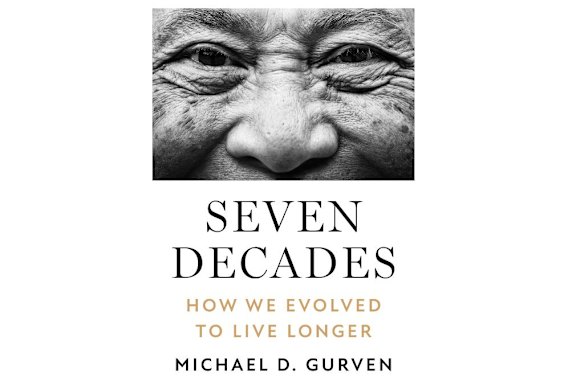
Seven Decades. How We Evolved to Live Longer
Michael D. Gurven
Princeton University Press, $59.99
If you are looking for the secrets to longevity, you already hold them. The hunter-gatherer human body evolved to survive at least seven decades. An extended lifespan is, says anthropologist Michael Gurven, “an immutable characteristic of our species”. While it might sound counterintuitive, gains in life expectancy in the last 200 years reflect a larger percentage of people living to older ages rather than any dramatic extension of longevity. As someone who has studied Indigenous communities in South America, he believes that only focusing on low-mortality populations in developed countries is myopic and doesn’t help us understand that, from an evolutionary perspective, living beyond one’s reproductive years is “like a superpower”. This wide-ranging and detailed work looks at the experience of ageing from prehistory to the present, with a particular interest in the role of elders in traditional societies and how, as JFK put it, we might “add life to years, not just years to life”.
The Booklist is a weekly newsletter for book lovers from Jason Steger. Get it delivered every Friday.