3 months ago
38
3 months ago
38
Former Bangarra dancer Peta Strachan, a Dharug woman from the Boorooberongal clan, started the all-female Jannawi Dance Clan in 2008, hoping to learn more about the almost lost language of her ancestors.
The mother of five and dance school graduate from Concord, started rehearsing with the troupe at Newington Armory, the former Navy depot near Sydney Olympic Park where she had performed in the opening and closing ceremonies at the 2000 Olympics.
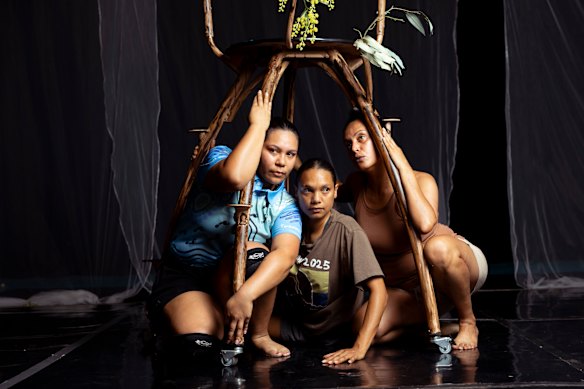
Aroha Pehi, Serene Yunupingu and Miah Wright of the Jannawi Dance Clan. Credit: Dominic Lorrimer
“This area, Wangal country south of Parramatta River, was where all the clans would gather peacefully for ceremony, corroborees and mullet feasting,” Strachan said.
“Jannawi means ‘with me, with you’ in Dharug language – and since 2008 we’ve been bringing together Indigenous women from all over Sydney, to revitalise the language through song and dance.”
Their most ambitious project to date is the first full-length work in Dharug language, bringing together female Indigenous dancers from all over Australia. It’s set to premiere as part of the Sydney Festival this week.
Garrigarrang Badu, meaning “saltwater / freshwater”, will have three performances on January 9 and 10, in the Sydney Opera House’s Drama Theatre. It’s appropriate the show will be at Bennelong Point, the place in Sydney Harbour where the saltwater of the ocean is said to meet the freshwater of the Parramatta River.
Loading
“We want people to have a deeper understanding of Dharug country’s river systems and waterways from the Blue Mountains to the saltwater of the beaches, through dance and song,” said Strachan, who began developing the project six years ago, working with the late Dharug linguist Richard Green.
“He was a big inspiration for me – he’s in the show as we recorded him singing in language,” she said.
The music was composed by First Nations artist Matthew Doyle and Indigenous musician Dyagula, who is also the lead vocalist. The work, which features 14 dancers performing 14 songs In Dharug, is presented in association with Parramatta’s Arts and Cultural Exchange and western Sydney’s FORM Dance Project.
Four generations of Strachan’s family are involved: two of her daughters and her six-year-old granddaughter are dancers, and her mother made the dilly bags that feature as props along with nawi (canoes) gunyas (shelters) coolamons (storage vessels) and digging sticks that Strachan created.
“This is matriarchal nura/country,” she said. “We really need to create a space and opportunity for all us women to sing up country again together in our beautiful dalang/ language.
“I wanted to create our own unique and genuine special songs and dances in Dharug dalang/ language to help keep our dalang alive, thriving, strong, heard and spoken and to maintain our culture and stories through those songs and dances for our yura/people.”
Her goal is for the audience to leave wanting to know more about the Dharug language, once widely spoken by most of the 29 clans of the Eora nation of the Sydney region.
Her daughter, dancer Serene Yunupingu, who has just returned from Arnhem Land, said the show was important to showcase the “matriarchal revitalisation” of Indigenous contemporary dance.
“We’ve danced on top of the Opera House, near the Opera House in the Botanical Gardens but now we’ve come from all over the country to dance our story on the Opera House stage, which is pretty special,” Yunupingu said.
Dancer Arohi Pehi, from Redfern, said it was emotional to be performing at the Opera House.
“This idea to revitalise the Dharug language through dance started as a seedling, now it is a big tree, like a wise old grandmother,” she said.
Must-see movies, interviews and all the latest from the world of film delivered to your inbox. Sign up for our Screening Room newsletter.
‘We really need to create a space and opportunity for all us women to sing up country again together in our beautiful dalang/language.’
Peta StrachanMost Viewed in Culture
Loading