3 months ago
22
3 months ago
22
As family members of inmates at a major Sydney prison complex paid significant amounts of money to secure their loved ones’ release on bail, Rabhi Sobhi oversaw the system’s management.
However, behind closed doors, the 47-year-old regularly abused this position of trust, exploiting people during incredibly stressful times by stealing or misappropriating about $315,000 over more than two years.
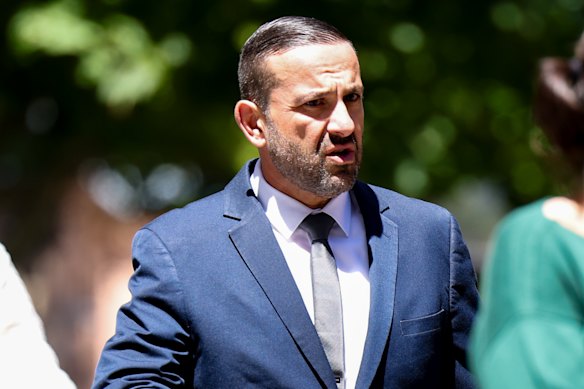
Rabhi Sobhi enters Darlinghurst District Court ahead of his sentence.Credit: Edwina Pickles
Sobhi avoided jail for his crimes – largely due to what a judge described as the longest delay she’d seen in her 30-year-career – in the NSW District Court earlier this month.
Between January 2012 and August 2014, Sobhi was employed by Corrective Services New South Wales as the Sole Finance Officer of Public Funds at the Silverwater Correctional Complex in Sydney’s west.
Before sentencing him to a three-year intensive correction order for 103 larceny and fraud offences, Judge Sharon Harris outlined the agreed facts.
She said Sobhi was financially stable during his relatively unsophisticated offending and was not riddled by debt or addiction, leaving his motive unclear.
“It was opportunism in a workplace where significant sums of cash were readily available, and the offender was systematically stealing,” Harris said, adding he destroyed and manipulated documents to remain undetected.
“It is important to emphasise the offender’s abuse of his position of trust.”
The judge described Silverwater prison’s finance office at the time as “shambolic”, short-staffed and having procedures that were not always followed, creating an ideal environment for Sobhi’s deception.
Inmates’ supporters would visit a window to deposit cash, either as bail surety – when an “acceptable person” guarantees a defendant’s adherence to bail by pledging money to the court that is forfeited if certain conditions are breached – or to be used at the prison’s “canteen”.
Cashiers would place a cash-filled envelope and manual receipt in a safe, which Sobhi had access to.
On 63 reported occasions from 2012 to 2014, Sobhi took the cash from these envelopes before it could be taken to the bank. He would then change numbers on the balance-counting Excel spreadsheets made by junior cashiers to reflect reduced bank deposits.
He would move funds between different ledgers to cover financial holes, and physically alter end of month reports. In one instance, he removed the digits “159” in a report showing a missing $159,100 to make the amount read $100.
His fraud only unravelled because Corrective Services ordered an early ledger close for the end of the 2014 financial year. Their head office saw a $159,000 gap before Sobhi had a chance to manipulate the report.
Auditors discovered that a year’s worth of original Excel sheets had been purged from the server, while an external investigation concluded Sobhi had consistently understated balances.
Sobhi was arrested in August 2014, more than 11 years before he would learn his punishment.
“The delay since Mr Sobhi was charged is extraordinary,” Harris said.
“Putting to one side accused persons who abscond or are in custody in another jurisdiction, or are perhaps the subject of a number of retrials, I do not know of any case involving such a lengthy delay, having practised in the law for almost 30 years.”
The setback was partly due to the “unexplained and unacceptable” years-long gap leading to Sobhi’s prosecution, followed by the Crown’s late service of material and issues with defence availability.
Sobhi’s first trial was postponed by the suspension of jury trials during the COVID pandemic, lasted 16 weeks and ended in a hung jury.
A 2025 retrial resulted in guilty verdicts for more than 100 offences, including larceny, dishonest financial gain and publishing false material.
Harris noted the psychological and financial strain the “uncertain suspense” had caused Sobhi and his family, as he continued to repay family members roughly $240,000 in legal debts. This stress significantly contributed to the avoidance of full-time custody, she said.
In recent years, Sobhi had become heavily involved in his local church and charity groups. He had been promoted to site supervisor at a Sydney Fish Market store, where he worked from 2am to 8am before attending each day of his trial.
While maintaining his innocence and therefore lacking remorse, Harris found his pro-social life and community support meant he would likely have been rehabilitated.
“Mr Sobhi states his intention is to continue contributing positively to his family and community and to overcome the mental and financial challenges that have arisen from these proceedings,” Harris said.
Sobhi, who was supported in court by his wife and children, was sentenced to a supervised three-year intensive correction order, with the first 12 months to be served in home detention.
The court heard the Crown intends to seek a repayment order for the stolen $315,000.
Start the day with a summary of the day’s most important and interesting stories, analysis and insights. Sign up for our Morning Edition newsletter.
Most Viewed in National
Loading