3 months ago
27
3 months ago
27
A scathing probe into the department in charge of the state’s energy transition has found the agency is siloed, disjointed, opaque and could pose a risk to the state’s decarbonisation efforts and attempts to shut down coal-fired power by 2030.
The agency capability review into the Department of Energy and Economic Diversification, led by former East Metropolitan Health Service chief executive Liz MacLeod, found the department was confusing for external stakeholders dealing with it and lacked a defined remit.
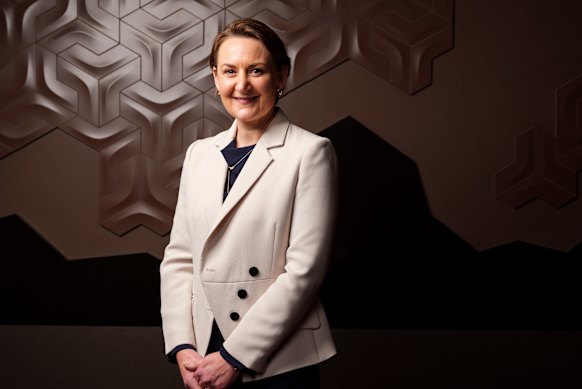
Energy Minister Amber-Jade Sanderson.Credit: Oscar Colman
“Examples of entrenched silos and resistance at all levels are apparent across the agency,” MacLeod said.
“The agency is described as disjointed and opaque, with stakeholders reporting advice is often confusing and contradictory depending on the area giving the advice.
“A refreshed operating model should be prioritised, with attention to integrating and aligning functions in both the energy and economic diversification functions.”
The department was formed from remnants of the old Department of Jobs, Tourism, Science and Innovation after the major public sector shakeup by Premier Roger Cook following the March election.
It is the lead agency in charge of making Cook’s ‘Made in WA’ vision a reality, as well as leading the state’s path away from coal-fired power by 2030.
However, MacLeod warned that was at risk because Energy Policy WA, a formerly standalone agency that guides the future of the state’s power grid, was not yet gelling with the bigger department.
“With a history of operating as an isolated entity, the full integration of Energy Policy WA into the agency is critical. If not resolved, it poses a significant risk to the agency’s ability to deliver the energy transition,” she said.
Shadow energy spokesman Steve Thomas said MacLeod’s warnings were more proof the state’s energy transition was well behind schedule.
“It’s another demonstration that energy policy in Western Australia is years behind where it needs to be. To me, it suggests that even within DEED that separate sections don’t trust each other to do the job,” he said.
Loading
“I think this reflects an overall government inability to understand and then ultimately implement an energy transition. I think the results of this will be their inability to get out of coal under their current timeframe and instability in the grid.”
Energy Minister Amber-Jade Sanderson welcomed MacLeod’s findings and said there were no surprises, but the outcome demonstrated the importance of agency capability reviews.
She pushed back on the finding that Energy Policy WA was not integrating well enough, noting that it had only been officially embedded in the department since July.
“EPWA was only integrated into the newly formed DEED in March this year with the machinery of government changes, and was only really formalised from the first of July. So they’ve only been part of DEED for six months,” she said.
“They have been a really important unit across government, but have been located in various departments around government, and what this government has done is reflected the Premier’s priorities in that energy and industry go hand in hand, and that is with the creation of DEED.
“I think it’s a good starting point. It certainly doesn’t reflect the ongoing operations of DEED because that has only been implemented in the last six months.
A DEED spokesman said the review provided critical insights that it was acting on.
“The review recognises the department’s pivotal role in driving Western Australia’s energy transition, economic development, international trade and investment, and advancing science and innovation,” he said.
“It highlights significant progress in key areas that establish a strong foundation for delivering the government’s priorities. The integration of former parts of the Department of Jobs, Tourism, Science and Innovation, and Energy Policy WA into one agency will enable the department to focus on these priorities.”
Most Viewed in National
Loading