3 months ago
20
3 months ago
20
Conducting his first round of interviews since leading the Greens to a catastrophic loss of seats and support in the last federal election, Adam Bandt says he is determined to reinvigorate the environment movement in his new role as chief executive of the Australian Conservation Foundation.
The former Greens leader has not been seen since publicly since leaving a press conference in the wake of the May defeat, and has spent much of his time since in his native garden in suburban Melbourne.
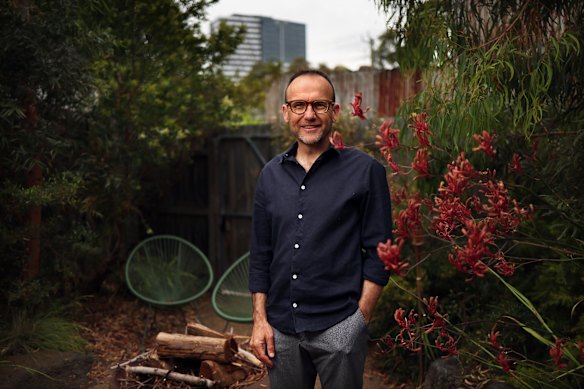
Former Greens leader Adam Bandt, now heading the Australian Conservation Foundation, says the organisation will seek to use people power to force change.Credit: Alex Coppel
In September, he was named as the ACF’s next chief, an appointment that raised eyebrows in the environment movement as some feared his former role as a political combatant might harm the foundation’s voice in Canberra.
Bandt dismissed those concerns in an interview with this masthead to discuss the ACF’s latest report into destruction of endangered species’ habitat in Australia, Extinction Wrapped. He said his role with the ACF was nonpartisan, that he had ended active involvement with the Greens, and that as the ACF’s chief, he would prosecute the environmental case by relying on science and evidence.
“The data speaks for itself, and one of the things that I’ve learned from my time in parliament is that governments make decisions within the window of what they think is possible, and part of my job now in this new role is to help shift that window,” he said.
Loading
“In my previous role we worked with the government to pass a lot of legislation ... it was a very productive period legislatively.”
In his new role, Bandt will have to reckon with an environment movement that was ascendent in the late 2010s but which is losing focused support as voters reckon with economic shocks and increasing geopolitical uncertainty. The ACF’s most active support base is growing older, a trend the organisation wants to reverse.
Bandt said he planned to strengthen the ACF by building its membership to create a “people power movement as big as the one that stopped the Franklin dam [in Tasmania].”
The new report shows that despite its promise to halt extinctions the Albanese government approved the clearing of more than 57,000 hectares of threatened-species habitat in 2025, the highest amount in 15 years. The oil and gas industry and the renewable energy sector were the top two beneficiaries.
The amount of threatened-species habitat approved for clearing for development last year was double that approved in 2024 and five times that approved in 2023. The vast majority of the clearing was approved for NSW, Queensland and Western Australia, which secured 98 per cent of the approvals.
In Western Australia, the resources sector extracted approvals for the destruction of 6198 hectares of habitat of the night parrot, a mysterious ground-dwelling bird that was feared extinct for almost a century and rediscovered in WA in 2024.
Bandt said it was frustrating to see the night parrot not only take a step further towards extinction (its status changed from endangered to critically endangered last year), but to have it lose the equivalent of six Sydney airports worth of its habitat.
He said the loss of habitat was in part due to the weakness of nature laws that the government managed to change late last year.
Loading
“This is the parliament that has the chance to stop extinction and to take real action on both the climate crisis and the extinction crisis for nature,” said Bandt, calling on the government to support new laws with a strong environmental protection agency to police them.
The WA government and the resources sector have lobbied against such an agency.
“We’ll be watching this closely, and hopefully these numbers start to turn around the next time we do this report,” Bandt said.
Mining accounted for 68.5 per cent of all threatened-species habitat destruction approved last year – with 39,202 hectares cleared – followed by renewable energy generation and supply, agriculture and forestry, and commercial and residential developments, the report showed.
Loading
Bandt said Australia had the space to accommodate a renewable energy sector large enough to supply clean power for the energy transition without clearing key habitat.
The report found 42 plants and animals were added to the threatened species list, while five were moved to a category closer to extinction.
A spokesperson for the federal government said it remained committed to protecting endangered species.
“That’s why we fought so hard to introduce a national Environment Protection Agency and reform the [Environment Protection and Biodiversity Conservation Act] at the end of last year.
“Under the reforms, projects will need to demonstrate a net gain for nature to receive approval, providing stronger protections for threatened species and their habitats.
“By adding species to the Threatened Species List, our government is ensuring their needs are considered under national environmental laws, and conditions can be applied to projects to protect them.”
Get to the heart of what’s happening with climate change and the environment. Sign up for our fortnightly Environment newsletter.
Most Viewed in Environment
Loading