3 months ago
41
3 months ago
41
We all know that sinking feeling. You head off Europe’s must-see cities with your significant other, eager to visit the historic sights and sample the local culture. Once you get there, however, you realise everyone else has had the same idea. Those historic sights are crawling with sightseers, and the local culture has been buried beneath an avalanche of souvenir shops and fast-food stalls.
You didn’t travel all this way to queue for selfies amid a crowd of gormless influencers, and if you wanted to eat at KFC or Five Guys, you could have stayed at home.
Surely there must be somewhere better to spend a romantic holiday? Somewhere less hectic and more authentic, where locals still outnumber tourists? If you’ve ever asked yourself that question (and I know I have), you’ll relish these unspoilt alternatives – places where you still feel as if you’re really travelling rather than traipsing round a theme park. Sure, you might not get so many hits on Instagram, but you’re bound to have a better time.
Don’t go to Vienna – go to Bratislava
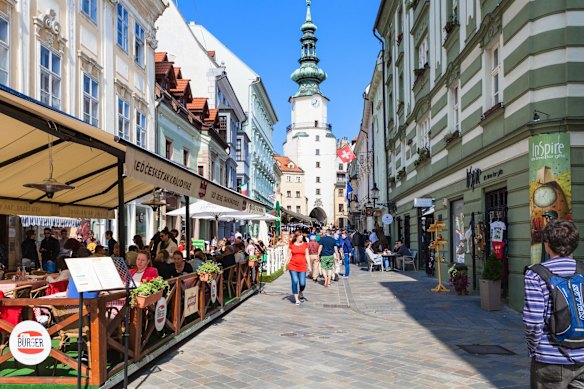
Vienna is magnificent, but it’s a big bustling metropolis, and getting around all the sights can be gruelling. If you’re looking for somewhere more mellow, board a bus and hop over the border into Slovakia.
Sign up for the Traveller Deals newsletter
Get exclusive travel deals delivered straight to your inbox. Sign up now.
Bratislava, the Slovak capital, is only 40 minutes’ drive from Vienna Airport, and the bus drops you right in the middle of this quirky, eccentric city. You won’t need to use public transport while you’re here either, as all the sites of interest are within easy walking distance of the quaint pedestrianised city centre.
In a prime position on the River Danube, Pressburg (as it was once known) has been occupied by Austrians, Hungarians, Russians and Germans, and the result is a melange of architectural styles, from baroque to Belle Époque, rococo to Art Nouveau. There are a fair few communist eyesores, but these brutalist tower blocks are mostly confined to the drab suburbs. Visit Bratislava’s hilltop castle and then refuel at the UFO outlook tower, a bizarre avant-garde relic of the Soviet era.
How to get there
Fly into Brussels via one of the major hubs in Asia or the Middle East. Travel from Vienna airport to Bratislava with Flixbus.
Where to stay
Skaritz Hotel & Residence has rooms from $165.
Don’t go to Bruges – go to Ghent
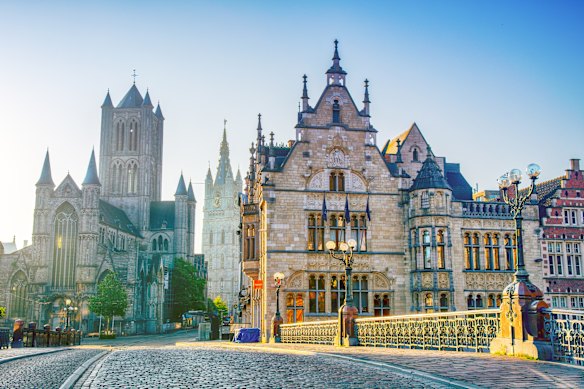
Bruges is one of Europe’s best-preserved medieval cities, a popular tourist destination since Victorian times. Consequently, it’s full of coach parties. If you want Flemish antiquity without the gift shops, go to Ghent. Its antique centre is just as pretty, but unlike Bruges it’s a living city with a bit of grit beneath its fingernails, and its thriving university gives it an energetic, youthful buzz.
The most celebrated sight is Saint Bavo’s Cathedral with its mesmeric altarpiece, Van Eyck’s Adoration of the Mystic Lamb. There are loads of other cultural attractions, including the Museum Voor Schone Kunsten, Belgium’s oldest art gallery with its wide range of Belgian artists, from the grotesque nightmares of Hieronymus Bosch to the surreal daydreams of René Magritte.
How to get there
Fly into Brussels via one of the major hubs in Asia or the Middle East and take the SNCB train.
Where to stay
1898 The Post has rooms from $300.
Don’t go to Prague – go to Karlovy Vary
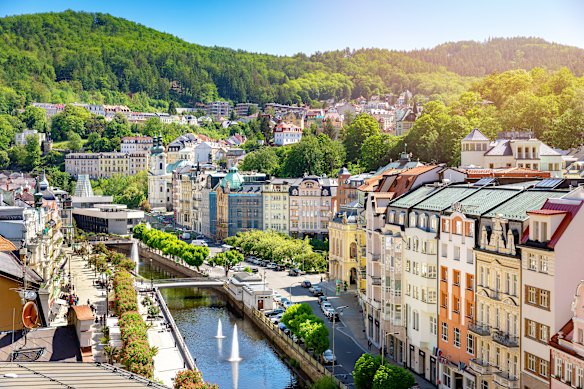
Prague is stunning, but the historic city centre is a scrum of sightseers. For a completely different sort of city break, travel to the ornate spa town of Karlovy Vary (or Carlsbad, as it was once known).
Karlovy Vary’s golden age was the 19th century, when its hot mineral springs made it a fashionable resort for the Austrian upper classes. The good times continued between the wars, when it became part of Czechoslovakia, but after the Second World War it vanished behind the Iron Curtain. The Velvet Revolution brought about its renaissance, and today it’s a boom town again, full of flamboyant Fin de Siècle cafes and hotels.
Karlovy Vary is one of a trio of Bohemian spa towns, and the other two are also well worth a visit. The smallest of the three, Františkovy Lázně (formerly Franzensbad), is tranquil and charming, but the most beguiling is Mariánské Lázně (aka Marienbad), with a romantic, melancholy ambience reminiscent of that marvellous tragicomic movie, The Grand Budapest Hotel.
How to get there
Fly into Prague with Turkish Airlines (via Istanbul) or Qatar Airways (via Doha) then take the train (approximately 3½ hours).
Where to stay
Grandhotel Pupp has rooms from $276.
Don’t go to Paris – go to Lyon
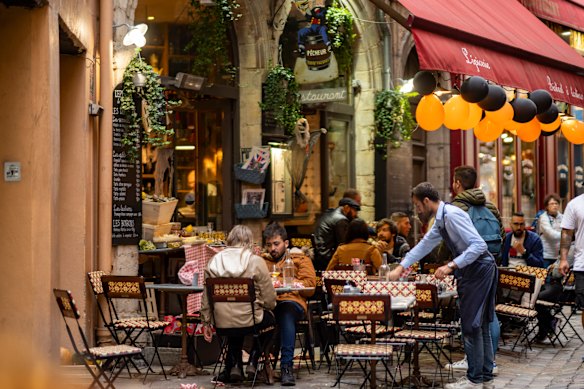
Paris has enough great galleries and restaurants to keep you entertained for several lifetimes, and the Haussmann architecture is sublime, but it’s hardly the most relaxing destination. The Eurostar link with London is superb, but the area around the Gare du Nord is shabby, and much of the city is scruffy and rundown. For a smoother city break, travel on to Lyon.
Lyon is renowned as the culinary capital of France, and the thing that makes it a foodie paradise is the quality of its everyday grub. For lunch, visit Les Halles de Lyon Paul Bocuse, a vast covered market full of culinary delights. For dinner, ask your concierge to recommend a local bouchon (a bouchon is a Lyonnaise institution – a homely restaurant serving traditional cuisine in a friendly, informal setting).
There are architectural treasures from every era, from the Presqu’île, a picturesque peninsula bordered by the Saône and Rhône, to the modernistic Confluence, where these two rivers converge. The Gallo-Roman Museum, flanked by two huge amphitheatres, charts the 400 years when Lyon was the capital of Roman Gaul.
The palatial Musée des Beaux Arts houses a wonderful array of French Impressionists, but the most distinctive museum is the Institut Lumière, devoted to the Lumière brothers, who pioneered filmmaking here. The Lumière Festival, held in October, is the cinematic highlight of the year.
How to get there
Turkish Airlines and Emirates both fly into Lyon–Saint Exupéry Airport, with connections from Australia via Istanbul and Dubai respectively.
Where to stay
Le Royal has rooms from $478.
Don’t go to Berlin – go to Leipzig
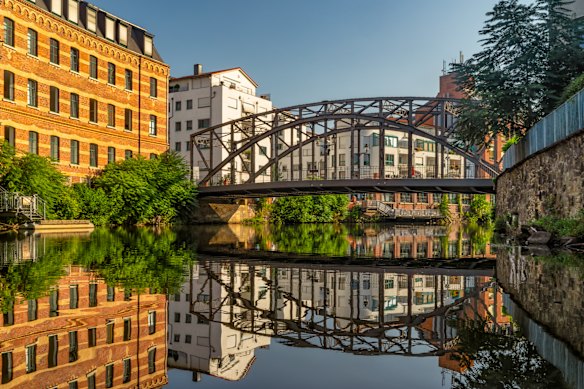
Berlin is full of things to see and do, but it’s a sprawling, overwhelming city, and if you’ve only got a few days to spare, it’s hard to know where to start. That anarchic era which followed the fall of the Berlin Wall is long gone, and the city centre is filling up with international chain stores. Nowadays, the liveliest city is Leipzig, where Germany’s Peaceful Revolution began.
An industrial city under communism, Leipzig has become a cultural hotspot. The rust belt districts of Plagwitz and Connewitz are full of pop-up bars and galleries – don’t miss Panometer and Kunstkraftwerk, two cutting-edge creative venues housed in former factories. Finish up at the Spinnerei, previously Europe’s biggest cotton mill, now a thriving colony of artists’ studios.
Visit the Zeitgeschichtliches Forum to learn about the brave civilians who brought down the Iron Curtain, then go to the sinister Stasi HQ to see how the east German secret police spied on them and persecuted them during the dark days of the Cold War.
How to get there
Fly into Frankfurt via one of the major Asian of Middle East hubs, then travel on by train with Deutsche Bahn.
Where to stay
Hotel Fregehaus has rooms from $206.
Don’t go to Venice – go to Trieste
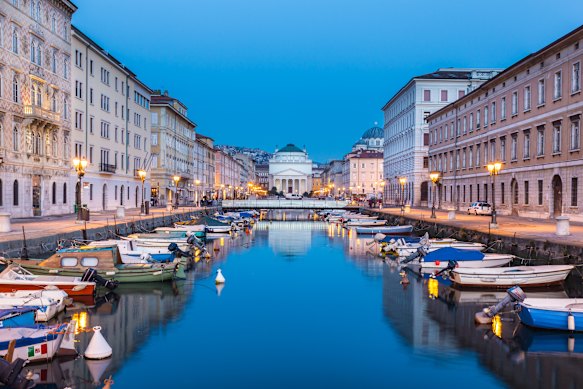
Venice is beautiful, but it’s become a victim of its own success. St Mark’s Square and the Rialto Bridge have been tourist traps for as long as anyone can remember, and the current ban on big cruise ships has only slowed rather than stemmed the tidal wave of visitors. However, there’s another Adriatic port with just a fraction of the tourist traffic – the ancient city of Trieste.
Trieste is in Italy, but only just. Before the First World War it was part of the Habsburg Empire, Austria’s gateway to the sea. A century later, its Austrian heritage is still echoed in everything from architecture to cuisine. After the Second World War it became a border town, surrounded by the Iron Curtain, but since the end of the Cold War it’s become a crossroads again.
Visit the Museo Revoltella for art and the Museo d’Antichatà JJ Winckelmann for archaeology. Both historic buildings are attractions in their own right. The most arresting sight is the Castello di Miramare, built by Maximilian, the Emperor of Mexico, a castle on a rocky promontory, battered by the wind and waves.
How to get there
Fly into Venice with Emirates (via Dubai) or Turkish Airlines (via Istanbul), then take the train to Trieste (about three hours).
Where to stay
The Savoia Excelsior Palace has rooms from $439.
Don’t go to Amsterdam – go to Delft
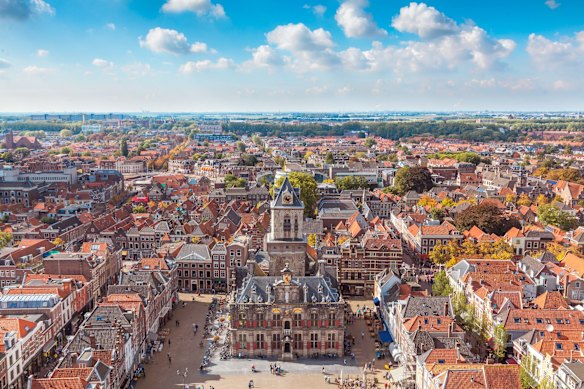
Amsterdam has world-class museums and amazing nightlife, but there are several smaller Dutch cities which are prettier and much less crowded. Our favourite is Delft, home of Johannes Vermeer (www.vermeerdelft.nl).
Delft is famous for its eponymous porcelain, Delfts Blauw, aka Delft Blue. Visit De Koninklijke Porceleyne Fles, aka Royal Delft Museum, the world’s last surviving Delftware factory, founded in 1653, then walk on to the Prinsenhof to admire its fine collection of antique ceramics. During the 16th century, this museum was the HQ of William the Silent, who led the Dutch rebellion against Delft’s Spanish rulers. He was assassinated here in 1584 (you can still see the bullet holes in the wall).
How to get there
Fly into Amsterdam via one of the major Asian of Middle East hubs, then Nederlandse Spoorwegen train.
Where to stay
Hotel Arsenaal has rooms from $276.
Don’t go to Barcelona – go to Valencia
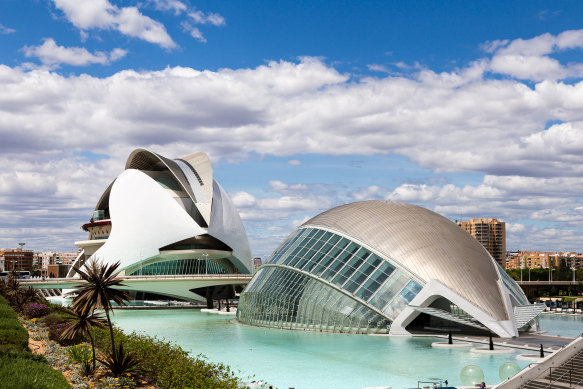
From Gaudí to Picasso, Barcelona is spectacular, but the city centre is overrun with tourists, and overtourism protesters. For a less frenetic city break, head for Valencia, home of the legendary Holy Grail.
The Holy Grail is housed in Valencia’s archaic, atmospheric cathedral – an eclectic blend of Gothic, Romanesque, baroque and neoclassical styles. The city also boasts one of Spain’s great art galleries, the Museum of Fine Arts. It contains masterpieces by Goya, El Greco and Velázquez, yet it’s remarkably quiet.
A snazzier attraction is the City of Arts and Sciences, a dazzling cluster of museums designed by Spanish starchitect Santiago Calatrava. The museums are interesting, but the space-age architecture is the biggest draw, a futuristic cityscape of undulating steel and glass.
An important port since Roman times, Valencia has some gorgeous beaches too. Check out El Cabanyal and La Malvarrosa. The birthplace of paella and Horchata (a delicious nutty drink a bit like chocolate milkshake), Valencia is an essential destination for anyone who loves Spain.
How to get there
Fly into Madrid via one of the major Asian of Middle East hubs then take the Renfe train (about two hours). Alternatively, Turkish Airlines flies direct into Valencia from Istanbul, with connections to Australia.
Where to stay
Las Arenas Balneario Resort has rooms from $310.
Don’t go to Geneva – go to Lausanne
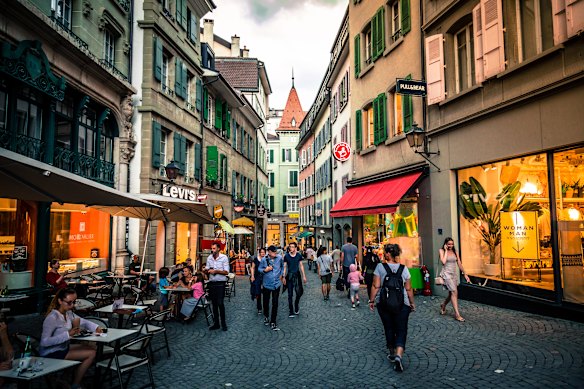
Geneva is pleasant but it’s primarily a business city, and though its lakeside setting is attractive, its streetlife is generally pretty bland. If you want to see the best of Europe’s greatest lake, go to Lausanne.
Geneva is tucked away in a narrow corner at the far end of Lac Léman (as French speakers call Lake Geneva). Lausanne sits in a splendid position at its midpoint, the widest part of the lake. The city tumbles down a steep hillside, with breathtaking views across the clear blue water, to the French spa town of Evian and the snowcapped Alpine peaks beyond.
People don’t just come here to admire the view. Its large student population makes Lausanne the liveliest city on the lake, and its galleries attract an arty crowd, here to let their hair down and have fun rather than to do boring business deals. Drop into Plateforme 10, right beside the train station – it’s more than a modern art museum, it’s also a stylish rendezvous.
How to get there
Fly to Geneva with Emirates, Etihad, Qatar Airways or Turkish Airlines. Travel on by train to Lausanne with SBB.
Where to stay
Château d’Ouchy has rooms from $502.
The Telegraph, London