3 months ago
4
3 months ago
4
Andeau Bowley’s skin cancer wasn’t caused by the sun. It grew out of sight, in the mucous membranes of her body. By the time it was discovered, it had already spread to her lymph nodes. Within months, it had reached her brain.
“In the end, it was 10 months,” said her daughter, Ellie. “It’s just the most aggressive form of cancer I’ve ever had experience with.”
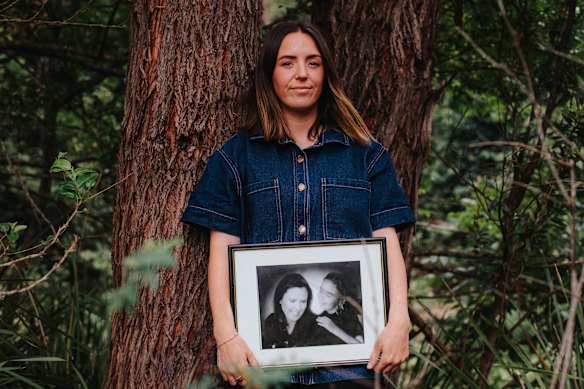
Ellie and Andeau Bowley were inseparable, an only child and a single mother, until mucosal melanoma claimed Andeau’s life in June 2024. Credit: James Brickwood
Andeau was 58 when she died in June 2024, a few months before the birth of her second grandchild. Ellie is telling her story for the first time to encourage more Australians to check their skin at the change of every season – and catch other early signs of cancers that collectively claim more than 1000 lives every year.
“We so desperately don’t want another family to have to experience what we’ve experienced,” Ellie said. “This person who you just adore – your entire world – they’re not the person who you remember them because as soon as the tumour hit her brain, she couldn’t put a sentence together.”
Andeau’s GP initially suspected the pain in her rectum was a hemorrhoid. When it didn’t heal after two months, she was referred to a colorectal surgeon who diagnosed her with mucosal melanoma, a rare cancer affecting the pigment-producing cells of membranes in areas including the throat, nose, vagina and anus.
Loading
Ellie studied dermal science and has worked in skincare for more than a decade, but had never heard of mucosal melanoma until her mother was diagnosed. It accounts for about 1 per cent of all melanoma cases in Australia, and is more aggressive. Fewer than one in four people diagnosed are alive after five years.
While her cancer would not have been detected in a routine skin check, Bowley said her mother’s experience highlighted the importance of regular check-ups, and seeking a second opinion if something doesn’t feel right.
“It could have been picked up a lot earlier if she explained those symptoms that she was experiencing,” Bowley said. “Don’t just wait … if you think something’s not right, speak up.”
Unusual symptoms can be red flags in more common forms of melanoma and skin cancer. For Tamara Dawson, who was diagnosed with stage four metastatic melanoma in 2015, the first sign was abdominal pain which a GP initially thought was a muscle strain.
Loading
“I went to have a CT scan and a biopsy, and that’s when I found out that I had melanoma that had spread to my liver,” Dawson said. “It’s on all of us to get to know our body, know our skin, but know when something’s not right.”
Dawson is now cancer-free and has since established the Melanoma and Skin Cancer Advocacy Network (MSCAN). On Wednesday, at Parliament House in Canberra, the charity will launch a new scorecard to track Australia’s progress on skin cancer prevention, early detection, and treatment. It will be updated every five years.
Melanoma survival rates have improved dramatically in the last five years despite more people being diagnosed every year. But mortality rates for the most common skin cancers – sometimes called keratinocyte cancers or non-melanoma skin cancers – have not improved in the same period, hovering around three deaths for every 100,000 Australians.
Because these cancers are mostly removed by GPs, it is unclear how common they are nationwide. Dawson said a national surveillance strategy was crucial.
Boosting sun-protective behaviour in secondary schools, improving and tracking the availability of shade in public spaces, and encouraging organisations to schedule outdoor sports at times of the day with lower UV were all areas where Australia has made minimal progress in the last five years, the scorecard noted.
“The teenage age group is quite challenging to get the message through about sun protection,” said Professor Victoria Mar, the director of the Victorian Melanoma Service at the Alfred Hospital in Melbourne.
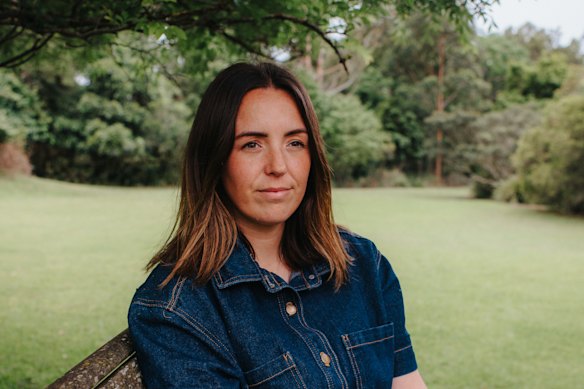
Ellie Bowley: “I just want to take Mum’s legacy and make it something.”Credit: James Brickwood
Skin cancer experts have repeatedly raised concerns that myths about sunscreen and the glorification of tan lines are eroding progress among a generation too young to remember the “slip, slop, slap” campaign.
“Unfortunately, there’s a lot of misinformation around sunscreens,” Mar said. “It tends to flare up every so often, and we’re going through a bit of a flare-up at the moment.”
Bowley said it was frustrating to see many people turning their back on simple sun safety measures that reduced their risk of getting preventable forms of the cancer that claimed her mother’s life.
“I’ve experienced first-hand what melanoma can do to someone, and I wouldn’t wish that on my worst enemy,” she said. “No tan is worth the risk of melanoma or skin cancer and what it does to the body.”
The Morning Edition newsletter is our guide to the day’s most important and interesting stories, analysis and insights. Sign up here.
Most Viewed in National
Loading