3 months ago
38
3 months ago
38
London: A damaging split over climate change has stymied a European bid to set new targets on carbon emissions on the eve of a United Nations summit, as leaders drag out a decision over concerns at the economic costs.
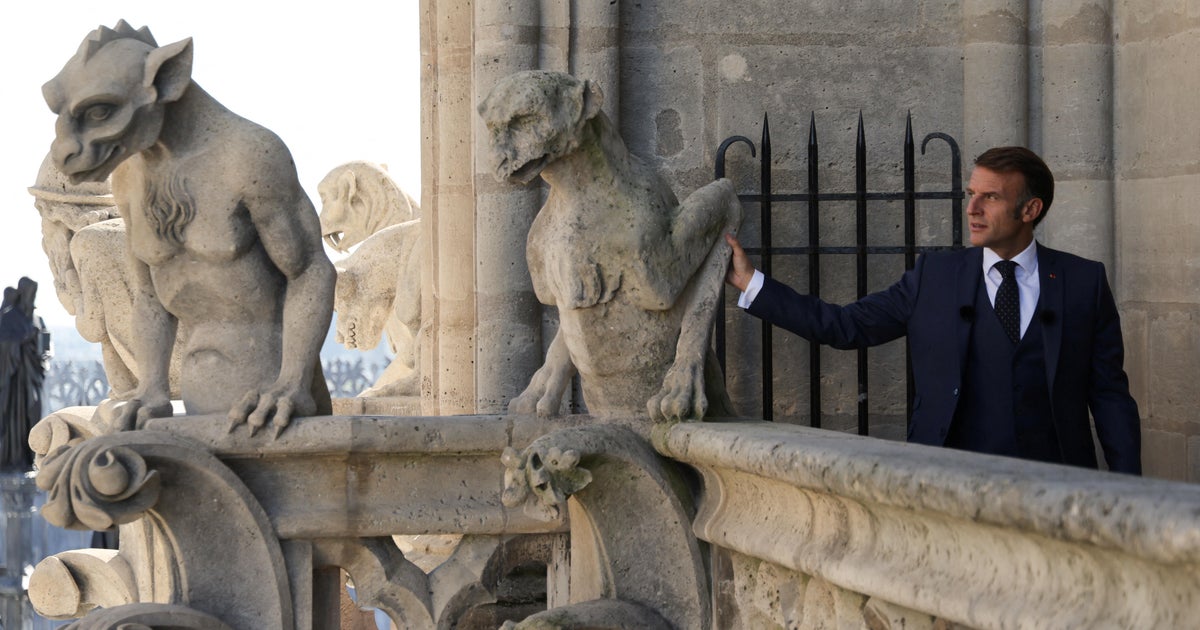
French President Emmanuel Macron is being blamed for stalling a formal pledge to cut emissions by 2035, while leaders from Italy and Poland have also argued against deeper cuts when Europe confronts low growth and the war in Ukraine.
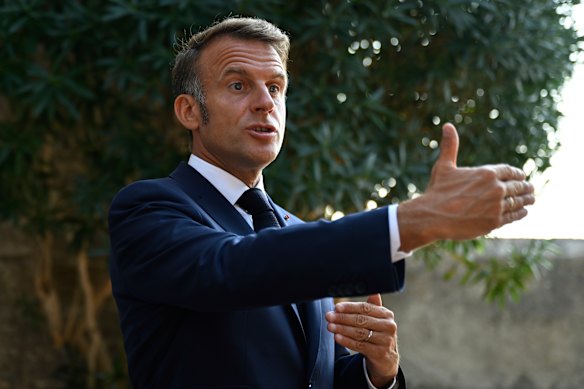
French President Emmanuel Macron is being blamed for stalling a formal pledge to cut emissions by 2035.Credit: AP
The impasse means the European Union will not set a formal target for 2035 in time for the UN gathering in New York next week and is struggling to reach an agreement in time for the UN climate summit in Brazil in November.
The outcome prompted warnings from environmental groups about a setback for the stated global goal of limiting warming to 1.5 degrees Celsius under the Paris agreement reached a decade ago.
EU ministers could not agree on a formal pledge and instead released a “statement of intent” that has no binding status in the UN negotiations, saying they would aim to cut emissions by 66.25 per cent to 72.5 per cent by 2035.
Loading
“Building consensus is something that takes time,” said EU climate commissioner Wopke Hoekstra.
The EU goal appears close to the formal Australian target revealed on Thursday when Prime Minister Anthony Albanese said the government would go to the UN summit with a pledge to cut emissions by 62 per cent to 70 per cent.
The targets cannot be directly compared, however, because the European goal seeks to reduce emissions from the levels of 1990 while the Australian pledge has a baseline of 2005. The Australian target is a Nationally Determined Contribution (NDC) for the UN climate summit, while the EU goal is not a binding commitment.
Climate Analytics founder Bill Hare, a climate scientist who works in Europe and Australia, said the EU statement was a “major embarrassment” when a target of more than 77 per cent was needed to meet the Paris goal of limiting warming to 1.5 degrees.
“It is of profound concern that the EU is unable to maintain its leadership at this critical time,” he said in a statement to this masthead.
“The difference between the proposal on the table and what’s needed for 1.5 degrees Celsius is not just a numerical gap; it’s a crucial test of the EU’s political will and its climate credibility.”
Hare linked the EU outcome to the Australian announcement by noting that Albanese had pointed to the European range to justify his targets, which Climate Analytics also labelled too weak. Hare was a lead author of the Intergovernmental Panel on Climate Change fourth report, which led to the IPCC receiving Nobel Peace Prize in 2007.
Italian Prime Minister Giorgia Meloni has warned against trying to cut emissions in a way that would damage industry, a key factor for other leaders when they are spending heavily on defence and want to boost manufacturing.
“I have often said that in a desert there is nothing green,” Meloni said in May. “Before anything else, we must fight the desertification of European industry.”
Loading
Behind the 2035 delay is a broader argument about an EU proposal to cut emissions by 90 per cent by 2040, a step towards achieving net zero emissions. EU ministers will seek to agree on a formal NDC at another meeting in October, in time for the summit in Brazil in November. China is expected to announce its new NDC next week.
Macron warned in June that the 2040 target would have to be “compatible with our competitiveness” and that this mean EU members should take the time needed to reach agreement.
Polish Prime Minister Donald Tusk has expressed concern this year at the speed of the EU plans on carbon emissions and the environment when
“If we go bankrupt no-one will care about the world’s environment any more,” he said in January.
German Chancellor Friedrich Merz criticised the EU’s mandate for electric vehicles in a speech to a Munich motor show earlier this month, opposing the plan to halt the sale of internal combustion engines using fossil fuels by 2035.
“We need more flexibility in regulation,” he said.
Spain and Denmark are said to support stronger climate action, but they are being countered by the Czech Republic and the biggest economies in the union.
The World Wildlife Fund said the heat waves in Europe over the past northern summer had caused 16,500 deaths and cost the economy €43 billion ($77 billion), citing this as proof of the need for greater ambition on emissions.
“With so many countries looking to Europe to decide on their own NDCs, this was a missed opportunity for the EU to raise the bar and inspire others to follow,” said Shirley Matheson of the WWF.
Get a note directly from our foreign correspondents on what’s making headlines around the world. Sign up for our weekly What in the World newsletter.
Most Viewed in World
Loading