3 months ago
31
3 months ago
31

Western Australia’s environment minister has launched a strident defence of the state’s environmental watchdog amid a wave of criticism from local governments and conservationists over the approval of several controversial projects, including plans for fracking exploration in the Kimberley and a South West tourism development.
Critics claim WA’s Environmental Protection Authority has got some decisions “seriously wrong”, and that the watchdog had “bowed to government pressure” in choosing not to assess some projects.
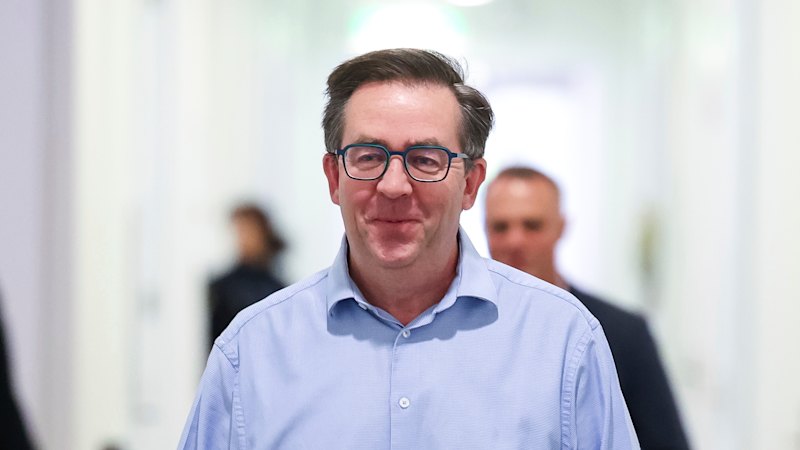
However, speaking at a Committee for Economic Development of Australia industry lunch on Tuesday, WA Environment Minister Matthew Swinbourn said those claims were “damaging” and accused critics of driving an “erosion of trust” in the EPA.
Swinbourn said recent commentary on decisions had been concerning, “both in its confidence in being on the right side of the argument, and at times its distance from the facts”.
“If confidence in [the EPA] is lost as a result of disingenuous, strident and unfounded attacks on its credibility, it will become much harder to maintain the rigorous environmental standards that West Australians expect,” Swinbourn said.
EPA chairman Darren Walsh also weighed in at the CEDA lunch, conceding the watchdog was operating in a “very contested environment at the moment”.
The EPA recently received an unprecedented number of appeals – more than 8000 – after signing off on plans for Texan-owned oil and gas company Black Mountain Energy to frack the Kimberley as part of exploration for its Valhalla gas project.
“Frankly, whether we receive one really well-informed submission versus 8000 not so well-informed submissions, what we’re interested in is the content of it,” Walsh told the lunch on Tuesday.
“Talk to the facts, provide information that helps us make our reporting more appropriate. That’s probably the key message – it’s not about numbers, it’s about content.”
Environs Kimberley director Martin Pritchard said he had been shocked by the decision to recommend “the most environmentally destructive proposal in the history of the Kimberley” for approval in the first place, describing it as “outrageous”.
Meanwhile, Conservation Council of WA executive director Matt Roberts claimed the EPA should “never have recommended in favour of this project”, and accused the watchdog of getting it “seriously wrong”.
“The EPA has relied on loose and unsubstantiated claims by the proponent about managing waste water contamination risks, which leaves us fearing there are no substantial plans in place to deal with the issue, or fund clean-up efforts post event,” he said.
Walsh said he had met with Environs Kimberley and traditional owners on site to discuss concerns – behind-the-scenes developments that had not reached the ears of the public.
But it is not just conservationists dismayed with the EPA.
Local governments have also hit out over decisions, including the recent green tick for a $280 million development at Smiths Beach in Yallingup, five years after the Adrian Fini-led developers first lodged the 42-hectare proposal.
That project – at a site with a rich history of controversial development attempts – includes a hotel, wellness centre, 61 holiday homes, campground, community hub and surf lifesaving club.
The City of Busselton has lodged a formal objection to the EPA’s decision, writing a letter to the minister that “drew attention to departures by the EPA from its own objectives and functions and questioned whether the assessment had proper regard to the Statement of Environmental Principles”.
“In particular, the City has significant concerns that the EPA recommendation is compromised by inaccurate calculations of required vegetation clearing, insufficient consideration of visual landscape impact, inadequate attention to coastal processes, and a failure to enforce longstanding requirements to cede land for inclusion in the national park,” a city statement said.
The green light for the Smiths Beach plans came after Swinbourn approved Saracen Properties’ 121-room five-star Westin resort and residential village in Gnarabup, south of Margaret River.
That project has also faced scrutiny and opposition from nearby residents and community groups.
Swinbourn said the EPA had recommended the project could proceed subject to strict conditions.
“Those conditions were further strengthened following community appeals to the state’s appeals convener, which I accepted and implemented as part of the final approval condition,” he told the CEDA lunch on Tuesday.
“These are the facts. Approval of the project did not simply dismiss the concerns of the community.”
Projects watchdog declines to assess just as controversial as approvals
In Perth, Town of Victoria Park Mayor Karen Vernon also criticised the EPA for announcing it would not assess the environmental impacts of the Cook government’s much-maligned Burswood racetrack and sporting precinct development.
Of the 953 submissions received in a week-long comment period, 877 supported a formal assessment.
“The EPA’s refusal to conduct any review is an abject failure to meet its own statutory purpose to protect the WA environment and prevent, control, abate and mitigate pollution and environmental harm that is clearly present in the racetrack project,” Vernon said.
“This is beyond disappointing. It is clear that the EPA has bowed to government pressure about this project by prioritising speed in decision-making over environmental protection.”
She said all West Australians were entitled to feel aggrieved by an environmental watchdog that “won’t do its job properly”.
However, Swinbourn said the EPA had decided not to assess the Burswood development because environmental impacts – including construction impacts and operational noise – were assessed as “localised, intermittent and short in duration”.
“Claims were made around the supposed pristine nature of the area, which ignores the fact that it was largely a tip, golf course, and now includes a freeway that hosts thousands of cars every day,” he said.
“Not liking a proposal is not in itself evidence of environmental harm.”
Swinbourn also addressed the EPA’s ongoing assessment of Alcoa’s plans to strip-mine WA’s Northern Jarrah Forest, which attracted 59,000 public submissions.
While reluctant to get involved in discussions about the future of that assessment, Swinbourn confirmed he was waiting for expert advice from the EPA.
“We do continue to undertake significant monitoring work in relation to [Alcoa’s] ongoing operations,” he said.
“Sometimes the discussion around what happens with Alcoa is very unitary among people, and often there is no appreciation or discussion about the many thousands of people that will be affected if mining is stopped in that particular area.
“I’ve had that responsibility; I have to face those people when those decisions are made.”
Misinformation ‘rife’ in ‘polarised’ debate: minister
Swinbourn claimed “misinformation and disinformation have become rife” in the public debate about environmental issues, which he said was becoming “increasingly polarised”.
“At the extremes, positions are sometimes driven more by base sectional interest than evidence, and when debate moves away from facts and into absolutes, it becomes much harder for governments and regulators to operate in a sensible centre where most West Australians expect decisions to be made,” he told the lunch on Tuesday.
“One of the things that does agitate me is that when groups don’t get an outcome that they want they attack the EPA and the institutions and the individuals that are involved without foundations.
“[They think] ‘we want to undermine the institution because if we can do that, we can undermine public confidence, and then we might get the outcome that we want’.”
Walsh said conservation organisations and other groups used social media “exceptionally well”, but the EPA was focused on the facts and the science, not the politics.
“Government doesn’t direct us about how we do assessments. Government doesn’t direct us in terms of what good outcomes would occur, and I can say very authoritatively that it actually doesn’t happen in practice. It’s just not there,” he said.
Swinbourn was adamant WA could “walk and chew gum at the same time”.
“We can protect ecological outcomes where they need to be protected. We can also approve sustainable economic development,” he said.
“To say otherwise is to ignore the reality that WA prosperity underpins our ability to balance conservation and environmental protection against responsible development.
“We do not have to choose between development and conservation. We can have both.”
Start the day with a summary of the day’s most important and interesting stories, analysis and insights. Sign up for our Morning Edition newsletter.