3 months ago
14
3 months ago
14
New nationwide e-bike standards will come into effect by the end of the year as authorities grapple with how to slow the flood of high-powered electric motorbikes into Australia.
And it may soon become illegal to sell an e-bike that can travel faster than 25km/h.
There has been growing community concern about teens hooning on high-powered electric bikes, which are not currently illegal to sell, but are only legally allowed to be ridden on private property.
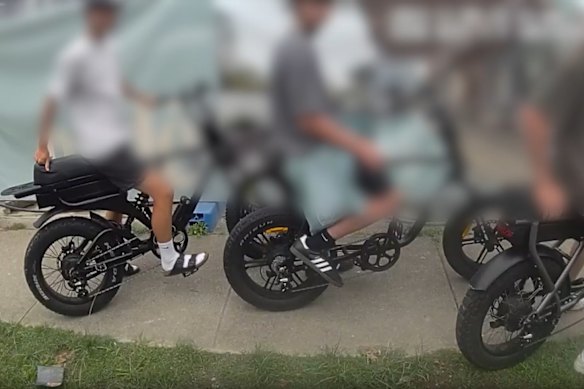
Police stopped three Gold Coast teenagers riding non-compliant bikes in Coolangatta on November 9, telling them they were electric motorbikes as they were powered by a throttle.Credit: Queensland Police Service
In the past month, a 15-year-old boy has been charged over a head-on electric bike crash that led to the death of an eight-year-old boy on the Sunshine Coast, and a 15-year-old died after crashing a SurRon Ultra Bee electric dirt bike on Broadbeach Boulevard on the Gold Coast.
Queensland Premier David Crisafulli has nonetheless resisted pressure to change existing rules before Christmas, while a parliamentary inquiry into e-mobility is due to report by March 30.
High-powered electric bikes have flooded into the country, and onto shared paths and public streets, partly due to a loophole in import laws.
A mandatory import approval through the federal government providing evidence a bike met the definition of an e-bike was removed in 2021, and replaced with an optional advisory notice.
In a briefing paper, the Queensland Transport and Main Roads Department said that meant e-bikes were not subject to the same level of scrutiny or assessment as road vehicles by Border Force.
“This has enabled the importation of non-compliant devices, such as high-powered or high-speed e-bikes that function more like motorcycles to be imported as legal e-bikes without oversight,” the department said.
However, a communiqué released on Friday reveals federal, state and territory transport ministers have agreed to reinstate reference to the European standard, EN15194, into the Road Vehicle Standards (Classes of Vehicles that are not Road Vehicles) Determination by the end of the year.
“Good, clear rules around e-bikes are critical to ensuring Australians are safe on the road and riding a compliant bike that isn’t dangerously overpowered,” federal Transport Minister Catherine King said.
“We will continue to work with states and territories to ensure consistency as we develop a regulatory framework that ensures safe and consistent supply and use of these devices in Australia.”
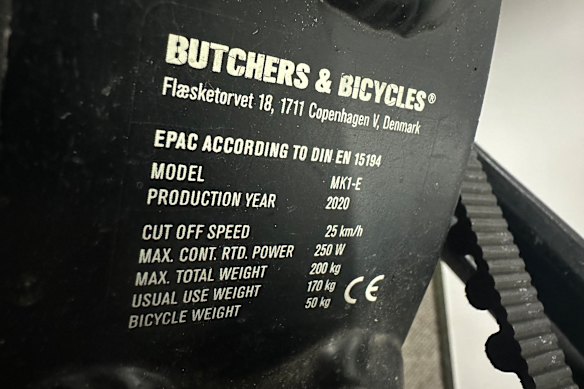
An example of an EN15194 compliance label on an e-cargo bike.Credit: Felicity Caldwell
The optional advisory notice for imports remains, but reinstating EN15194 will provide further clarity to consumers and sellers.
Under EN15194, e-bikes have a motor with a maximum continuous rated power of 250 watts, which must cut out when the speed reaches 25km/h, must be pedalled to receive assistance, and meet safety standards.
Loading
While road rules across Australian states and territories ban high-powered electric dirt bikes from being ridden on public roads or paths, they can be ridden on private property, and they are not currently illegal to sell or buy, with e-dirt bikes with motors up to 10,000 watts available for sale.
Ministers have also agreed to work towards a new regulatory framework for devices across Australia, while “still promoting mobility and innovation”.
Mandatory product standards under Australian Consumer Law may be considered for e-bikes as part of this broader national strategy.
Such standards would restrict the sale of non-compliant e-bikes in Australia in shops or online.
A clear national standard would also make it easier for police to run education campaigns and ensure e-bikes used in public places are legal.
The 250-watt and 25km/h speed limit under the EN15194 standard aligns to the road rules for e-bikes in all Australian states and territories, except in New South Wales, where e-bikes up to 500 watts are currently allowed.
This masthead contacted the NSW Transport Department to ask if they would adopt the 250-watt standard but did not receive a response before publication.
Road rules will continue to be the purview of states and territories.
We Ride Australia national advocacy director Stephen Hodge welcomed the move to reinstate reference to EN15194 into the Road Vehicle Standards (Classes of Vehicles that are not Road Vehicles) Determination.
“The reinstatement of EN15194 means Australians will have the confidence to know the e-bikes they buy for themselves and their children are safe and fit for purpose,” he said.
Queensland police have been running an operation over the past three weeks, visiting schools and conducting high-visibility patrols targeting safe use of e-scooters and bikes, and issuing hundreds of fines, most for not wearing helmets.
“What these numbers do not capture is the conversations our officers are having with parents, children and Queenslanders every day – unfortunately, the majority don’t seem to have an understanding about safety and non-compliant devices,” Road Policing Group Chief Superintendent Mark Wheeler said.
Start the day with a summary of the day’s most important and interesting stories, analysis and insights. Sign up for our Morning Edition newsletter.
Most Viewed in National
Loading