3 months ago
20
3 months ago
20
We reflect on some of the great, and not so great, comebacks of sporting history.
The success stories
Bob Simpson (cricket): The former Australian skipper retired in 1968, at the age of 32, to pursue a business career.
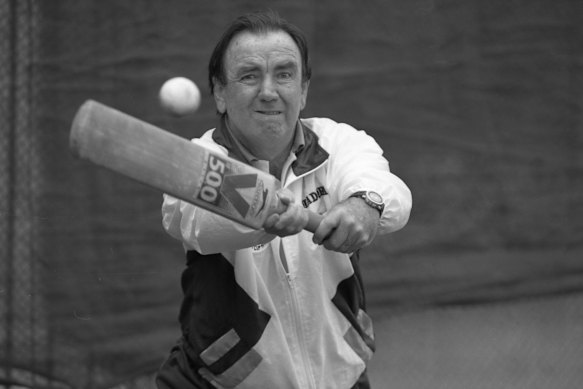
Former Australian skipper Bob Simpson.Credit: The Age
But he continued to play at club level for his beloved Western Suburbs and was cast in the unlikely role of saviour in 1977 when World Series Cricket decimated the national team.
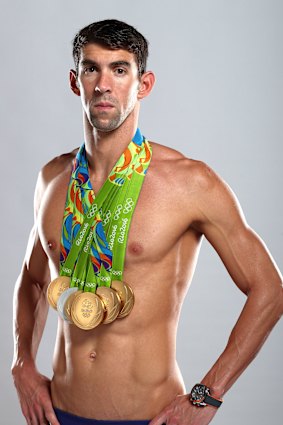
Michael Phelps after the 2016 Rio Olympics.Credit: Getty
Aged 41, he played two series and 10 Tests against India and West Indies, scoring two centuries and averaging almost 40 with the bat.
Michael Phelps (swimming): The American superstar had already won more Olympic gold medals than any athlete in history when he retired after London 2012.
But just when his rivals were daring to dream, Phelps announced he was returning to the pool for Rio 2016, collecting another five golds to take his overall Olympic tally to 28 - a record unlikely to ever be broken.
Lauren Jackson (basketball): Arguably Australia’s greatest-ever basketballer, chronic injuries forced Jackson to retire in 2016.
But six years later, as a mother of two, she resumed playing for the Albury-Wodonga Bandits and was so impressive she was recalled to the national team.
She proceeded to represent the Opals at Paris 2024, becoming the first Australian athlete to win medals at five Olympics.
George Foreman (boxing): A heavyweight world champion in 1973, after beating the previously undefeated Joe Frazier, Foreman retired four years later.
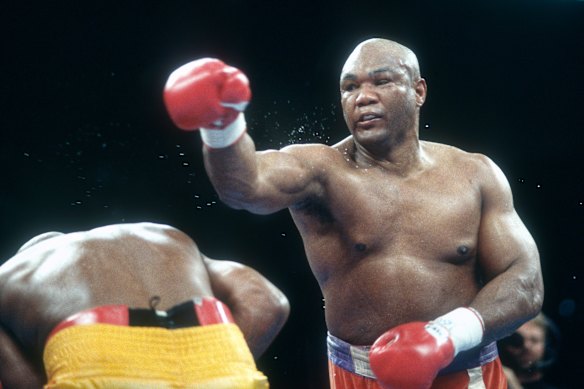
George Foreman and Michael Moorer fight for the WBA and IBF heavyweight titles.Credit: Getty Images
A decade on, he returned to the ring and, in 1994, he became the undisputed world champion with a victory over Michael Moorer. When he defended his title against Axel Schulz, Foreman became the oldest heavyweight champ, at 46 years and 169 days.
Gary Ablett Senior (AFL):
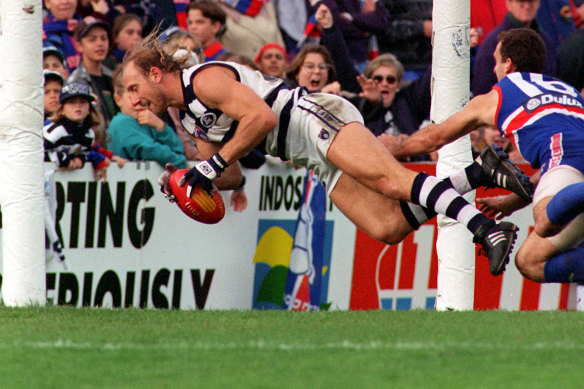
Gary Ablett snr playing for Geelong during the heyday of his colourful career.Credit: Jim Hooper
The man Geelong fans called “God” shocked AFL fans in early 1991, announcing his retirement at the age of 29, saying he had fallen out of love with the game.
But he was back within six months and proceeded to play until 1997, winning an array of coveted individual awards and earning induction into the AFL team of the century.
The not-so-successful stories
Lance Armstrong (cycling): The American was an international icon when he retired in 2005, having overcome cancer to win a record seven Tours de France.
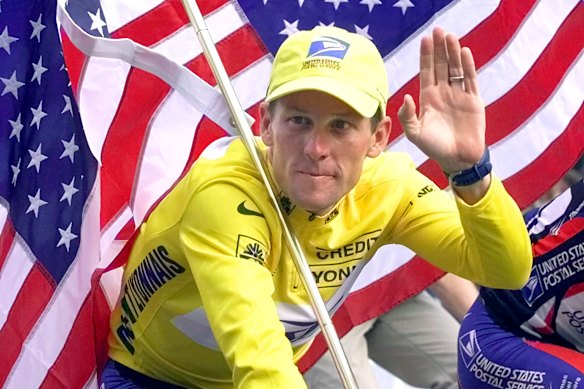
Lance Armstrong was stripped of his seven Tour de France victories.Credit: AP
But in 2010, he returned for another crack at the great race, finishing a distant 23rd.
Worse was to come, as anti-doping officials were finally able to gather enough evidence to prove that Armstrong had been cheating through his career.
He was stripped of every title he had won and banned for life.
Bjorn Borg (tennis): The world’s best tennis player in the late 1970s and early 1980s, Borg retired at the peak of his powers, aged 26.
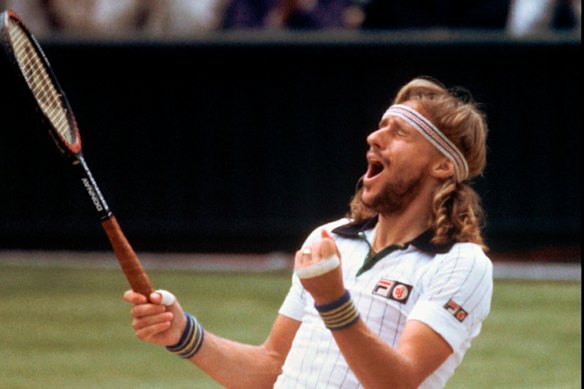
Bjorn Borg was the dominant player of his era.Credit: AP
The 15-time grand slam champion launched a comeback nine years later, attempting to use his preferred wooden racquet, but was no match for the modern graphite models his younger rivals were using.
He failed to win a match in 12 attempts before again pulling the pin.
Mike Tyson (boxing): He was the “baddest man on the planet” after becoming the youngest boxer to win a heavyweight world title in 1987, aged 20.
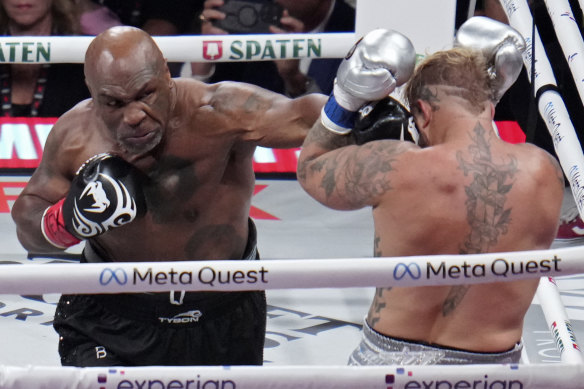
Mike Tyson during his recent fight with Jake Paul.Credit: AP
But he was never the same fighter after spending almost three years in jail for rape, between 1992 and 1995.
He returned to the ring in 1996 but consecutive losses to Evander Holyfield left Tyson a spent force.
Ian Thorpe (swimming): A teenage prodigy, Thorpe won gold medals at the Sydney and Athens Olympics and was arguably the world’s best swimmer before giving it away at the age of 24.
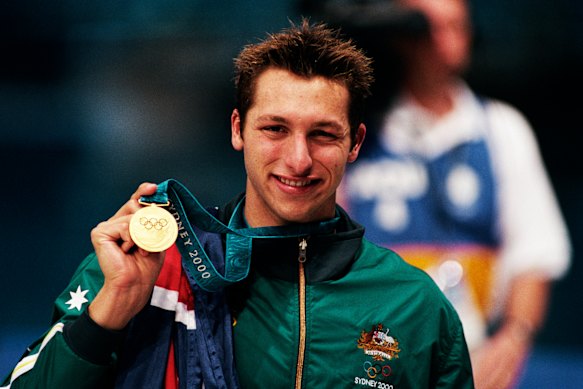
Australia’s Ian Thorpe was arguably the world’s best swimmer in his prime.Credit: Sygma via Getty Images
Five years later, he attempted a comeback in the countdown to London 2012, but was unable to qualify.
Martina Hingis (tennis): The “Swiss Miss” became the youngest player to win a tennis grand slam, and to be ranked No.1 in the world, after exploding on the scene in the mid-1990s.
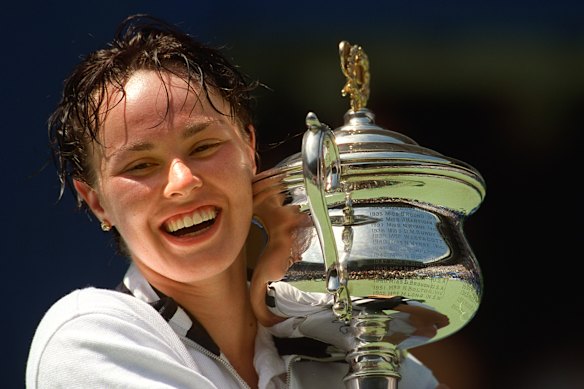
Martina Hingis with one of her three Australian Open singles trophies.Credit: Ray Kennedy
But injuries prompted her to retire at the age of 22. She returned a year later, but was unable to add to her five grand slam singles titles.
She retired again in 2007, after copping a two-year ban for testing positive to a metabolite of cocaine, but reappeared in 2013 to forge a successful doubles career.
A league of his own
Michael Jordan (basketball): The basketball icon made two comebacks – one successful, the other not so much.
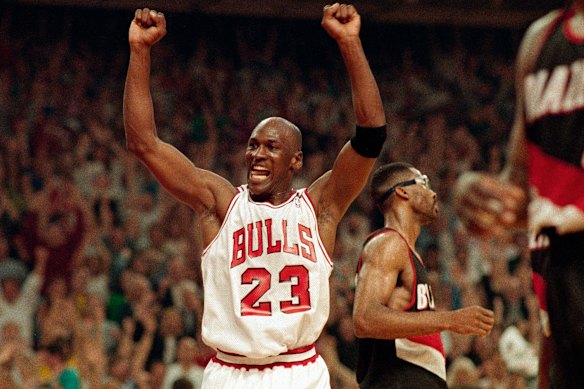
Michael Jordan is widely regarded as the greatest basketballer of all time.Credit: AP
After winning a three-peat with Chicago (1991-93), Jordan tried his luck in minor league baseball. He eventually returned to the Bulls in 1996 to win another hat-trick of titles.
He retired again, but three years later resumed playing for the Washington Wizards, having become a part-owner of the franchise.
The great man could not inspire Washington to reach the play-offs during his two-season playing stint.