
 5 months ago
88
5 months ago
88
Thud. Generations of readers have known the sound of the newspaper that has chronicled their lives hitting the front lawns of Sydney homes.
First published as a four-page weekly, the Sydney Herald aimed to sell 600 copies. Success soon demanded daily publication and a new name.
Now 195 years on, the print and digital publications of The Sydney Morning Herald reach millions of readers.
Over those years, the Herald stood watch as Sydney grew from a colonial settlement into a global city.
We reported the discovery of gold in 1851, the openings of the Harbour Bridge and the Opera House, and massive tunnel boring machines now tearing through the city’s sandstone to make ways for vehicles and trains.
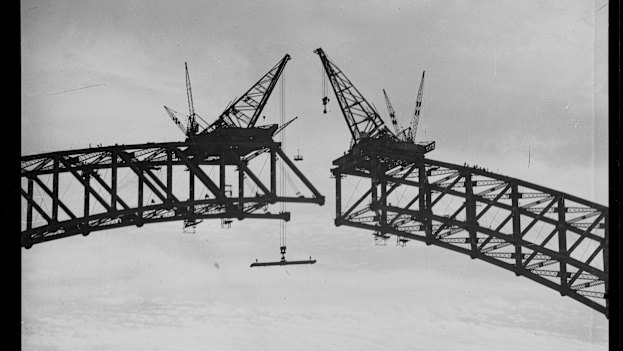
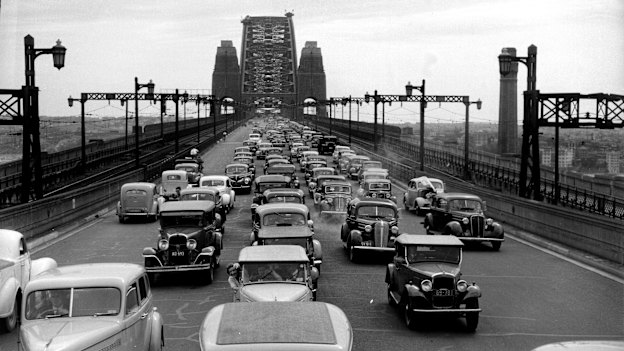
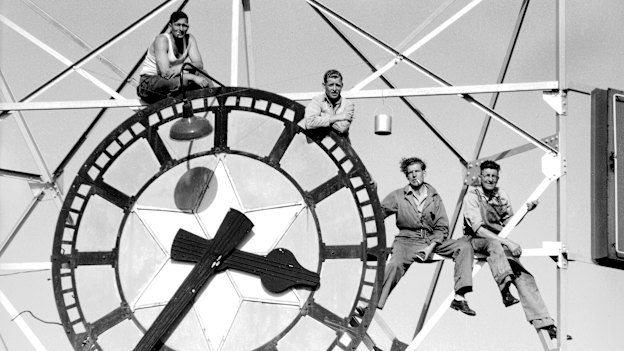
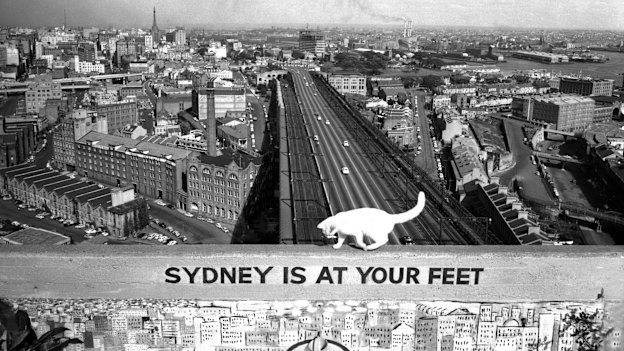
There were floods, fires, pandemics, wars and disasters, including the 1857 sinking of the Dunbar off Port Jackson, the 1964 ramming of HMAS Voyager off Nowra and the 1997 Thredbo landslide.
There were politics galore. Federation, the 1967 referendum to constitutionally recognise First Nations people, the 1975 dismissal of the Whitlam government, John Howard taking the guns after the 1996 Port Arthur massacre, the 2017 same-sex marriage legislation, the robo-debt failings, the Wranslide era and Gladys Berejiklian’s groundbreaking premiership.
Peter Hartcher, our political and international editor, follows the trail blazed by our must-read Saturday columnists, Peter Bowers and Alan Ramsey. They put the confusing madness of Canberra into true context. Ramsey was the hard charger who took no prisoners. Bowers was the gloved hand, the first to divine Malcolm Fraser’s resemblance to an Easter Island statue, whose most remembered column was the problem of lost single socks, under the headline “Where, oh where, have 35 odd socks gone?”
And crime. The Myall Creek slaughter (1838), bushrangers, the Clontarf assassination attempt on Queen Victoria’s son Prince Alfred (1868), the Shark Arm murder (1935), the Qantas bomb hoax (1971), the Hilton bombing (1978), the Granny Killer terror of the late 1980s.
In more recent times, crime was reported almost on the spot as the Lindt siege (2014), the Bondi Junction stabbings and the Bondi Beach terrorist attack got real-time coverage through blogs and other platforms.
Malcolm Brown’s dogged reporting following the 1980 disappearance of Azaria Chamberlain was unadorned journalism at its best.
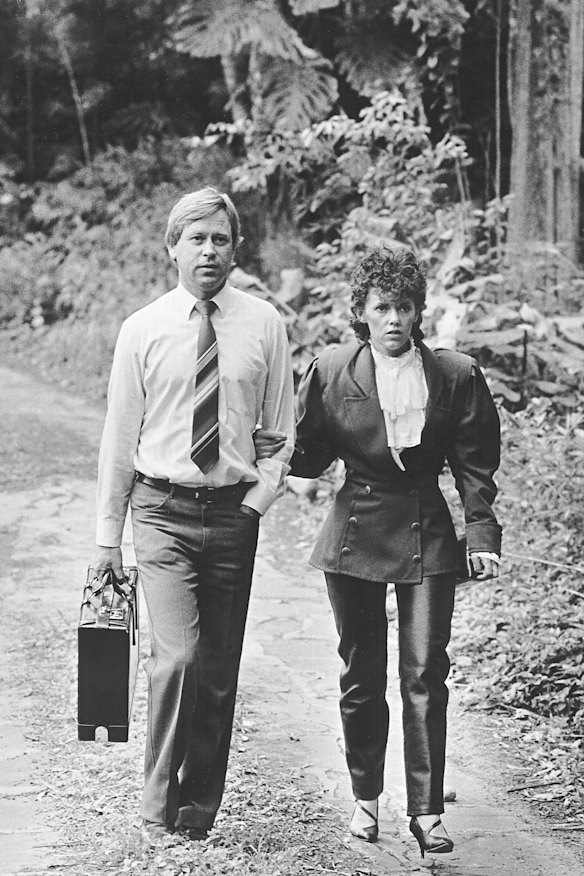
A large lumbering man in a permanent brown suit, Brown somehow managed to convince Michael Chamberlain he was a jogger for an exclusive interview, and he stayed with the story long after most Australians had made their minds up and moved on. He was so invested that when Lindy Chamberlain was convicted, he swore in the court, an act portrayed in the 1988 film Evil Angels. For years at staff Christmas parties, proud colleagues sang a hymn to our only Hollywood star based on The Stranglers’ hit Golden Brown.
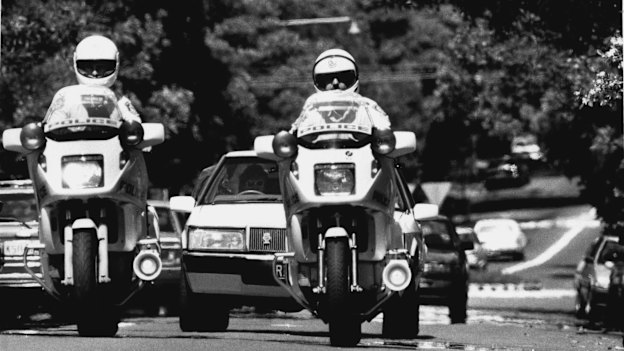
Investigative journalism came into its own after the 1972 Watergate scandal when two American reporters revealed a political cover-up that eventually forced president Richard Nixon from office, and the Herald was quickly on the case.
We enlarged our investigation team to meet the complex challenges first articulated in the US civil rights movement: speak truth to power.
Our chief investigative reporter, Kate McClymont, has been doing just that for many years. She exposed salary cap breaches by the Canterbury Bulldogs after which the club was heavily fined and stripped of NRL ladder points; she probed massive fraud by former Australian Labor Party national president Michael Williamson, who stole millions from the Health Services Union; and she stayed hard on the trail of NSW Labor power broker and politician Eddie Obeid until he was jailed for misconduct in public office.
McClymont, the recipient of many awards, developed an interest in Sydney’s underbelly early on: a university student, she was near Luna Park in 1979 when a mysterious fire killed seven on the Ghost Train; seven years later, she was walking around Centennial Park when the body of police corruption whistleblower Sallie-Anne Huckstepp was found in the lake.
Police corruption was one of our bigger beats: misconduct, systemic issues, sexual harassment and connections to organised crime were running sores. Articles on police corruption in Kings Cross led to the 1994-97 Wood Royal Commission.
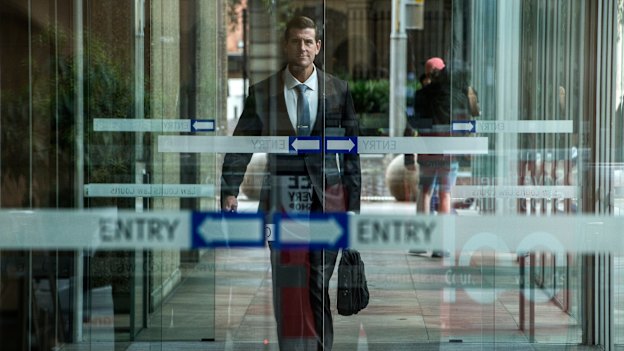
A 1996 investigation into an array of appalling conditions in nursing homes resulted in improved care for the elderly, and in the late 1980s, the Herald played a critical role in the establishment of a royal commission to investigate the multitude of deaths of patients at Chelmsford Hospital, Pennant Hills. Reporting in 2018-19 on misconduct by big banks and systemic failures in the banking industry led to a royal commission.
We have called for, and won, improvements to Sydney’s water and sewage system. Our award-winning investigations into per- and polyfluoroalkyl substances (PFAS) – known as “forever chemicals” – have unearthed widespread contamination across Australia, particularly in Sydney’s water catchments and in the Blue Mountains.
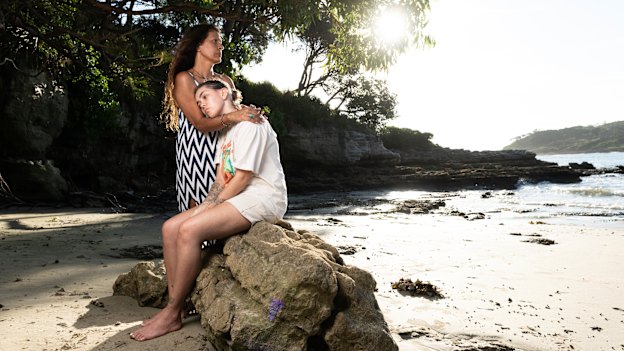
In a copybook example of independent journalism and holding truth to power, the arrest earlier this month of Ben Roberts-Smith, VC, on alleged war crimes in Afghanistan, was the culmination of work begun nine years ago by reporters Nick McKenzie and Chris Masters.
The early years
When John Fairfax bought the Sydney Gazette in 1841, it was the beginning of a dynasty that owned the Herald for 146 years, until family rivalry resulted in a takeover that, on the eve of a global stockmarket collapse, proved disastrous.
But for much of the Fairfax century and a half, the Herald peerlessly reflected the interests and opinions of Sydney’s leafier suburbs.
Gavin Souter, a former reporter and editorial writer who wrote the history of the Fairfax company, Company of Heralds, told the Herald’s Peter FitzSimons our front page banner “Independent. Always” could not have been unfurled during the Fairfax era because the newspaper was in the hands of conservatives who paid little attention to the left.
However, Baby Boomers expanded Sydney’s middle-class numbers, and when they hit adulthood, they wanted homes, jobs and Herald classifieds. They also wanted writing that reflected a changing Australia, and advertising created rivers of gold that purchased bylines, many of whom became household names.
From the Greek island of Hydra came Charmian Clift. Commissioned to write from a “woman’s point of view”, she penned essays on the Vietnam War, conscription, the Greek junta, and world hunger. Craig McGregor completed a cadetship, caught the New Journalism zeitgeist of immersing yourself in the story, and wrote on politics, society, surfing and pop – and in 1966, he even introduced Herald readers to Bob Dylan in a seminal interview.
Queenslander Lenore Nicklin arrived and, as one of the nation’s best feature writers, she moved seamlessly from celebrities to Oxford Street illegal gambling dens, and hobnobbed with Wangi locals at a pub wake to remember a much-loved drinking mate, artist Sir William Dobell. Next, she was discussing I Am Woman with songwriter Helen Reddy. A little later, Tony Stephens′ elegant writing was to range across a spectrum of issues that reflected the changes in Australian society for more than three decades.
They kept coming. In 1981, David Dale began his attention-seeking daily column Stay In Touch, pricking the pomposity of politicians and providing an early glimpse of the internet by running snippets of bizarre reports from around the world that in those days usually ended up ignored in the wastebaskets of teleprinter rooms. Peter Smark, one of the wittiest and most accomplished journalists of his generation, became chief reporter in 1984. David Marr and Adele Horin joined the mix.
While these writers were the “cherry on top”, the day-to-day task of journalism was to get the facts and get them right to help readers understand their city and decide the direction of their lives.
In 1974, long before climate change entered mainstream consciousness, we appointed Joe Glascott as Australia’s first dedicated environment reporter, and our arts coverage through the eyes of reporters, critics and literary editors helped create and maintain a vibrant industry that has reflected Sydney’s growing sophistication and Australia’s rise as an artistic powerhouse.
At the same time, popular culture erupted into a world of its own, and when business, celebrity, fashion, food and gossip started to spread from the citadel of the financial pages and women’s magazines, the Herald was ready. Today they comprise an important and popular part of our journalism.
Global journalism
But traditional journalism has been our forte, and even before Federation we’ve endeavoured to lift the fog of war.
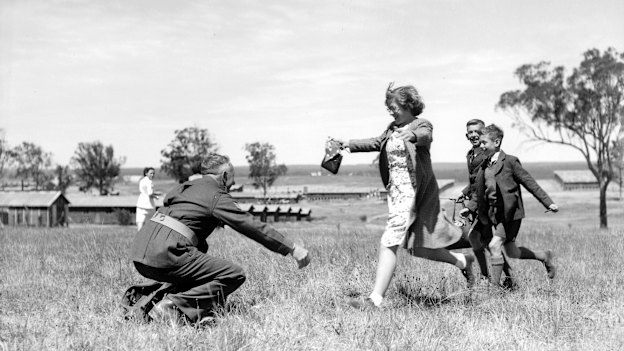
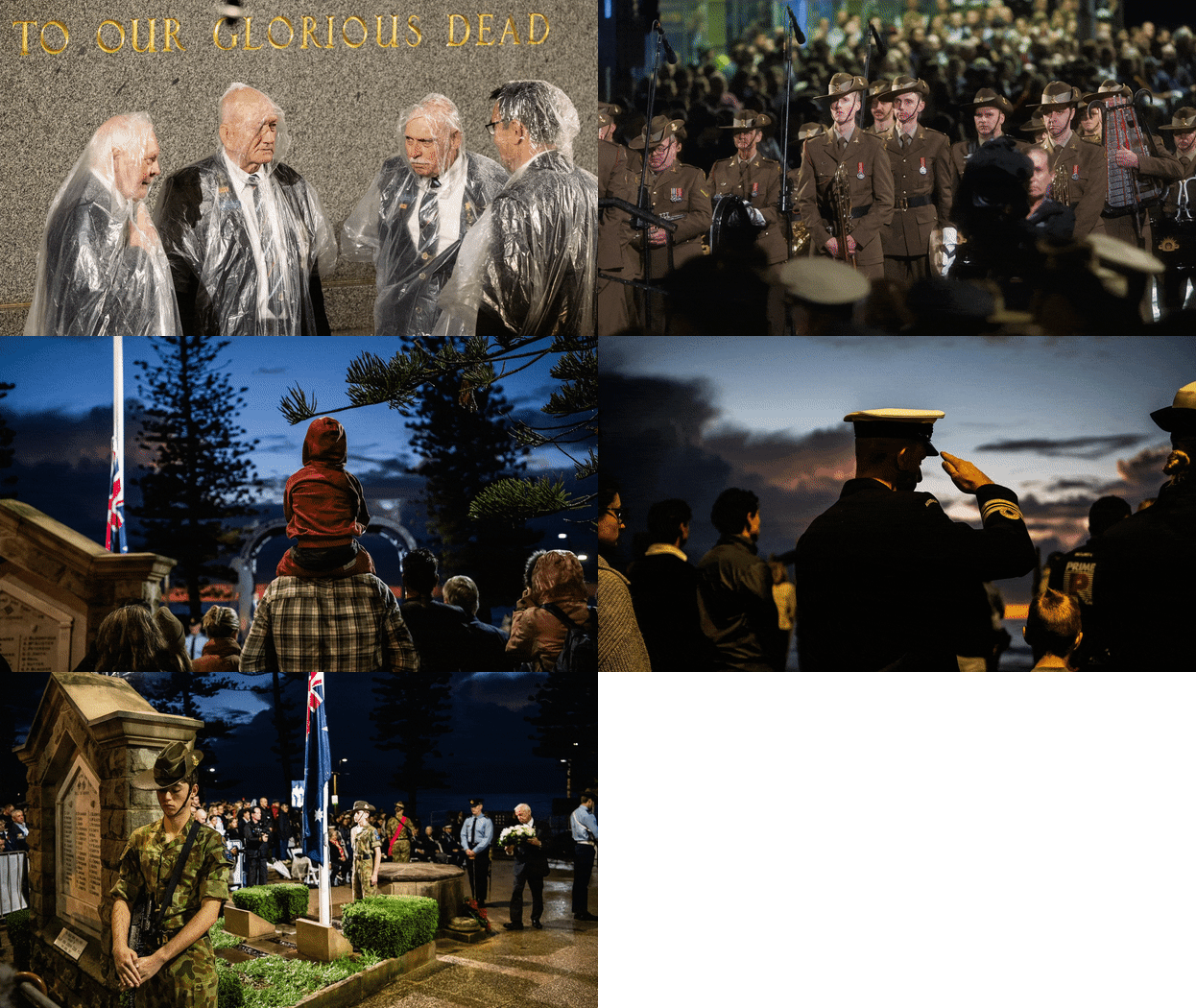
In 1889, Australian poet and journalist A.B. “Banjo” Paterson covered the Second Boer War in South Africa, and during WWI, he was a “special commissioner with the Australian troops” in 1914. Charles Bean, a reporter and editorial writer, was chosen as Australia’s official war correspondent and went ashore at Anzac Cove, and his subsequent writing turned defeat into an enduring victory. Harry Standish and Harry Summers reported World War II. Bill Mundy and Roderick Macdonald were killed in Italy.
In Vietnam, photographer Stuart McGladrie (along with Alan Ramsey in a career before joining the Herald) stayed with the Diggers at Bien Hoa Air Base rather than shelter with the press corps in Saigon and catch taxis to battle.
When Australia joined the US-led Coalition of the Willing to invade Iraq in 2003, the Herald had Paul McGeough and photographer Kate Geraghty in Baghdad, Mark Baker in Amman, Lindsay Murdoch in Kuwait, Tom Allard in Qatar, Russell Skelton in Iran, Hamish McDonald in Islamabad and Ed O’Loughlin in Jerusalem.
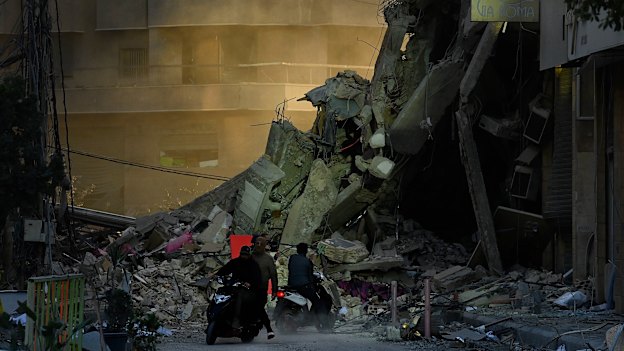
Twenty-three years later, with Lebanon caught in the crossfire between Israel and Hezbollah, Europe correspondent David Crowe and the Herald’s now-chief photographer Kate Geraghty were on the ground in Beirut.
Herald international correspondents have changed journalism history and indeed history.
Three years before equal pay for women became law in Australia, in 1966 Margaret Jones was named the paper’s first correspondent based in Washington, and seven years later, she was appointed Beijing correspondent, the first based in China since World War II. She was succeeded by Yvonne Preston in 1975. The Herald reopened its bureau in Beijing in February, after deteriorating relations between Australia and the Chinese government had forced its closure six years earlier.
In what developed into a diplomatic incident, a former foreign editor, David Jenkins, was banned in 1986 over reports on the corruption and nepotism of the Indonesian president Suharto’s family, and an embarrassed Hawke government stayed mum, wedged between seeming meek or interfering with press freedom.
And when our then Europe correspondent Bevan Shields asked Emmanuel Macron in 2021 if he thought the then-Australian prime minister had lied over a terminated $90 billion submarine contact, the French president’s reply sank Scott Morrison and a thousand ships: “I don’t think, I know.“
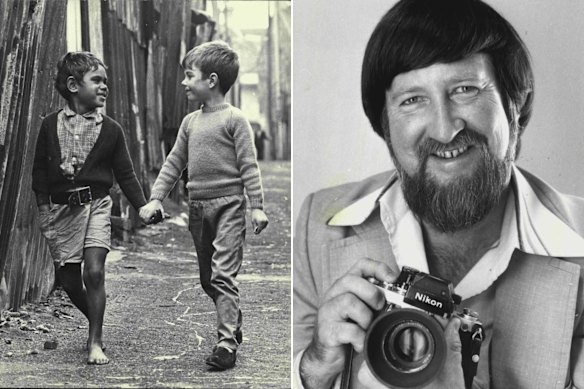
Closer to home, sports writer Roy Masters and photographers like Rick Stevens, Robert Pearce and George Lipman became heritage bylines. So too did cartoonists Alan Moir and Cathy Wilcox, and the late illustrator John Shakespeare.
The Herald’s relationship with its readers may be the biggest defining difference with our competitors.
We’ve given them their own space. The letters pages, Column 8, the opportunity to comment on online stories and the quizzes are all theirs. Some regard these as their personal space. So much so that they even have their own name for DA, the cruciverbalist who creates sometimes-annoying and eccentric Friday crosswords. Clue to his identity: Victorian ABC night show host.
And sometimes it goes way beyond brand loyalty.
In October, the Herald’s economics editor and longest-serving journalist, Ross Gittins, fell ill in Europe and disappeared from our pages. He returned earlier this month with a stunning tour de force headlined “Ross Gittins spent 44 days in ICU and almost died. This is his story.”
The 2300-word story of his recovery from surgery and further complications attracted the sort of online interest usually reserved for the declaration of World War III, and subscribers assiduously read his medical report. That’s not readership. That’s true affection.
Damien Murphy is an award-winning journalist and has worked at The Age and the Herald, on and off, for more than 35 years. He is the Herald’s editorial writer.
Start the day with a summary of the day’s most important and interesting stories, analysis and insights. Sign up for our Morning Edition newsletter.

















































