3 months ago
5
3 months ago
5
Frontline healthcare staff will be offered awareness training to tackle widespread ageism in the health system as older Australians reveal they are being denied treatments, dismissed and excluded from decisions about their own care.
Australia’s age discrimination commissioner Robert Fitzgerald will on Thursday unveil an ambitious plan to combat ageism in healthcare which would seek to boost the representation of people over 65 in clinical trials, review healthcare standards to remove age-related biases and safeguard new healthcare technologies against potential dangers of artificial intelligence.
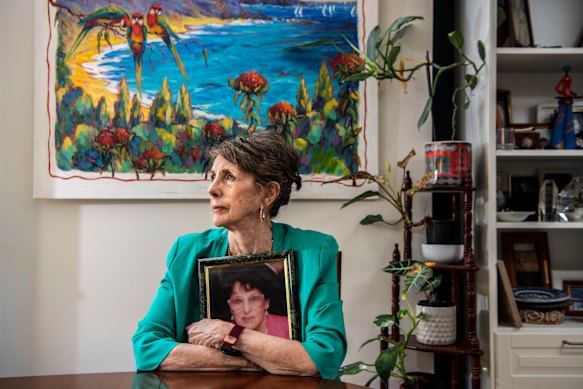
Coralie Wales with a picture of her mother, Bonnie Jean Tosswill, and a painting by the prolific artist. Credit: Steven Siewert
“When you actually talk to people in ... aged care or health care, they will immediately identify that ageism exists,” Fitzgerald said. “We’re not going to blame people, but what we are saying is it absolutely has to change.”
Fitzgerald was spurred to act after dozens of Australians over 65 told the Human Rights Commission about their experiences of age discrimination in healthcare.
One unnamed patient recalled going to an emergency department with stomach pain, where a triage nurse put the complaint down to bad food.
“She said, ‘You’ve probably eaten something you’re not [supposed to]. You should know by your age what not to eat’,” they said. “As it turned out, what I had was ... cancer.”
Many of the dozens of older people who participated in the study reported decisions were being made about their care without them. Some said their age was given as a reason for not proceeding with treatments or procedures, without a medical explanation.
“They [decided] not to operate before I even knew it was an option,” one person said. “I found out after the fact that they’d discussed it with my son and decided it wasn’t worth it because of my age.”
About 16 per cent of Australians are over 65, but that figure is projected to grow beyond 20 per cent by the mid-century.
The federal government is locked in a funding battle with the states and territories over who pays for an increasing number of frail and vulnerable patients in the hospital system. The ABC reported this week that state health ministers were angered by a letter sent by Prime Minister Anthony Albanese in September, demanding they rein in hospital spending.
“Getting old sucks, but it is actually possible to have a positive experience in ageing.”
Age Discrimination Commissioner Robert FitzgeraldIn NSW, taxpayers are spending an estimated $1.2 million a day on hospital patients awaiting discharge to aged and disability care.
Fitzgerald said he was concerned the debate was focused on the burden of “bed block” on taxpayers and waiting times, not on the needs of older Australians: “Did it become a big issue because it was affecting older people? I suspect not. It’s become a big issue because they’re blocking beds for the general population.”
The former productivity and child abuse royal commissioner said there was a risk decisions about older patients were being made based on resource “rationing” rather than their individual needs.
“That is highly problematic, and we could fast reach that point as the pressures in the healthcare system grow,” he said. “Getting old sucks, but it is actually possible to have a positive experience in ageing … you can’t have that if you feel diminished and unworthy of that experience.”
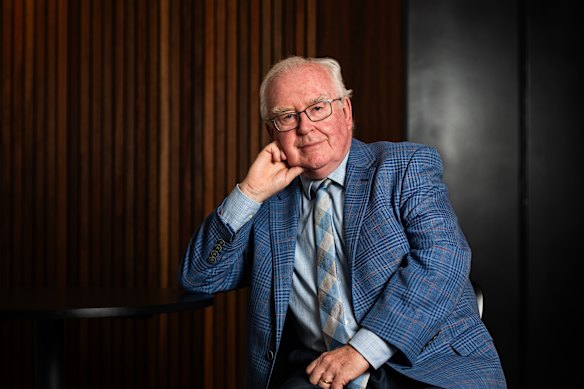
Australia’s Age Discrimination Commissioner Robert Fitzgerald says ageism is endemic in many corners of the country’s health system. Credit: Steven Siewert
Coralie Wales, a public health expert working in western Sydney, watched her mother, Bonnie Jean Tosswill, become increasingly frail over the decade until her death in June at 94.
Tosswill – a prolific artist and painter – grew depressed as she progressively relinquished the activities that helped define her, and felt health professionals cut her out of decisions about her care.
“Mum used to say to me, ‘Why do they talk to you and not me? I’m still here. I’ve still got ears, I’ve still got a brain’,” Wales said. “If people had been treating her as a fully sentient, listening, intelligent woman much earlier, and offering her the preventative stuff in a way that she could accept it, then she wouldn’t have had to die … in misery.”
Loading
Australian Medical Association president Dr Danielle McMullen said the report shed light on the challenges older Australians faced from GP clinics to hospitals.
“A person’s age is only one piece of the puzzle. High-quality patient-centred care requires looking at all the factors relating to someone’s health, not just their chronological age,” she said. “Sadly, system pressures in public hospitals and aged care are making it harder for older people to access timely, appropriate care.”
The Human Rights Commission will next week begin holding age awareness workshops for health professionals, funded by the federal health department.
A 2023 analysis found that, after one 2½-hour workshop, nine in 10 participants said they had rethought how they communicate with older adults, and 82 per cent reconsidered their attitudes towards ageing.
“We’re optimistic that the same pattern will emerge [with health workers],” Fitzgerald said.
Start the day with a summary of the day’s most important and interesting stories, analysis and insights. Sign up for our Morning Edition newsletter.
Most Viewed in National
Loading