3 months ago
39
3 months ago
39
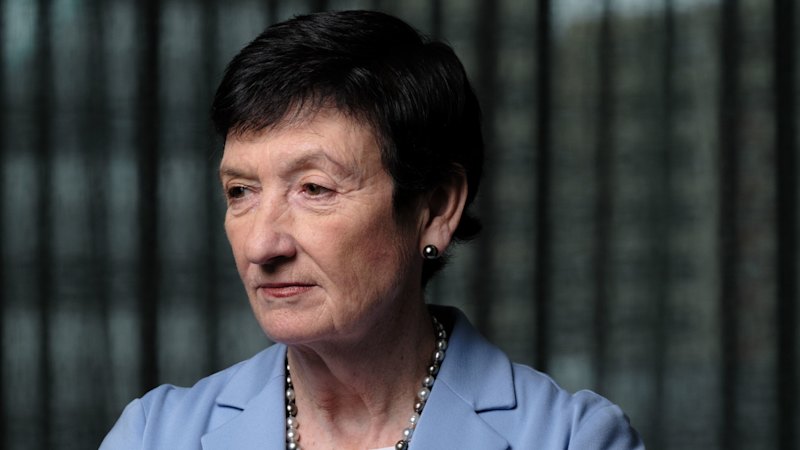
In the “just Google it” era, what makes a 2.8kg book essential? Stephanie Alexander reflects on her 30-year mission to build Australia’s definitive kitchen guide.

Regrets? Stephanie Alexander has a few. The woman who has taught three generations of Australians how to prep a globe artichoke is back with the third edition of The Cook’s Companion – a 1352-page tome tipping the scales at 2.8 kilograms.
Sitting at the table in her sunny, book-stuffed inner-Melbourne apartment to discuss the fully revised magnum opus, Alexander gestures towards her own well-thumbed earlier editions, which bristle with Post-it notes and fluoro highlights.
Despite the heavy revisions and handwritten additions, she notes with a wry smile that one thing is still missing: the Anzac biscuit was accidentally omitted again, for reasons she is unable to fathom.
It is a rare oversight in a book that covers almost everything else, but at 85 (“and a half”), Alexander grudgingly acknowledges she’ll have to let it go. There is unlikely to be another.
The orange-spined first edition was written in the stolen hours between shifts at her three-hatted Melbourne restaurant and published in 1996, the year before Stephanie’s closed. An expanded second edition, which Alexander lovingly calls “stripy”, followed eight years later.
The best recipes from Australia's leading chefs straight to your inbox.
Now, to mark the 30th anniversary of a book that has become a fixture in the nation’s kitchens, we have a third – bigger yet.
But the door-stopper we know today almost didn’t exist at all.
When Alexander’s publisher, Julie Gibbs, warned Penguin publishing director Bob Sessions that the manuscript was ballooning, his directive was blunt: “Tell her to cut it.”
Alexander pressed on, working methodically from A to Z like the former librarian she was. She tested the recipes herself, eventually producing a 60-centimetre stack of typed pages.
This time around, she and her longtime editor, Caroline Pizzey, followed a similar manual process, meeting fortnightly to work directly on a physical master copy. This analogue approach ensured computer glitches never compromised the text; there was only ever one version of every recipe.
They would break from the “CC3” revisions for a lunch that epitomised Alexander’s philosophy. “Placemats and serviettes would come out,” Pizzey recalls, for a spread of fridge leftovers – a nub of cheese, a garden tomato, a slice of ham. “Nothing showy, but always tasty. I loved these times.”
To ensure the new edition met modern standards, Alexander enlisted Natalie Paull – the meticulous force behind best-selling cookbook Beatrix Bakes – to rigorously test 90 new additions. “She has very Catholic tastes,” Alexander says of Paull, noting the younger chef was as comfortable with charcuterie as she was with pastry.
The pair entered a three-week marathon of testing and note-taking that was as inventive as it was exhaustive. To achieve the parchment-thin skin of a Chinese roasted duck, Paull reached for a hairdryer, which worked a treat. “It’s your own home-made roast duck with pancakes,” says Paull. “What other recipe book could easily hold your hand through that?”
Throughout their sessions, Alexander retained a singular focus. “She always refers to the reader,” says Paull, “thinking about whether they have a certain piece of equipment or whether they would go to a certain length.”
While the new book’s silver cloth-bound covers contain more Asian and Middle Eastern staples, Alexander remains clear-eyed about her own culinary compass. Her passion remains rooted in the sun-drenched flavours of Europe, even as she overhauls chapter-openers to reflect a changing landscape.
The updated game section, for instance, acknowledges the scarcity of venison and pigeon, while new entries tackle the modern ethics of the plate – from the sustainability of aquaculture to the encroaching dominance of supermarkets.
Alexander is often asked why this weighty book still holds its ground in the age of the “Just Google It” reflex. Her answer is simple: trust. She offers a curated “snail trail” of culinary history, providing the context and provenance that a digital algorithm lacks.
As Paull observes: “Put ‘new ways to cook potatoes’ into a Google search and you’d be there for hours. But there’s Stephanie just saying, ‘Well, let’s try a gratin or a potato galette’.”
Even Alexander admits to the occasional digital dalliance, though she treats the internet as a starting point rather than a destination. “Some are excellent recipes from very well-known people, and others are just terribly ordinary,” she says. “It brings me back to that word ‘trust’. Those who bought the first edition 30 years ago have learned they can rely on it.”
This sense of trust extends beyond the page. If The Cook’s Companion is her written legacy, the Stephanie Alexander Kitchen Garden Foundation is its living, breathing counterpart. Launched in 2004, the growing and cooking program now reaches more than 1000 schools across Australia.
She still encounters parents who insist their child “doesn’t eat green things”, to which she counters: “Well, that child has just helped create a pasta dish filled with ricotta and silverbeet, and he’s loving it.”
She hopes the connection between her two master works is obvious: “That food should be joyful and that a love of good food ... adds enormously to the pleasure of living.”
Paull remains in awe of her drive. “She has the energy of a woman half her age, and the application to a task of no one I’ve ever met before.”
Yet, the work has left its mark. The same hands that produced a towering manuscript now feel the weight of the years.
“My balance is really not good,” Alexander admits, “and I’ve definitely damaged my back with 30 years of standing and bending over a bench, chopping.”
This physical retreat has changed the way she inhabits her own kitchen. The doyenne of Australian entertaining, whose name can still strike fear into the hearts of dinner party hosts, now finds the “heavy lifting” literal.
Even a modest dinner for six results in 24 glasses to wash – an effort that feels increasingly like an edurance test. Yet, she continues to espouse the belief that cooking should be a pleasure, not a chore, “even if it’s just scrambled eggs on a piece of toast”.
Pizzey says she has heard four times that the latest book will be Alexander’s last. Indeed, when Good Food interviewed her in 2021 to mark the release of Home, Alexander dropped the same hint.
Yet two years later, she was back with Fresh – a collection inspired by the Kitchen Garden project (which, notably, finally included a recipe for Anzacs).
While there is unlikely to be a Cook’s Companion Mark IV, it is clear the indefatigable Alexander has no plans to hang up the apron. As the interview ends and the recorder is switched off, she reveals that a new idea – centred on her decades of travel – has already begun to germinate. Watch this space.