3 months ago
28
3 months ago
28
For the past five years, the cinema industry has repeated one simple mantra: Survive until 2025. The theory was that if the industry could hold on until then, it could reset and grow into the financial behemoth it once was.
Now, as we enter 2026, analysts and punters are reflecting on the year that was in film. From tent pole titles such as Superman and Avatar: Fire and Ash to auteur-led hits like Sinners and One Battle After Another, there certainly wasn’t a shortage of quality fare. But did cinema actually reset?
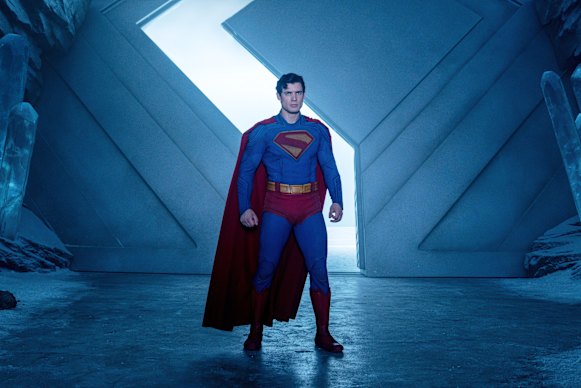
From Superman to Sinners, there were plenty of new movies in 2025. But did cinema actually reset?Credit: Warner Bros Pictures
Wait, why did it need a reset?
Associate Professor Liam Burke, Swinburne’s cinema and media studies discipline leader, says the industry first encountered trouble when the COVID-19 pandemic hit. It had just enjoyed a stellar 2019 with massive drawcards such as Avengers: Endgame and Joker. But once lockdowns began, cinemas shuttered and productions stalled, things took a dramatic turn.
“The hope then was that post-pandemic, cinema attendance would return to the norm. But then there were the actors’ and writers’ strikes in Hollywood, which also closed productions, films couldn’t be promoted, and so on. So, there’s been a series of back-to-back calamities that have stalled and ceased productions,” Burke says.

Hollywood is still feeling some of the after-effects of the 2023 writers’ and actors’ strikes, which halted many productions.Credit: AP
It didn’t end there. The California wildfires at the beginning of 2025 drove some film and TV workers to leave the industry entirely. Meanwhile, streaming proliferated. Most people broke the habit of regularly attending the cinema during the pandemic, a habit Burke says never returned as films quickly went to streaming.
Each time a crisis ended – be it the lockdowns, strikes or fires – the industry pointed to 2025 as the year of long-awaited stability that would allow the box office to finally catch its breath. The reality, however, was far more complicated.
Streaming has proven a major threat to the cinema industry.Credit: Bloomberg
Did cinema survive, thrive or dive?
The film industry technically improved last year, with the global box office estimated to close out at around $49.8 billion – nearly 12 per cent more than 2024.
However, a good chunk of that came from China where animated phenomenon Ne Zha 2 alone grossed over US$2 billion. If you look at other territories, the situation appears slightly less promising.

Chinese animation Ne Zha 2 secured itself as a cultural phenomenon this year, becoming the highest-grossing animated film in the world.
Analysts predicted the North American box office would reach a post-COVID high of US$9.3 to $9.5 billion. This was later revised to US$S9 billion, which would bring the year just above 2024 (US$8.7 billion) and significantly behind pre-pandemic highs of US$10.5 to $11 billion.
Loading
“While global box office results have been more consistent over the past 12 months, the industry remains structurally volatile,” says Matthew Deaner, chief executive of Screen Producers Australia.
“Corporate mergers are still playing out, spending restraint has become embedded rather than temporary, and that uncertainty continues to influence what gets made, how it’s released, and how much risk companies are willing to take. So, 2025 showed improvement, but not a full reset.”
What hit, what didn’t?
Deaner says the year could best be described as feast or famine. When major event films landed, audiences turned out in force. But long stretches of weaker periods exposed a poor release pipeline, making cinema attendance seem like a series of spikes rather than a consistent habit.
The spikes coincided with family films, anime and horrors, as well as original concepts with strong word-of-mouth such as Ryan Coogler’s Sinners, Lilo & Stitch, Demon Slayer: Kimetsu no Yaiba – The Movie: Infinity Castle, Weapons – Burke says these types of films were generally made for co-viewing, for which there’s a growing appetite.
Then there were films that needed to be seen on the big screen. Premium formats such as IMAX, 4DX and Dolby Atmos enjoyed a major boost, with IMAX delivering its best year on record with US$1.2 billion globally. Executive director of Cinema Association Australasia Cameron Mitchell says since December 2024, eight new IMAX locations have opened across Australia.

Sinners was the sleeper hit Hollywood dearly needed this year.Credit: AP
Since the cinema is now more of a treat rather than a weekly routine, Burke says, people are craving unique experiences – and are willing to pay more for it – whether that’s seeing Thunderbolts in 4DX or watching Taylor Swift: The Official Release Party of a Showgirl with a themed cocktail in hand.
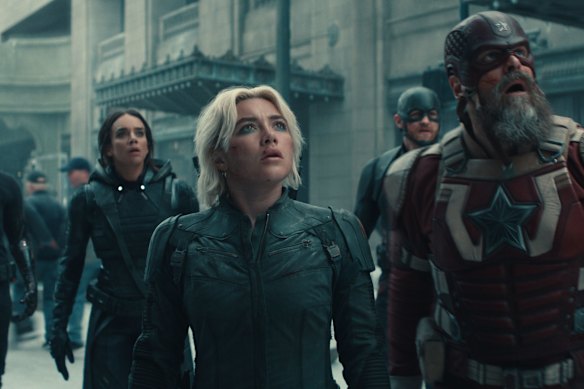
Marvel’s Thunderbolts may have been ok in a standard screening, but awesome in 4DX.
However, a rather alarming lesson learned in 2025 was that popular IP and major stars no longer guarantee box office success. The once-reliable superhero genre faltered, with Marvel’s Captain America: Brave New World and The Fantastic Four: First Steps delivering results light-years away from the heights of Avengers: Endgame. DC’s Superman fared better, but only modestly.
Meanwhile, mid-budget, star-studded and adult-oriented films (After the Hunt, The Smashing Machine, Bugonia, Good Fortune) also faltered. Burke says this was probably because these kinds of films now thrive on smaller screens.
Loading
“Streaming has trained us not to go to the cinema for those types of stories and genres. We expect to see them at home.”
What about Australia?
At the end of 2024, the local box office was forecast to exceed $1 billion in 2025. Mitchell says it’s now expected to have exceeded $975 million, marking a slight dip from original projections and an increase of only about 2.5 per cent compared to 2024 ($951 million). That figure is also about 19.2 per cent down on the pre-COVID (2017-2019) average, according to Comscore.
Even though local titles such as the family-comedy Kangaroo performed well Down Under (it became the highest-grossing locally produced film of the year), US content still dominated our box office.
“[This] creates a visibility problem for local films,” Deaner says. “Australian producers don’t have the buying power or marketing reach of US studios, so even strong local titles can struggle to secure screen space and audience attention, despite clear appetite for Australian stories.”
While the industry had hoped for a stronger rebound in 2025, chief executive of Palace Cinemas Benjamin Zeccola says it’s still on track, especially for independent Australian institutions. Palace Cinemas, he notes, were up by 11 per cent year-on-year, partly thanks to the success of their film festivals, including the French and Italian festivals, which broke previous records with over 80,000 attendees.
“Making movies isn’t like making toothpaste – you cannot just turn a tap on and off. A film comes from harnessing the creativity of hundreds of individual artists working together to tell a single story at a single moment, and capture that on film. That kind of momentum takes years to build.”
The cost of going to the movies
Cinema has been and will remain a popular pastime for Australians, but the price of tickets cannot be ignored as the country continues to struggle through a cost-of-living crisis.
According to Screen Australia, the average Australian ticket price rose 27 per cent between 2014 and 2024 ($13.60 to $17.26).
This increase appears to be steepening, as pricier premium formats such as IMAX become more popular. In fact, the average price of tickets increased by about 10 per cent year-on-year in the first weekend of 2026, per Comscore (from $17.78 to $19.68).
What’s in store for 2026?
Deaner says he remains cautiously optimistic about the year ahead.
“The key lesson from 2025 is that cinema needs balance,” he says. “Blockbusters matter, but so does volume, variety and consistency. Sustainable box office performance comes from giving audiences regular reasons to go to the movies, not just one or two moments a year.”

Chris Hemsworth’s Thor will be back in Avengers: Doomsday later this year.Credit: Jasin Boland/Marvel Studios
Gower Street Analytics estimates the 2026 global box office will reach around $52 billion, a 5 per cent jump against current estimates for 2025. The line-up promises both popular franchises and original stories, from The Super Mario Galaxy Movie and Avengers: Doomsday to Christopher Nolan’s The Odyssey and Steven Spielberg’s Disclosure Day.
A concern haunting the industry now is whether Netflix succeeds in buying Warner Bros, a deal that could threaten the length (or even existence) of theatrical distribution for certain major pictures. However, Burke says that the deal, if successful, would take a few years to finalise, particularly given the regulatory pushback it’ll likely receive.
Loading
If anyone will ultimately “save” cinema, Burke says it’s Gen Alpha.
“The assumption is that digital natives want everything online. But recent research found that for under-14s who’ve grown up in the era of streaming and TikTok, there’s no novelty to watching something on Netflix or Disney+. The novelty for them is in-person experiences,” he says.
We saw this in 2025 when young people threw popcorn at the chicken jockey in A Minecraft Movie and sang along during the karaoke screenings of KPop Demon Hunters.
“Communal experiences – that’s one thing that cinemas can offer that will outstrip anything you can have at home.”
Must-see movies, interviews and all the latest from the world of film delivered to your inbox. Sign up for our Screening Room newsletter.