3 months ago
18
3 months ago
18
Children as young as 10 are frequently locked alone in cells or rooms without basic facilities in Queensland’s youth detention centres – sometimes for days at a time – due to high demand and staffing issues, a new report has found.
In some instances, children reported having to urinate into drains after their requests for the bathroom were ignored.
An inspection report released on Wednesday evaluated operations at three Queensland youth detention centres – West Moreton, Brisbane and Cleveland – throughout 2024, focusing on the use of force, restraint, separations, and health.
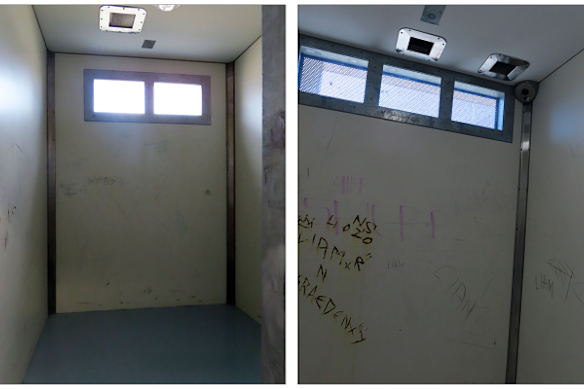
Separation rooms, where children are kept for hours – sometimes days – at a time, at West Moreton Youth Detention Centre (left) and Brisbane Youth Detention Centre (right). Credit: Queensland Ombudsman
The report found most detention centres were close to capacity, with almost 100 per cent of accommodation used across all three facilities in 2023-2024.
This was well above the recommended safe capacity limit of each centre (85 per cent), with beds in Queensland’s juvenile detention centres the country’s most utilised.
Loading
Across all centres, the growing number of incarcerated children has placed significant challenges on staff-to-child ratios. As a result, children are frequently forced into separation – locked in their cells or designated rooms without toilets or running water.
Cleveland Youth Detention Centre in Townsville had the most separations due to staff shortages, with nearly 20,000 incidents recorded over the reporting period.
On one occasion, children across 11 units were separated for three days due to staff shortages.
Those placed in the centre’s designated separation rooms told inspectors the space was often left filthy by the previous occupant, and they were sometimes forced to urinate into the drain when their bathroom requests were ignored.
Inspectors said the practice of placing children in empty rooms without basic amenities was inhumane, and described the environment as unsuitable for an adolescent’s cognitive development, and particularly harmful to children who have experienced trauma.
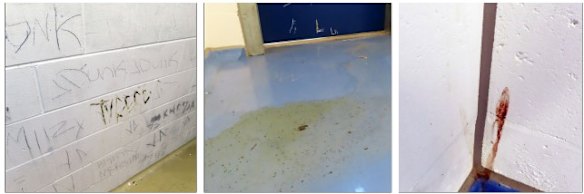
Conditions observed inside separation rooms at Brisbane Youth Detention Centre.Credit: Queensland Ombudsman
They called on the government to provide funding to improve separation rooms and holding cells to include basic facilities such as a toilet, running water and a bed or seat.
In response, Department of Youth Justice and Victim Support director-general Kate Connors said it was difficult to retrofit hygiene facilities in separation rooms, but said the inclusion of these features would be considered in the design of future detention centres.
Professor Nitin Kapur, a paediatrician at the Queensland Children’s Hospital and a critic of child incarceration, told this masthead earlier this year that isolation and solitary confinement had adverse mental health effects, particularly for Indigenous children and those with a disability.
“Up to 80 per cent of children in the criminal justice system have an underlying neurocognitive impairment, so they may be 10 years of age chronologically, but their mental age could be six or seven,” Kapur said.
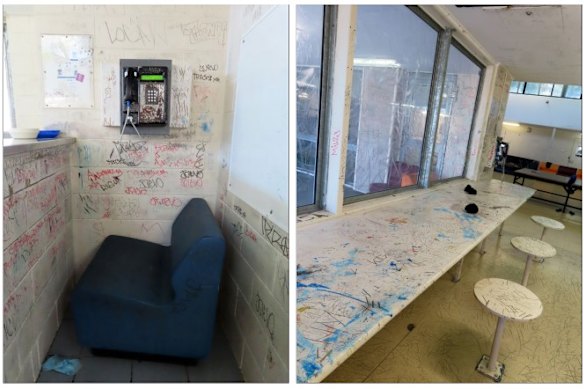
Graffiti and floor scratchings in areas of Brisbane Youth Detention Centre. Credit: Queensland Ombudsman
“It’s well known that isolation and any sort of solitary confinement, and the boredom associated with it, leads to increased self-harm, and definitely has a serious mental health impact.”
Under the Youth Justice Department’s separation policy, children must be observed every 15 minutes, but the report found staff do not consistently conduct routine or suicide-risk observations, with some children left unchecked for hours.
A survey of children aged 14-17 in contact with the justice system in Queensland and Western Australia found almost 23 per cent had attempted suicide.
Loading
On the use of force and restraint, the report found some staff continued to use techniques that were no longer approved. It also found issues surrounding the consistent use of body-worn cameras.
At the Brisbane centre, for example, body cameras were found to dislodge easily, with staff telling inspectors children sometimes removed cameras from staff vests “as a joke”.
The report recommended changes to reduce the reliance on separation or improve the conditions under which children in isolation are held.
Most Viewed in National
Loading