3 months ago
38
3 months ago
38

February 26, 2026 — 5:50am
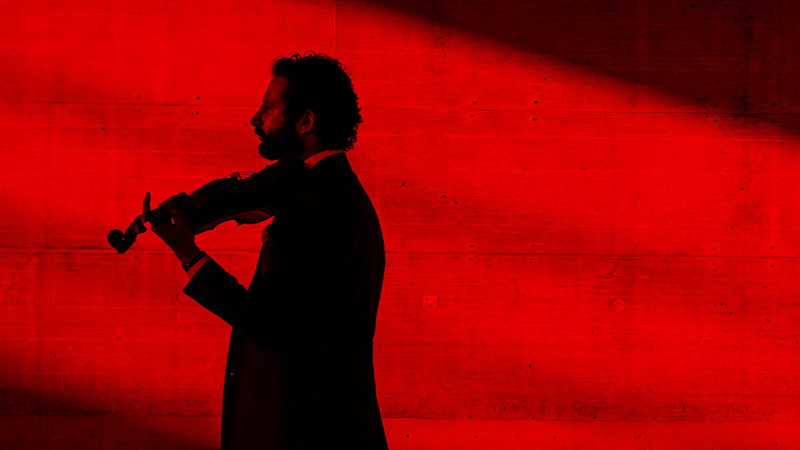
In a 12-month rollercoaster, Khaled Sabsabi has gone from an artist in exile, scrambling to find a venue for his artwork, to a dual-represented artist on the world’s most prestigious art stage.
Sabsabi, and curator partner Michael Dagostino, will be showcased not once, but twice, at the 61st Biennale of Venice, the world’s biggest art festival, it was announced overnight.
They will become the first Australians to feature in the Venice Biennale’s Australia Pavilion while simultaneously exhibiting in the Biennale’s curated main exhibition, In Minor Keys. Only three other artists globally – most recently the legendary American photographer Nan Goldin – are thought to have received the same honour in 125 years of the Biennale.
Federal Arts Minister Tony Burke lauded the invitation as a “significant win” for the pair and international recognition for the arts sector ahead of Venice’s May opening.
“It is a tribute to the artist and curator themselves, but also another example of the global recognition of Australian art,” he said.
The announcement, kept under wraps for months, comes a year after the pair were appointed, then abruptly terminated as Australia’s 2026 Biennale representatives.
Their commission was rescinded the same day as the federal Coalition raised questions in parliament about the intent of two historical works by the Lebanese-born Sabsabi, who has taken strong positions on Gaza.
The decision sparked a firestorm. High-profile figures such as Archie Moore—Australia’s first Golden Lion winner at Venice —condemned the move as censorship, while philanthropist Simon Mordant resigned his ambassadorship and withdrew financial support in protest. Burke denied he ever leaned on the board to axe the pair.
In the midst of upheaval, Sabsabi travelled to Bangkok—supported by a grassroots crowdfunding campaign—to continue producing the work he was determined to bring to Venice in a private show.
“We were cancelled on the Thursday, it was grief on Friday and Saturday, and Khaled started to make the work on Monday,” Dagostino recalled.
Venice’s chief curator Koyo Kouoh reached out to Sabsabi before her sudden death in May 2025, to ensure the work was represented, bypassing the national debates that had derailed it. “It was a beautiful gesture of support,” says Dagostino. “To have this moment—it brought tears to our eyes.”
Weeks later, after a review by governance firm Blackhall & Pearl which identified a massive “lack of preparedness” and poor crisis management, the board of Creative Australia issued a formal apology and reinstated the pair.
The original work selected by the federal funding agency Creative Australia will now be housed in Venice’s Arsenale, while Sabsabi has created a second, interconnected work, conference of one’s self, for the national pavilion exploring “spirituality, migration, and the vastness of shared humanity”.
The presentation in the Australia Pavilion is funded by Creative Australia, which has confirmed it has also provided unquantified support toward the work in the main exhibition, whose title will be officially announced in May.
Sabsabi’s challenge will be to ensure his appearance in the main show doesn’t overshadow the national work, for which he would be eligible for a Golden Lion award. Artistically both works need to stand independently. Mordant, who has returned as ambassador, said the artist’s first work “massively complements and enhances” the second.
“It’s an absolutely massive honour especially given the circumstances, and for someone who has gone through what he’s been through,” he said. “Standing by Khaled has been a real pleasure.”
Sabsabi describes the two works as “one body with two limbs”. “They’re both inspired by the soul of Tasawwuf (Sufism), looking at the inner and outer self—the zahir [actions of the individual] and the batin [intentions of the heart].”
Australia’s pavilion entry is inspired by the 12th-century poetic allegory The Conference of the Birds by Farid al-Din Attar, which recounts a pilgrimage resulting in the realisation that the divine exists within. The work promises to be a sensory experience utilising multimedia, sound, light, and “technological firsts” that will span the pavilion’s entire footprint. The installation was assembled and tested in a Sydney warehouse in December.
Following the Biennale, a major solo exhibition of Sabsabi’s work will be presented in March 2027 at Adelaide’s Samstag Museum of Art, supported by a $100,000 grant from Creative Australia.
“Sufism speaks of seven layers of the soul; we’ve added an eighth level for people to walk into,” Sabsabi said. “The eighth level is about completeness and wholeness. You can be in the work for three minutes or four hours; it will keep giving you more. It will give you pause—moments of reflection.”
Despite the political drama, the artist says his intent has always been to unify, not divide. “I’ve always had the will and the intent to make this body of work, regardless of what’s happening around me. Making work is part of my sanity.”
Be the first to know when major news happens. Sign up for breaking news alerts on email or turn on notifications in the app.