3 months ago
29
3 months ago
29
By Washington Post staff
December 27, 2025 — 5.00am
Many of us want to age well – staying in good physical and cognitive health into our 80s, 90s, 100s and even beyond. Winning the genetic lottery can help in that quest. But even if you don’t have the genes linked to longevity, you can increase your chances of ageing well with certain lifestyle choices.
Here are some ways to promote a long and healthy life, according to people reported on this year who are known as “super agers” – generally, those older than 80 whose memory is as good as those 20 to 30 years younger, if not better – and the scientists who are studying them.
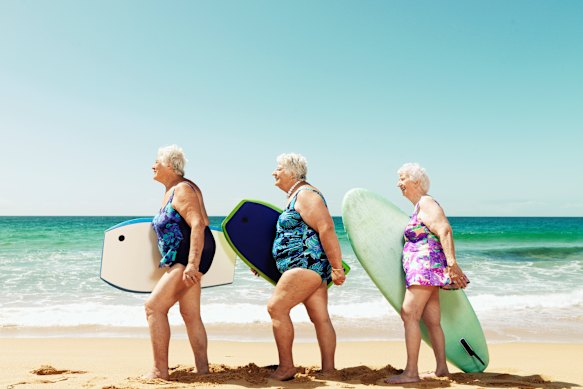
While genes do help, it’s possible to be a super ager by following some basic rules around diet, exercise and social connection.Credit: Getty Images
1. Choose the right food
Marion Nestle, 89, a top nutrition expert, credits “Michael Pollan’s famous mantra: Eat food, not too much, mostly plants,” for her longevity.
In a Q&A with nutrition writer Anahad O’Connor, Nestle said: “And I define food as being unprocessed or as minimally processed as possible. Not ultra-processed. I really think that takes care of it. That doesn’t mean I’m perfect. I’m an omnivore. I eat everything. I just don’t eat very much, in part because metabolism drops with age, and I don’t have much metabolism left.”
Maria Branyas Morera was 117 and in relatively good health before she died last year. Diet and lifestyle probably played a large role in her longevity, researchers who studied Morera told our ageing and longevity reporter Gretchen Reynolds.
“In the last 10 years of her life, she ate three plain yoghurts a day,” said Manel Esteller, senior author of a study about Morera. She followed a typical Mediterranean diet. “She ate very lightly,” Esteller said. “A lot of fish and olive oil and fruit.”

A Mediterranean diet has proven to be the best for healthy longevity.Credit: Getty Images/iStockphoto
2. Try to be consistent in your workouts
At 92, Emma Maria Mazzenga, who lives in Padua, Italy, is an elite sprinter with four age-group world records to her name – and very few opponents to race against, write reporters Teddy Amenabar and Stefano Pitrelli.
Mazzenga runs two or three times a week and goes for a walk on her off days. Her track workouts last about an hour.
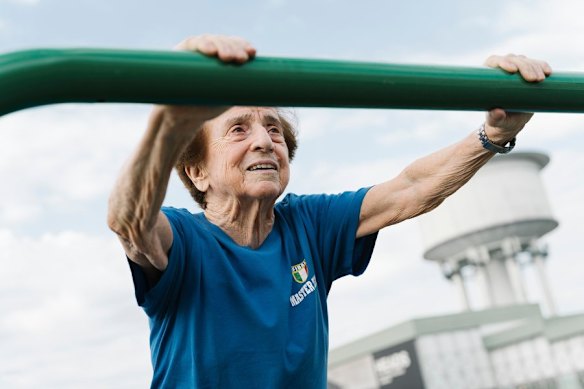
Ninety-two-year-old Emma Maria Mazzenga is breaking records for her age category in athletics.Credit: Washington Post / Claudia Gori.
Mazzenga’s advice for other older athletes: Know your limits. Meet your doctor first to make sure you’re fit to start exercising. Then, stay consistent - for Mazzenga, that means running multiple times a week.
Jeannie Rice is 77 and has broken world women’s records in the 75-79 age group for every distance and, at times, beaten the fastest men in that age group, writes Marlene Cimons. Rice isn’t technically a super ager (being younger than 80), but her physiology is striking. Her maximal oxygen uptake (VO₂ max) – a measure that reflects her aerobic fitness and endurance capacity – equals that of a 25-year-old woman, according to lab tests in the days after her world record performance (3 hours, 33 minutes and 27 seconds) in last year’s London Marathon.
Rice runs 80 kilometres a week, or 112 to 120 kilometres a week when she’s getting ready for a marathon, with one day off. She also lifts light weights three times a week for upper body strength.
“She exemplifies how consistent training, and perhaps favourable genetics, can partly defy conventional ageing processes,” said Bas van Hooren, an assistant professor in nutrition and movement sciences at Maastricht University in the Netherlands and one of the authors of a study about Rice.
Rice, a retired real estate agent who started running at age 35, proves “it’s never too late to start exercising,” van Hooren said.
Exercise is the only intervention in people that has shown any effect on slowing the body-wide ageing clock, meaning it appears to change how rapidly we age, said Eric Topol, a cardiologist and founder of the Scripps Research Translational Institute in the La Jolla neighbourhood of San Diego.
Topol, the author of Super Agers: An Evidence-Based Approach to Longevity, recommends aerobic exercise, “walking or bicycling or swimming or elliptical or you name it”, and to get at least 30 minutes most days. And, he said, “resistance training and grip strength have extraordinary correlations with healthy ageing”.
3. Connect with others and have a little fun
Social interactions are essential for our wellbeing and happiness, research suggests. And a recent large clinical trial has found that a mix of exercise, a healthy diet, social engagement and brain games could improve cognitive capabilities in older adults at risk of cognitive decline or dementia.
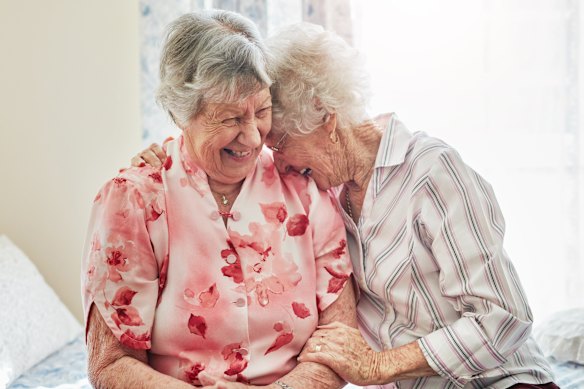
Maintaining, and continuing to build social connections is key to healthy and happy ageing. Credit: Getty Images
We need to stay socially connected because feelings of loneliness can increase the risk for dementia, while having strong social connections is a key to cognitive health.
Morera, for example, mingled with other residents in her assisted-living facility when she could and welcomed visitors.
Rice has a rich social life and enjoys going out to dance, although not in the week before an important race. “A lot of runners are so serious, they don’t do anything socially. But I like to have fun,” she said. “I’m the last one to go home.”
To get more social, try strategies such as setting aside time in your calendar and seeking out opportunities to connect, experts suggest. It’s been long established in wellbeing research that “happiness is better predicted by the frequency of positive experiences than it is by the intensity of them”, Nicholas Epley, a professor of behavioural science at the University of Chicago who researches how we often underestimate the impact of socialising, told our brain health reporter, Richard Sima.
“Having a good life is about stringing together as many of these positive activities as we can. So it becomes a habit,” he said.
4. Don’t fear setbacks
Some people see ageing as a one-way decline. But new research in the journal PLOS One suggests it is possible for many adults over 60 to find their way back to strength and flourishing, even after health setbacks.
The researchers identified factors that correlated with bouncing back to better health. They included good mental health; social connections; and other lifestyle choices such as not smoking (or quitting if you do), eating well and sleeping enough.
“It’s never too late,” said first author Mabel Ho, a recent doctoral graduate at the University of Toronto.
When Florene Shuber was about 82, she noticed that sometimes she’d trip and fall.
“One thing that old people don’t realise when they fall is they don’t know they’re falling until they’re about this far from the ground,” Shuber told reporter Maggie Penman, holding up her fingers an inch apart. “I found it pretty frightening. It happened two or three times. And I thought, I have to do something about this.”
There was a small gym near where she lived that she had walked past for years, and finally, she went inside and asked to meet a trainer. She started working out regularly.
Shuber is 91 now and said she feels younger and stronger than she did 10 years ago.
“You can improve. I see it in myself, for sure,” Shuber said. But it is hard work, she adds. “You have to be consistent with it.”
5. Keep a positive attitude
Si Liberman, 101, has faced many challenges in his life, including multiple injuries from being struck by a truck when he was five, a heart attack at 39, and a triple bypass and mitral valve repair surgery at 89. When he was a B-24 bomber radio gunner in World War II, his plane was often hit by enemy-fire flak during 13 bombing missions over Nazi Germany.
Despite having to get through some dark days, Liberman writes, “I’ve never been down for very long. If I have a cold, I think it will be better soon. If I’m going through a rough time, I think I just have to live through it and things will look up. I think attitude is highly underrated and can’t be underestimated. I’m almost always optimistic. I always thought there would be better days ahead, and that positive attitude probably helped.”
The Washington Post
Make the most of your health, relationships, fitness and nutrition with our Live Well newsletter. Get it in your inbox every Monday.
Most Viewed in Lifestyle
Loading