3 months ago
62
3 months ago
62
Black market cigarette prices have soared up to 50 per cent as the closure of the Strait of Hormuz, a series of major seizures and worsening violence in the nationwide tobacco war squeezes local supplies and leads to price gouging.
Illicit tobacco shops across Melbourne are jacking up prices on illicit brands such as Manchester and Double Happiness as the market faces shortages for the first time in years and some operators have begun profiteering.
The increase of $4 to $5 a packet to $16 to $25 – compared with more than $50 for legitimate brands – comes as there has been a fresh outbreak of violence between warring gangs in the illicit tobacco market following the arrest of kingpin Kaz Hamad.
The most popular cigarette in Australia is the UAE-made brand Manchester, which is shipped from Dubai and has now been cut off for more than a month by Iran’s closure of the Strait of Hormuz.
Underworld sources say the crunch started more than a month ago – before the outbreak of the war – when retailers were told there were “supply problems” and prices would rise.
There has also been confusion inside the illicit supply and retail chain following Hamad’s arrest in Iraq in January, sources say.
“Everything is getting jammed up, so they’re raising prices,” an underworld source said. “They’re catching more of them – it’s harder to get them in. Reality is hitting.”
There have been nearly 30 arson attacks and shootings nationwide since the 42-year-old’s arrest, as former rivals and new players attempt to push into the multibillion-dollar illicit tobacco market.
“New suppliers, more money,” one illicit retailer told this masthead. “There’s just not as much around, and they’re charging more.”
Prices remained stable over the past year after Hamad forced the creation of an illicit tobacco cartel known as “The Commission”.
Minimum and maximum prices were set for wholesalers and retailers across large swaths of the country, which were enforced through fear and violence.
In suburban Melbourne, prices for Manchester packets were about $12 to $14. They were permitted to be set higher at $18 to $20 in the CBD and inner-city nightlife precincts.
Initially, the recent supply problems were limited to increases of about $2 a pack. But in the past two weeks, prices have been forced up again by another $2 to $3 as the once-abundant supply in shops has begun to dry up with no new shipments arriving and uncertainty around distribution.
This means the cost has jumped up to 50 per cent for black market Manchester packs, depending on the retail location.
Tobacco industry sources say there has also been an element of profiteering from the chaos, with even Chinese-made brands such as Double Happiness commanding double recent prices for a carton.
Over the past week, this masthead found significant price variations for packets of Manchester between shops even in close proximity. Sources say some retailers are taking advantage of the instability to make bigger profits.
In the past few months, federal and state law enforcement agencies have been blitzing illicit importers and retailers following significant political pressure to crack down on the $8 billion black market.
Seizures by the Australian Border Force have been at record highs, although crime groups have been sending hundreds of millions of cigarettes towards Australia each month from the UAE.
The new state regulator, Tobacco Licensing Victoria, has said it seized about 3.1 million cigarettes in its first month of operation from the start of February.
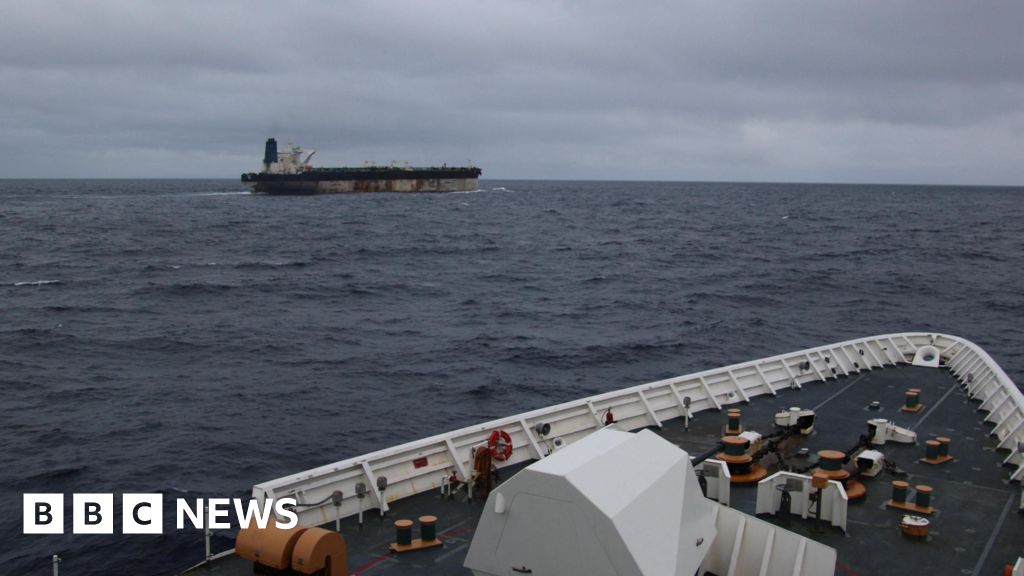
Supply issues are expected to become a critical problem for the syndicates with the Strait of Hormuz effectively closed as the war rages in the Middle East.
It takes about a month for a ship leaving the Dubai port of Jebel Ali to reach Australia, often after transiting through a South-East Asian port first.
More than 4.4 billion Manchester cigarettes were sent to Asia and onwards to Australia between 2023 and 2025.
The strait was effectively closed to commercial shipping on February 28 with the start of the US and Israeli bombing campaign.
Forecasts based on known smuggling routes and shipping schedules suggest the last containers of Manchester to be sent from Dubai before the strait was closed will probably arrive in an Australian port this week.
The factories that manufacture Manchester churned out nearly 500 million cigarettes in February, according to records obtained by this masthead. That supply is now sitting in warehouses and on ships in the UAE port of Jebel Ali waiting to be sent to Asia and then on to Australia.
It will take almost a month for new tobacco supplies from the UAE to arrive in Australia once the strait is reopened.
Criminal intelligence sources said smugglers were now looking at alternative routes to get the product to Australia – including sending containers from Dubai to Kuwait and then overland to ships transiting the Red Sea via the Suez Canal. This rerouting will also probably force up prices.
Law enforcement sources and industry analysts say the gangs will now be scrambling to grab a larger slice of the made-to-order counterfeit cigarette market based in South-East Asia.
These are factories run by local crime groups that manufacture cigarettes that appear to look like conventional brands but cost only a fraction to produce.
They are commonly slipped into the market where customers are unaware they are paying regular prices for a knock-off product.
The centre for the production of counterfeit cigarettes is the Cambodian coastal town of Sihanoukville.
There is a cluster of more than 20 factories that churn out knock-offs of major brands such as Marlboro, Benson & Hedges and Winfield.
The packets are high-quality copies that often mimic the health warnings and other labels required for products to be legally distributed in destination countries.
Loaded onto ships in Sihanoukville, the cigarettes are trans-shipped through Singapore, Malaysia, Thailand and Vietnam and then on to the US, Europe and Australia.
“The counterfeit problem is big and growing, but it doesn’t come close to the amount of cigarettes that are pumped out ‘legally’ by Manchester (from Dubai) or Double Happiness (from China) for the black market in Australia,” an industry source said.
Estimates put production levels out of Cambodia in the tens of millions of cigarettes, compared with billions for the UAE and China.
A number of unusual bespoke “fake” brands have also appeared on the streets of Melbourne recently.
These include a new entrant called “Royal Oak”, which mimics the appearance of Manchester cigarettes but combines the branding of British American Tobacco and Philip Morris International.
Others use the Manchester name but conceal its illicit origins by using plain packaging labels.
One counterfeit doesn’t have a name but is simply labelled “Classic Original” and contains nonsensical product and health messages.
The seemingly insatiable demand for cut-price cigarettes has also resulted in the syndicates trying to build up a “domestic” tobacco growing and manufacturing industry.
In January, Australian Border Force seized an industrial-grade cigarette rolling machine from a storage locker in Sydney. The million-dollar device was capable of producing 3.6 million cigarettes a day when running at full capacity.
The raid also found “suspected counterfeit tobacco packaging” that used the Manchester brand.