3 months ago
62
3 months ago
62
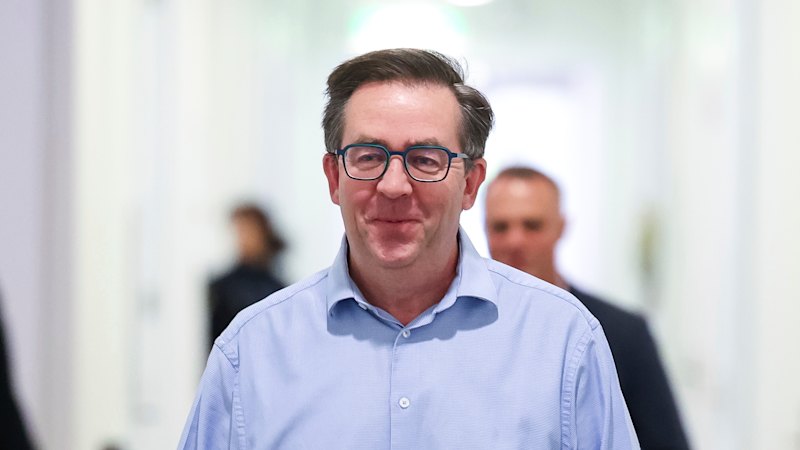
‘We saw enough of that’: opposition doesn’t want COVID-style mandates
By Nick Newling
Sticking with Angus Taylor’s press conference, and the Liberal leader has pushed back against any COVID-style mandates to deal with the fuel crisis, as he continues to attack the government with claims they are not being transparent.
“We oppose heavy handed mandates. We saw enough of that during COVID. I don’t want to go back to that,” Taylor said.
“I think every Australian is suffering. [During COVID] we didn’t enjoy having governments tell us what to do the way they did. But if that’s what the government plans, they need to tell us now, after coming out of this national cabinet.”
Both Treasurer Jim Chalmers and Energy Minister Chris Bowen this morning said the government’s response to the fuel crisis would feel different to the pandemic response of a few years ago.
‘We need transparency right now’: Taylor demands national cabinet plan
By Nick Newling
Opposition Leader Angus Taylor has outlined four outcomes he wants out of this morning’s meeting of national cabinet, including cutting the fuel excise and offering comfort to Australian’s on what will come next in the fuel crisis.
“This is a shocking situation for Australians, and not just households who are trying to get to work and get to all the things they have to do in their everyday lives,” Taylor told a press conference at Parliament House in Canberra.
“Businesses, our farmers, our tradies, our truckers … are all deeply concerned about whether they’re going to get the fuel they need to get the job done in the coming days, weeks and months,” Taylor said.
Taylor said this morning’s national cabinet meeting of Prime Minister Anthony Albanese and state and territory leaders needed to “get the fuel to where it is needed”; halve the fuel excise; provide transparency on where fuel is in the supply chain; and explain what next steps the government will need to take to manage the crisis.
“It’s time to be up front with exactly where this goes next, and what the government has got in its plans. We know there’s all sorts of secret plans that have been talked about. We need transparency right now,” Taylor said.
National cabinet will meet from 10am (AEDT), with a press conference anticipated afterwards.
Cost of new refineries worth it for security, says Liberal senator
By Nick Newling
The benefits of opening new oil refineries would far outweigh the costs and ensure the nation’s fuel security, Liberal Senator Dave Sharma says, as he calls for increases to minimum fuel stocks.
“I think we need to improve our fuel security and our fuel resilience,” Sharma told Sky News on Monday morning.
“I think it’s having only roughly 30 days of liquid fuel supplies in the sort of geopolitical and geo strategic environment we live in is no longer good enough.”
The NSW senator then went on to say the following:
Opinion: Why fear is the rational emotion of our time
By Sean Kelly
Last year, historian Adam Tooze wrote about the tendency to describe the history of energy as a “series of transitions”. In this story, wood gave way to coal, coal to gas, and now fossil fuels are being replaced by renewables. This allows us to believe in history as a tale of progress. In turn, it is that story of progress which allows us to believe that whatever we are now living through, however troubling it might seem, is a necessary step – because soon we will arrive at a better destination.
The problem is that these “transitions” never actually happen. (Tooze is drawing on the work of historian Jean-Baptiste Fressoz). The history of energy use is that energy sources are never actually replaced. Instead, they are added to each other. In fact, Tooze writes, the world now uses more wood than it has at any point in its past – and the same goes for coal.
The story we tell ourselves – one that makes us feel better about our own time – is false. Suddenly, Australia’s current policy of continuing to export fossil fuels reads differently: not as a stop on the way to somewhere better but as yet another step on the way to somewhere worse.
‘Everything should be on the table’: Liberal frontbencher
By Broede Carmody
South Australian Senator Anne Ruston was on ABC radio earlier this morning, where she expressed concerns that older Australians – particularly in rural and regional areas – were going without day-to-day necessities due to the rising cost of fuel.
The Liberal frontbencher, who was the minister for social services under the former Morrison government, said everything should therefore be on the table when it comes to today’s national cabinet meeting:
They [the Albanese government] really haven’t been upfront with Australians about what’s going on and they haven’t provided Australians with the certainty that they have a plan going into the future.
So I think everything should be on the table.”
National fuel response won’t shock Australians, energy minister says
By Nick Newling
Fuel rationing isn’t inevitable, federal Energy Minister Chris Bowen says, while insisting a “coordinated approach” to the fuel crisis will feel different to the response to COVID.
“We want to see the lessons of COVID learned and, also, we want to make clear to the Australian people that where we think we’ll be [acting], will be signalled well in advance,” Bowen told ABC radio.
“It’s not going to mean 9pm press conferences saying what you can and can’t do tomorrow.”
National cabinet – a meeting of state, territory and federal leaders – will be convened this morning to discuss the nation’s response to the fuel crisis. The cabinet was established by the Morrison government to respond to the COVID pandemic.
“I don’t want to pre-empt what the prime minister and premiers and chief ministers will be talking about today, but, obviously, they’ll be talking about: ‘You don’t just jump from one situation to the other. You talk about how we’ll manage an unfolding situation together.’ That’ll certainly be what we’ll be putting to the first ministers, and that’s rational and sensible,” Bowen said.
How much a month of free public transport will cost Victoria
By Alexander Darling
Victoria will forgo $71 million in revenue so that its residents can use public transport for free for the entire month of April.
Starting on Tuesday, there will be no charge for using the state’s train, tram and bus networks.
Speaking Channel Seven’s breakfast show Sunrise, premier Jacinta Allan said the move was about relief for household budgets rather than trying to change commuter behaviour long-term.
“We might not be able to control global oil prices, [but] what we can control is cost-of-living measures now,” Allan said.
NSW treasurer doubles down on resistance to free public transport
By Emily Kaine
In NSW, state Treasurer Daniel Mookhey is refusing to say whether the Minns government will back calls to cut the federal fuel excise, but has doubled down on the Minns government’s decision not to offer free public transport to commuters in Sydney.
Speaking to radio station 2GB a short while ago, Mookhey said the ultimate decision on whether to cut the federal tax did not lie with state governments, but with the Albanese government:
If Prime Minister Anthony Albanese cuts the fuel excuse temporarily, that would make a big difference to motorists in NSW, I’m sure ... I think it’s going to be up to the federal government, obviously, to respond to that, it is their tax ultimately.”
The Minns government yesterday ruled out free public transport for Sydney after the Victorian and Tasmanian governments announced fully subsidised fares in response to soaring petrol prices.
Underwriting fuel imports a ‘vital measure’: Bowen
By Nick Newling
Meanwhile, Energy Minister Chris Bowen says the government’s emergency legislation to boost fuel stocks – to be introduced to parliament today – is a “vital intervention” that will help Australian firms scour the globe for shipments of petrol, diesel, crude oil and fertiliser.
Amendments to the Export Finance and Insurance Corporation Act will be introduced to the House of Representatives and will essentially allow the government to underwrite purchases by private companies. The government will not pay upfront for fuel, but public funds will be put up as an insurance for importers that are having to buy fuel at sky-high prices.
“We’ll set up Export Finance Australia to help these firms hedge their risk so that they can make these purchases with confidence, so that they can buy these cargoes and get them on the way to Australia as soon as possible,” Bowen told the ABC Radio.
“It’s a well calibrated, vital intervention to assist with the flow of fuel to Australia over coming weeks and months.”
Bowen said the measure would support independent distributors and that it showed the government was “one step ahead” of the crisis.
Chalmers doesn’t rule out excise cut, says contingencies under ‘constant review’
By Nick Newling
Treasurer Jim Chalmers has not ruled out a reduction to the fuel excise today after the opposition last week called for a halving of the tax to provide some help to customers at the bowser.
On Friday, Opposition Leader Angus Taylor and Nationals leader Matt Canavan called for an immediate halving of the fuel excise, which currently sits at 52.6 cents per litre.
Asked on Sky News this morning whether a cut to the tax was part of the government’s plan, Chalmers said:
Our plan is all about securing more supply. It’s about getting distribution, particularly to regional areas. It’s about cracking down on rip-offs, and it’s also about helping with the cost of living in other ways.”
Obviously, we have a range of contingencies and fallbacks that we keep under more or less constant review … our government is always looking for ways – responsible ways – to help people with the cost of living, to try and alleviate some of this pressure which is coming at people.”
This is what Taylor said at the time:
1 of 2