3 months ago
29
3 months ago
29
After the pandemic, visiting and revisiting the UK’s major cities has been eye-opening. As high streets in towns have dwindled, cities have become retail powerhouses. Gastronomy across the board is hugely improved, though hotels are generally more flatpack in appearance. Some boast excellent museums and galleries (crucial in a rainy country), while others fall short.
All things considered, I think the UK is lucky to have a variety of large, historic cities spread out across its four nations. For all the talk of chains and homogeneity, each has its own vibe and idiosyncrasies. But which ticks the most boxes? Here’s my honest review of Britain’s 20 biggest cities.
20. Southampton
Visitor appeal: 1/10
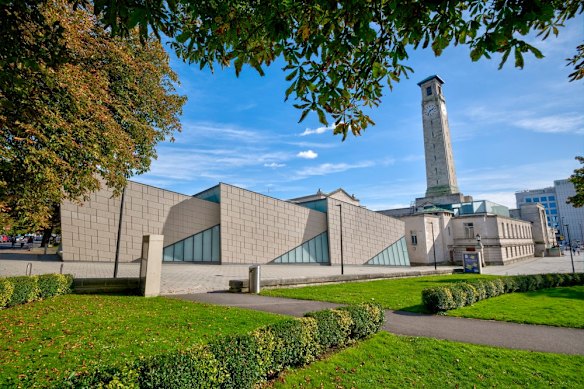
It has the UK’s busiest cruise terminal, but in all other matters, Southampton is a minor player. Visitors must make do with moderately well-curated maritime heritage (SeaCity museum), satisfactory shopping (Westquay) and some OK green spaces (Queens Park, Southampton Common), but very limited cultural offerings.
Sign up for the Traveller newsletter
The latest travel news, tips and inspiration delivered to your inbox. Sign up now.
19. Coventry
Visitor appeal: 3/10
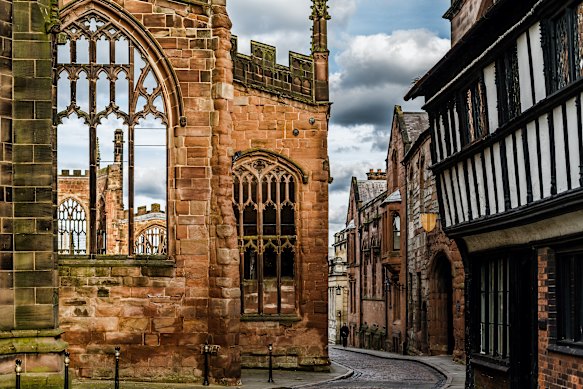
As the 2021 UK City of Culture, Coventry wowed first-time visitors with its moving cathedral ruins and Basil Spence’s modern cathedral – both Grade I-listed – as well as the Doom painting at Holy Trinity, medieval Guildhall and impressive transport museum. The only trouble was, and is, that these hark backwards, as do intangible cultural treasures such as Two Tone and (more tenuously) Philip Larkin.
Five years later, all manner of inward investment is claimed as a legacy of the 2021 showcase, though the collapse of the Coventry City of Culture Trust in 2023 led to the loss of 50 jobs and the shuttering of the Reel Store, the UK’s first immersive digital gallery. The city has had to fall back on old faithfuls, such as the Herbert Art Gallery, Belgrade Theatre, Warwick Arts Centre (on the outskirts) and the Godiva Festival – once Britain’s largest free family festival, now charging.
As a day trip, Coventry definitely delivers. For longer than that, it requires a psychogeographer’s interest in ruins and history – unless you can get a ticket to see Coventry City, who are flying high in the EFL Championship.
18. Nottingham
Visitor appeal: 4/10
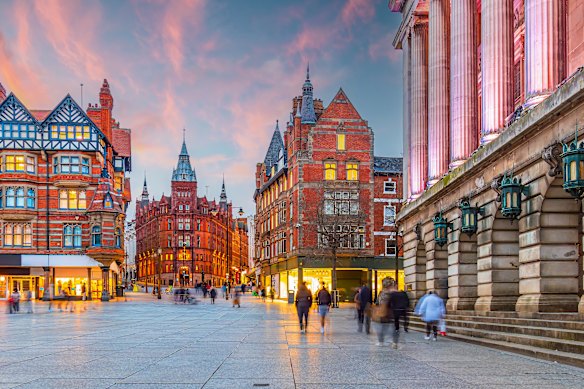
Only the 19th most visited city in Britain, Nottingham is all too easily bypassed. Perhaps it’s to do with its blurred identity. The city feels quite northern (its greatest literary and cinema protagonist, Arthur Seaton in Saturday Night and Sunday Morning, was seen as a gritty northern hero) but is deep inside the Midlands. It’s oldish and modern, radical and a tad traditional, provincial and metropolitan.
The largely well-preserved traffic-free city centre, with characterful flagstone pavements, maze-like lanes called “twitchels”, England’s biggest medieval market square and the Lace Market, is quite atmospheric. Nottingham has some fine Victorian architecture by Watson Fothergill. The former Boots the Chemist on Pelham Street is an Art Nouveau beauty. The monumental 1930s city hall building is like a slimmed-down St Paul’s Cathedral.
Hip Hockley has coffee shops, restaurants and microbreweries. Underground, and open to visitors, are hundreds of sandstone caves that were used as beer cellars, tanneries, and even dwellings, and later air-raid shelters. There’s a good number of old boozers, and one of the country’s few surviving Victorian music halls. It’s quirky, characterful, but somewhat unprepossessing.
17. Brighton
Visitor appeal: 4/10
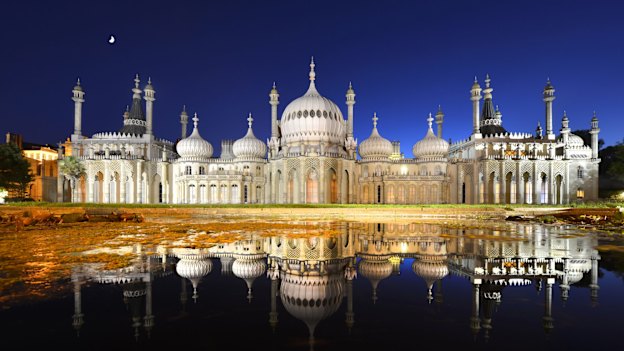
If you ever head to the East Sussex Coast’s fabled metropolis, be sure not go with your expectations too high. Because, to untutored eyes, Brighton looks like a cross between Blackpool (minus the sand), Eastbourne and the sketchier parts of Lambeth. You have to close your eyes to the tat, and your nose to wafts of overused chippy oil, to get to glorious landmarks like the Royal Pavilion, Palace Pier and the Grand Hotel.
A stroll along the Lanes and North Laine, a glance at the street art, some satisfactory nosh and a look at the Booth Museum of Natural History are all pleasurable, and if you’re here for a gig or show, that can enrich a weekend trip. But Brighton’s main strength is the sea, the cliffs, the Downs. As a seaside resort, it sets a high bar; as a place to live, it ticks many lifestyle boxes; as a “great” city, it’s wanting.
16. Derby
Visitor appeal: 4.5/10
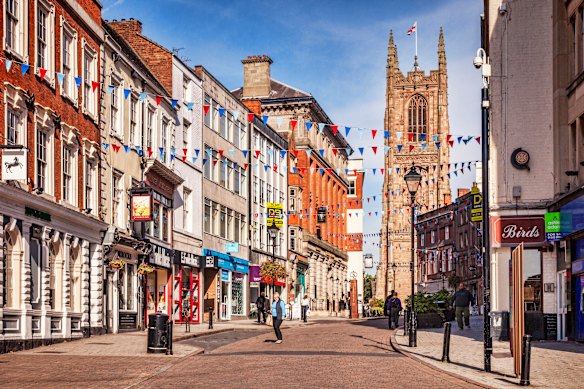
A survey recently named Derby the “worst” city break in Britain (out of 25 contenders). Not for everyone, then, the Grade I-listed Cathedral Church of All Saints with its Perpendicular Gothic tower and the oldest ring of 10 bells in the world.
Derby Art Gallery is also home to the largest collection of work by Joseph Wright, born here in 1734. His works evoke new technologies, the magic of science and the enduring – and threatened – beauty of nature. (Note: London’s National Gallery has borrowed some pieces for its big show until May 2026.)
Rolls-Royce and Bentley cars are historically tied to Derby. Great Northern Classics opened in 2024 at the former Victoria Ironworks foundry and showcases classic cars from all eras. The Museum of Making, in the old silk mill, celebrates engineering, design and craft. There are a hundred or so Camra-approved pubs. Art, beer, cars, UNESCO-listed textile mills, rail history, a massive church. It doesn’t sound too bad.
15. Leicester
Visitor appeal: 4.5/10
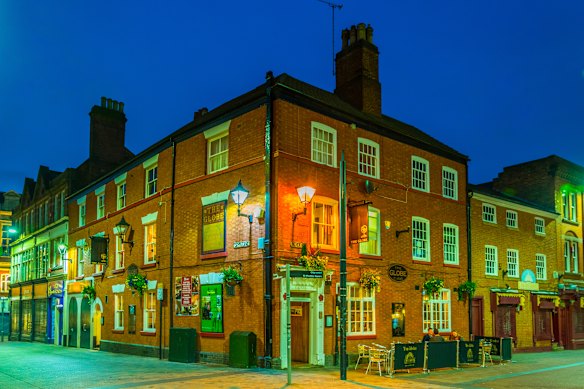
Is this big, friendly East Midlands metropolis the UK’s most underrated urban centre? It might be. History is deeply embedded here, as evidenced by the dashing Jewry Wall museum – which reopened in July after a major revamp. It reminds us that Roman Leicester (Ratae Corieltauvorum) was a wealthy and logistically important hub on the Fosse Way, between Lincoln and Exeter, and near Watling Street, linking Dover to Wroxeter.
Beside the River Soar are medieval and Tudor buildings, including stone gateways, a church and castle motte, and not ten minutes’ walk away (everything is close) is the excellent King Richard III Visitor Centre, which makes some sense of the confusingly internecine Wars of the Roses, Battle of Bosworth and the archaeology that gave us this remarkable royal burial attraction.
There are great pubs, like the Globe, where textile tipplers gathered, lots of bars, cafés and restaurants, and a fair smattering of shops, gaming places, co-working offices, and a superb mid-price hotel in the well-located Novotel. The Golden Mile (Belgrave Road) is the place for restaurants that combine amazing value and cracking curries.
14. Sheffield
Visitor appeal: 5/10
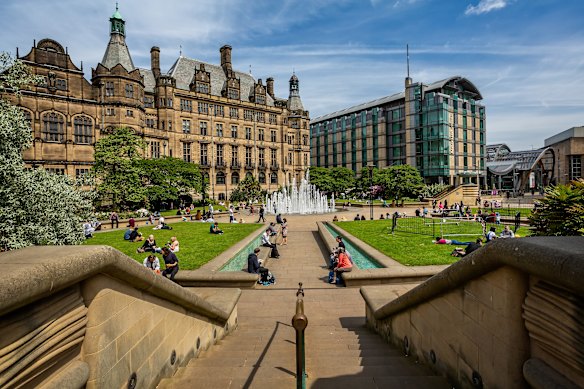
Sheffield has a great reputation as a student city, a pop and indie music city and a football city (down to endurance rather than league success), but it has little in the way of mainstream tourist attractions. What it does offer is value for money.
For urban explorers, a guided walk of the Brutalist “Streets in the Sky” of the Park Hill housing estate – the largest listed building in Europe – is fascinating. In the centre, the Peace Gardens are worth a stop (local bodies claim 61 per cent of the city is green space). The former steel-making district of Kelham Island has been reinvented as a hedonistic “lifestyle” quarter, with bars, bakeries and food halls in converted foundries and warehouses. A Bessemer Converter and Europe’s largest working steam engine are on display at the museum to remind visitors of the glory days of the “Steel City”.
13. Bradford
Visitor appeal: 5/10
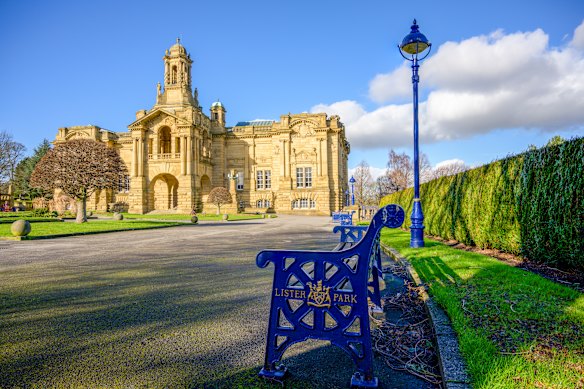
Sometimes, West Yorkshire’s second city seems to be all promise, little product. Last year’s UK City of Culture events generated upbeat headlines, but it’ll be interesting to see what they did for visitor numbers.
The decline of the National Museum of Photography, Film & Television – now the National Science and Media Museum – has seen its world-famous photography collection nicked by the V&A in South Kensington and the whole building has the vibe of a low-brow crèche.
Beyond this, the city is still rebuilding and how successful the razing and redevelopment will be remains to be seen. The old Odeon cinema has been reopened by Trafalgar Entertainment as a 3,800-seat concert space called Bradford Live. A major arts centre in the Little Germany neighbourhood officially re-opened its doors to the public after a multimillion-pound refurbishment in October.
Lister Park is lovely and its Cartwright Hall gallery, which hosted the 2025 Turner Prize, is always worth dropping in on. Food-wise, Bradford could do with a half-dozen high-end Asian eateries, but the Victorian tunnels of Sunbridgewells are great for a drink and a pizza. Outside the city, Saltaire’s model village and art/retail-filled Salts Mill and Haworth make for enjoyable half-days out. One to watch, still.
12. Hull
Visitor appeal: 5.5/10
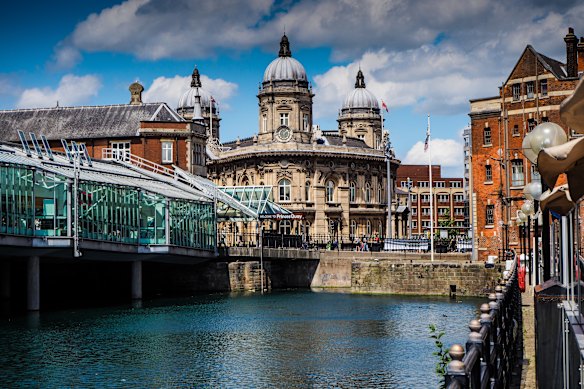
Friendly, distinctive, somewhat cut off from greater Yorkshire by the river, Hull can’t quite shake off its underwhelming atmosphere. Yet it offers plenty to see and do.
Scale Lane Staith, Trinity Wharf, Chapel Lane Staith: the short, cobbled alleys that run down from High Street to the River Hull (hence the name Kingston upon Hull) evoke the days of the Hanseatic League, fish and whaling, wool and wine.
Hull’s Old Town is not very large (thanks partly to the Luftwaffe) but it has Victorian bonded warehouses, old pubs and interesting merchant houses, as well as the house where William Wilberforce was born. The latter, built around 1660, brings slavery into focus as well as the career of the politician and social reformer.
Nearby is Hull Minster, over 700 years old and England’s largest parish church. The Ferens Art Gallery has a collection that ranges from late medieval paintings to contemporary sculptures; a star exhibit is Pietro Lorenzetti’s masterpiece, Christ Between Saint Paul and Saint Peter.
11. Cardiff
Visitor appeal: 6/10
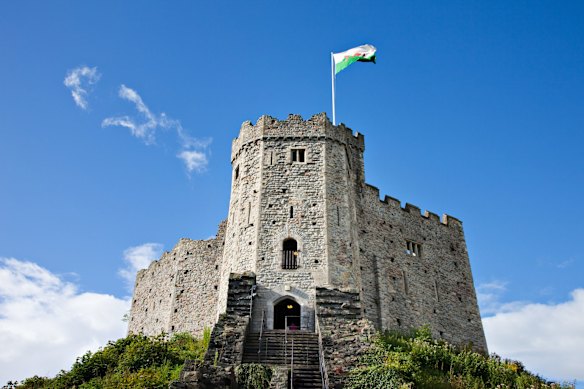
The Principality Stadium is too big for its location, looming over the rest of the city like a big corporate bully. On match and gig days it brings crowds and energy to the Welsh capital, but when it’s empty, it occupies a gigantic chasmal footprint.
Away from this behemoth, Cardiff has lots to see: a castle, the Senedd, Bute Park, the 1891 market, Victorian and Edwardian shopping arcades, the excellent national and city museums, and all the waterfront airiness along the banks of the Taff and the Bristol Channel that is such an asset.
Envious of Bristol for its perceived glamour, Cardiffians tend to be self-deprecating. But their city, though only made a capital in 1955, has a certain undeniable politico-historical heft and ranks highly in surveys for business growth, family life and overall friendliness. A major university, media and intellectual centre, it got its first Michelin star in 2025 for Gorse, in the fashionable suburb of Pontcanna. So whether you want high culture or indulgence, you’ll find it here.
10. Leeds
Visitor appeal: 6.5/10
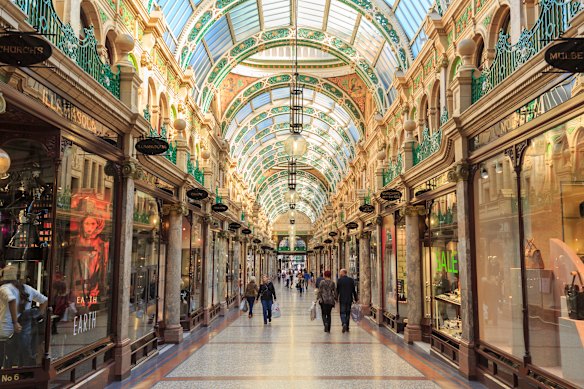
There’s an untidy quality to Leeds, borne of a patchwork of periods in its built environment and the fact that a lot of regeneration is underway (cranes rise at every corner). There is also a certain shapelessness, with no great river or hilly park there to set off the city. You could visit Leeds your whole life and never really be aware of the Aire.
There are some ugly, run-down streets very close to the centre, and while the Headrow and other high streets have a fair number of shops, there’s no real boulevard or grand square. The most atmospheric spaces are Queens Arcade and perpendicular Cross Arcade, and Thornton’s Arcade; Grand Arcade is also Victorian but looks and feels less uplifting.
The Corn Exchange is good fun, and the Leeds Playhouse and the Howard Opera Centre/Opera North add cultural class. A major lack is a top-end, innovative museum or edgy major art gallery along the lines of the Hepworth in Wakefield or the (poorly connected) Yorkshire Sculpture Park. Leeds’ strongest points might be its small size and its north-central location; it’s easy to walk everywhere inside the city, and a short ride away are Ilkley, Skipton and the Dales.
9. Bristol
Visitor appeal: 6.5/10
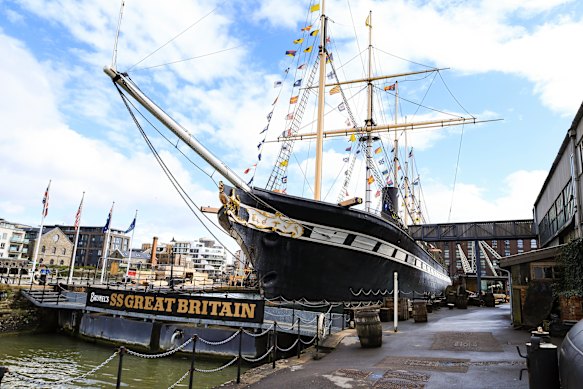
That Bristol is intriguing is irrefutable. A city and a county, a gateway to the South West and Wales, a former slave port turned progressive power base, a rioting hotspot and cool party-town. It has been ranked as the happiest city, the most liveable city, a vegan hotspot, Britain’s first-ever Green Capital and a UNESCO City of Film. But is it nice?
A walk along the harbourside name-checks key associations – Brunel’s ships and bridges, the M Shed museum, dining and drinking options galore, a Banksy, Redcliffe caves – and shows up the idiosyncrasies, including the city’s particular grunginess; downtown Bristol remains scruffy around the edges, and perhaps better for it.
The centre has the big shops and department stores of a regional hub. It also has a Victorian lido, great independent retail (and the Hidden gallery) in Bedminster and Clifton, the lovely Brandon Hill Park conservation area, grand Queen Square and, off the Bath Road, Paintworks, a creative hub where you’ll find the Martin Parr Foundation and, nearby, the Royal Photographic Society.
The imminent opening of the five-star Hotel Gotham in the old Guildhall on Broad Street will give Bristol a showstopper property for wealthy tourists. Bristol has everything, except a definable personality of the kind you feel in larger cities like Liverpool, Glasgow and Newcastle.
8. Birmingham
Visitor appeal: 6.5/10
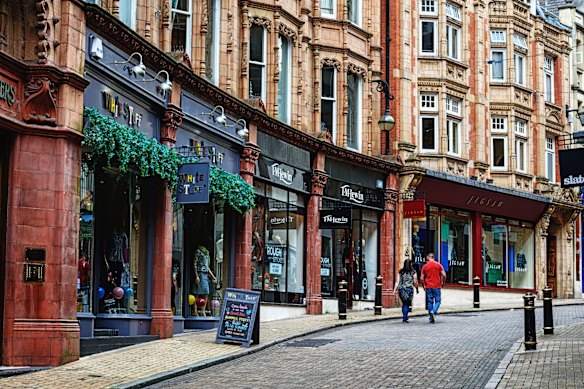
Hosting the 2022 Commonwealth Games and having a starring role in Peaky Blinders (2013-2022) gave the nation’s long-overlooked second city a fillip. For a time, Brummies spoke proudly about being humble and happily showed off their fancy Selfridges, amazing new library and Ozzy the Bull. But is the city still making news?
Well, the recent heavy metal extravaganza at Villa Park, for Ozzy Osborne’s last ever gig, caused a bit of a stir, but Birmingham is in need of constant and far more ambitious cultural self-assertion if it wants serious limelight time. Being the “workshop of the world” and an industrial hub of “a thousand trades” could never quite compete with Manchester’s Cottonopolis or Liverpool’s maritime era.
Something in Birmingham’s DNA or the basic reality of being both in the “Midlands” (and therefore “middling”) and surrounded by the hard-to-distinguish mega-sprawl of the West Midlands/Black Country, makes it hard for the city to stand out and turn on the style. The canals are many, but they are dirty. The food is good, but the golden era of Balti is long gone and many cities now have posh South Asian restaurants.
7. London
Visitor appeal: 7/10
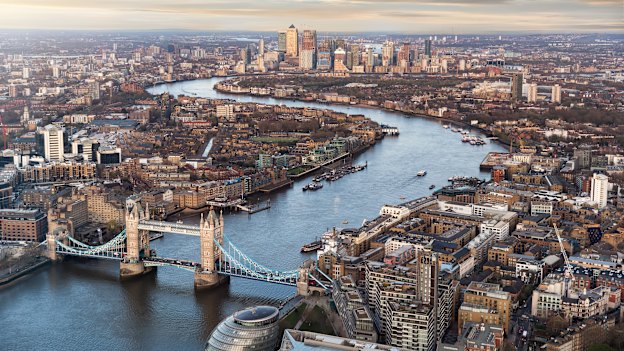
Megacities are many places at once. London is cultural powerhouse, architectural showcase, suburban super-sprawl, multiethnic Babel, tourist trap. And more besides. It’s also unlike any other UK city or, for that matter, international capital. This is a strength, as London has its own smell and noise and energy, but it also means the “capital” or head of the nation doesn’t feel at all representative of it.
The City of London, to the east of Holborn, has almost completely lost its historical character, but still draws crowds with St Paul’s Cathedral, the Tower of London and Tudor-era survivors like Staple Inn, as well as the Barbican arts centre. The planned closure of Smithfield meat market in the Farringdon area as well as Billingsgate fish market further to the east are significant cultural losses.
From Westminster to Regent Street, there are patches of medieval, Regency and Victorian architecture, as well as some of the busiest theatre, dining and drinking districts in Europe. The South Bank is a key gauntlet of art, music and drama, as well as crowded drinking and dining and the ersatz market at Borough. London is one of the best museum capitals in the world.
For all this, the city’s main strength might be in the patchwork of boroughs around the centre, which combine the appeal of local pub, cafés and restaurants (every cuisine is represented), with smaller cultural venues, the UK’s best city parks and green spaces, and no small degree of shabbiness – which is far more alive than the tackiness of, say, Leicester Square and Oxford Street. An enigmatic city, for sure, but out of control, architecturally and in other respects.
Read more in Traveller’s London Destination Guide
6. Manchester
Visitor appeal: 7.5/10
Manchester Museum was named European Museum of the Year in 2025 Credit: alamy
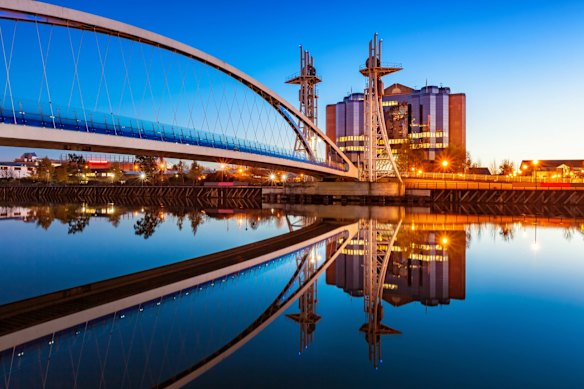
“Manchester was masculine in not being greatly impressed by beauty,” wrote Anthony Burgess. “Beauty was not serious, but business was.”
Few serious Mancunians would claim their city was a looker. The city lacks green spaces, old places, nice shopping streets, and the former grandeur of redbrick warehouses and mills has been largely erased. Nonetheless, the North West’s biggest city has undeniable energy, and is a retail, hedonism, study, media and services hub without equal in these parts.
World-class venues like the Whitworth Gallery, Manchester Museum (European Museum of the Year in 2025), Bridgewater Hall (home of the Hallé), the biennial Manchester International Festival, and the recent opening of the Aviva Studios and Co-op Live make the city a cultural big hitter; the English National Opera is (slowly) moving its base to Manchester.
Press-savvy Andy Burnham and headline-grabbing policies, like Greater Manchester’s taking control of local transport, have helped make Manchester appear to be a rival to London, despite Birmingham’s larger GDP and population. Mouthy and immodest, but enduringly unbeautiful, Manchester is 21st-century Britain encapsulated. Salford, somewhat subsumed but different in character and a symbol of northern reinvention, is also worth a day’s exploring for anyone staying for the weekend.
5. Newcastle
Visitor appeal: 7.5/10
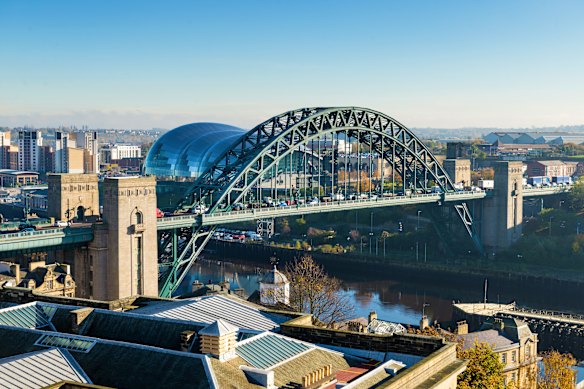
The most popular images used to sell Newcastle as a destination are the bridges, which are shared with Gateshead, and the Baltic Centre for Contemporary Art and Glasshouse International Centre for Music, which are in Gateshead. This is not a negative, but we should think of the two cities as conjoined for visitors, just as they are for residents.
A welcoming, fun city for tourists, Newcastle has a bit of everything, even if its biggest “cathedral” is a football stadium. A quick wizz around the centre can take in the Norman stronghold of Newcastle Castle, the Hogwarts-esque Lit & Phil Library, handsome Grey Street, lively iron-and-glass Grainger Market and the Queen Street area under the Tyne Bridge – where there are good options for brunch or a coffee.
Newcastle’s neighbourhoods – all easy to get to – have their own vibe. Ouseburn is home to open studios and microbreweries, Heaton’s got heaps of indie spirit and artisan coffee shops, while Tynemouth, a metro ride away, is sea breezes, surfboards and Sunday markets. The Laing Art Gallery is great, and the Great North Museum: Hancock a classic family-friendly showcase of anything and everything.
But the main pleasures here are to be found walking along the river, crossing the bridges and going to pay open-armed homage to the Angel of the North – though that’s in Gateshead, too.
4. Glasgow
Visitor appeal: 8/10
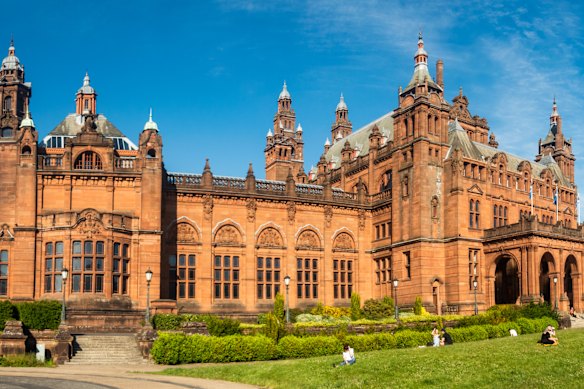
Walk from the Kelvingrove art gallery and museum in Glasgow’s West End to Central station and you’ll see all the faces of Glasgow: gracious, gritty, intellectual, inebriated, stylish, scruffy. But this is a big city, and it feels like the real deal.
People come here because they want to drink in superb pubs, enjoy one of the many festivals, dine on superb food, see a gig – the city became the UK’s first Unesco City of Music (and only the third in the world) in 2008 largely for its live music scene – and spend time among friendly people.
Scotland’s most populous city brims with historical and cultural stops – the cathedral, St Mungo’s religious art collection, the mural trail, Mackintosh’s art school and teashops, the Hunterian museum, the Burrell collection – but one measure of a great city is that it thrills just to be there and amble and watch people and look around.
This is a grand Victorian metropolis, duly daubed with green areas, and it can feel life-enhancing in the right weather. Glasgow had 20 per cent more tourists staying overnight in 2025 than the previous year. But Glaswegians will tell you they knew all along theirs was the best city in Scotland, the North, even the UK. But they are comedians, and might not be saying it too seriously.
3. Belfast
Visitor appeal: 8/10
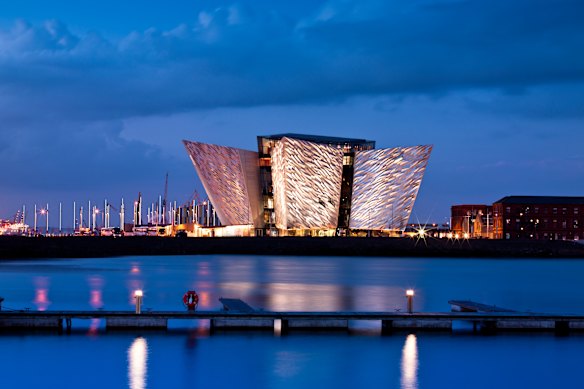
In three decades, the Northern Irish capital city has been transformed. Belfast is now wondrous, and well worth a visit.
Across the so-called Cathedral Quarter is a great world of city pubs (including lovely old boozers like White’s Tavern, Duke of York and Kelly’s Cellars) and restaurants for every taste and budget. St. George’s Market is a wonderful indoor people’s ball of energy, eating and live music, ideal for a rainy Sunday. The Botanic Gardens and Queen’s University area are good for a wind-down mid-stroll, and the Peace Walls, Stormont, Crumlin Road Gaol and assorted Troubles-related sites add depth and complexity to any visit.
The port district, with the Titanic museum as its centrepiece, makes up for the lack of a major city park. Belfast’s Merchant Hotel is pricey but very posh, and the jazz nights at Bert’s sort of make you think you’re in New York. The best museum space is out of town, so it’s worth taking a ride in the 502a or 502b Ulsterbus from Laganside Buscentre to Cultra, Holywood, to visit the Ulster Folk and Transport Museum.
It has a transport section filled with planes, trains and automobiles, and a folk section, which superbly recreates rural and urban Northern Ireland life in the early 20th century. For a long walk, jump on a train to Bangor and come back on the riverside.
2. Edinburgh
Visitor appeal: 8.5/10
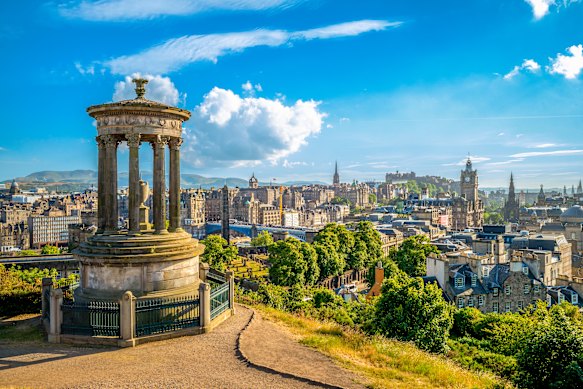
Some cities are so handsome that they always delight. Rio is just such a city. And so is Edinburgh, and like the Brazilian beauty, part of the allure of the capital of Scotland is the natural setting – Arthur’s Seat, the castle on its hill, Leith and Portobello over on the Firth of Forth (with its magnificent bridges).
Political capitals hoard history, exude power and have a natural relationship with their built heritage; Unesco listed the New and Old Towns back in 1995 for the “harmonious juxtaposition of… two contrasting historic areas, each with many important buildings, [which] gives the city its unique character.” This, and the International and Fringe festivals, have enviable pull when it comes to high-quality, big-spending tourism, and foreign visitors often rank Edinburgh alongside London.
For bars, restaurants, museums, hotels of all classes and all the key elements of a great weekend, this might just be the strongest city in the country. The tram is a great addition. Overtourism is the one serious blight here, and some of the pipes-and-kilts stuff is just too cheesy to credit. But Edinburgh, in the shoulder seasons, is superb.
1. Liverpool
Visitor appeal: 9/10
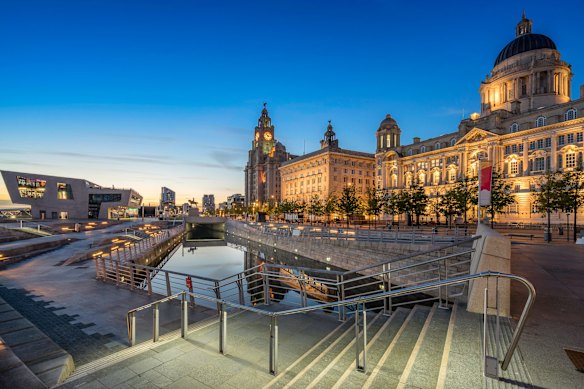
In certain lights – which can be a summer evening, a clear dawn, a wintry afternoon – the waterfront of Liverpool is magical. It’s partly the contrast with the shopping area, which is often hectic, but it’s also the sheer, irrefutable glory of the Three Graces and the handsome red dock architecture combined with sea breezes and a big sky.
Liverpool has had major ups and downs, swinging from the “managed decline” imposed on it by Geoffrey Howe after the Toxteth riots to the pomp and pageantry of 2007-8 when the city was the UK’s last ever European Capital of Culture (hosting, among other things, the glamorous MTV Europe awards) and celebrated its 800th birthday.
The Walker, Open Eye Gallery and Museum of Liverpool are always hosting exciting shows; the Tate, being refurbished till 2027, and the International Slavery and Maritime museums, closed till 2027, are sorely missed by Albert Dock visitors. The Liverpool ONE al-fresco mall-type development is not to everyone’s taste, but the big-name chains attract good numbers of shoppers.
Boasting stellar Victorian heritage architecture and the UK’s two finest modern-era cathedrals, a still buzzing pub scene, improving gastronomy and a small but strong arts scene, Liverpool is a one-off. Its people are storytellers and, more importantly, stars in their own private novels.
Agree or disagree with the ranking? Post your comments below.
The Telegraph, London