3 months ago
11
3 months ago
11
Apple’s future artificial intelligence (AI) features, including a revamped Siri assistant due to arrive this year, will be powered by Google as the two tech giants have announced an agreement that could potentially shake up how AI works in smartphones.
The specifics of the deal are still unclear, with a brief joint statement from the two companies saying only that the next generation of Apple AI models will be based on Google technology, but will continue to use Apple’s “Private Cloud Compute” architecture. The statement was published on Google’s blog.
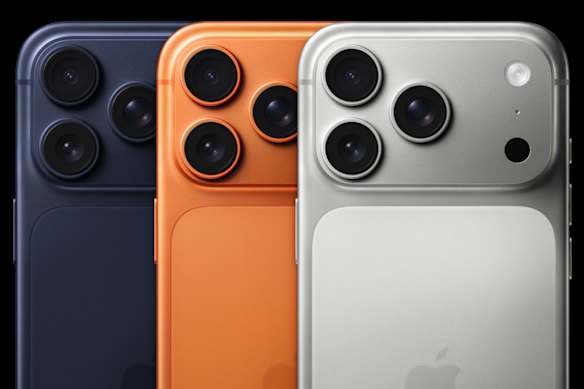
Apple’s iPhones will soon be powered by new AI features built on Google tech.
The announcement comes after years of pressure from analysts and investors for Apple to plug a perceived AI gap, with the company drip-feeding elements of its “Apple Intelligence” suite and delaying its new Siri while competitors raced ahead with experimental generative AI.
The development is obviously a win for Google, and for Wall Street’s AI hype-pushers. Parent company Alphabet briefly broke above a $US4 trillion ($5.9 trillion) market capitalisation on Tuesday as shares rose 1.7 per cent following the announcement, making it the second-largest firm after Nvidia.
Loading
Wedbush Securities analyst Dan Ives said the move was what the Street had been waiting for, “a stepping stone to accelerate [Apple] AI strategy into 2026 and beyond”.
The deal could be a threat to Samsung, which also leans heavily on Google AI to differentiate its phones from Apple’s, and to OpenAI which wants its ChatGPT to find a home on iPhones. But what will the development mean for consumers?
On the one hand, the tech industry’s enthusiasm for AI is far greater than the average phone user’s need for more generative features. An OPPO Australia survey published in October found only four per cent of respondents thought AI was an important factor in choosing a phone.
Behind the scenes, AI can positively affect smartphone elements people actually care about – improving battery life, maximising storage space, powering computational photography – but the more language-focused or creative elements explicitly marketed as AI have received a lukewarm welcome.
The buzziest of Gemini capabilities, including real-time voice conversations and image generation, have proven to be hit-and-miss, while the chatbot itself continues to struggle when it comes to serving reliable and verified information without invention or confusion (and Gemini is not alone in this). By hitching a core part of its smartphone experience to Google’s wagon, Apple could make it much more difficult for consumers to find an AI-free path to information.
Loading
On the other hand, Apple has arguably proven itself to be the most cautious and trustworthy of the tech giants when it comes to AI. If it uses Google’s raw resources to create responsible features, the iPhone could become a superior overall platform for AI.
If consumers consider the major issues with these features to be around privacy, utility and seamless integration, Apple is ideally positioned to deliver an experience that’s preferable to what is currently found on Pixel and Galaxy phones.
However, the iPhone-maker also has other challenges ahead of it. It appears determined to deliver the more personal, more context-aware AI Siri it originally promised years ago, but it needs to find a way to avoid the problem Gemini and ChatGPT have with lying and overconfidence.
Apple also runs platforms favoured by the creative industry, and will likely want to avoid the perception that its technology is based on art that Google has scraped and repurposed behind creators’ backs.
The final piece of the puzzle will be price. Consumers currently pay Apple subscription money for tangible benefits including cloud storage and premium news content, but will the company charge for high-end AI like Google and OpenAI do? Perhaps unsurprisingly, analysts view that as inevitable.
“This was a necessary move for Apple to deliver its own personal assistant within its hardware ecosystem, while expecting to deliver a new subscription-based revenue stream to the largest consumer installed base in the world,” Ives said.
Get news and reviews on technology, gadgets and gaming in our Technology newsletter every Friday. Sign up here.
Most Viewed in Technology
Loading