3 months ago
16
3 months ago
16
Darren Thorpe was 61 and feeling healthy when a full-body medical scan threw a curveball at the managing director.
The medical resonance imaging (MRI) detected a lesion in his prostate. It turned out to be an aggressive form of cancer.
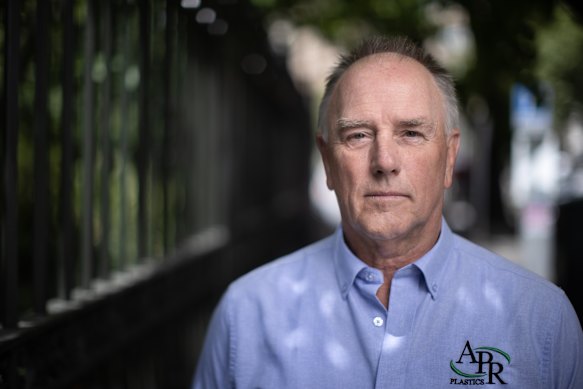
Darren Thorpe detected a cancerous growth in his prostate through a preventive MRI. Credit: Simon Schluter
“It saved my life,” Thorpe said of his 2023 scan, which was part of a $3500 preventive medical check offered at a private clinic in Melbourne.
While whole-body MRI scans such as these are surging in popularity and hailed by many patients as life-saving, doctors and private health insurers warn they could be doing more harm than good.
The radiation-free scans, often spruiked by celebrities including Kim Kardashian, promise to detect early signs of cancerous tumours, brain aneurysms, inflammation, cysts and conditions such as multiple sclerosis.
Loading
They are now offered in dozens of clinics across Victoria, NSW, Queensland, Western Australia and South Australia.
The Royal Australian and New Zealand College of Radiologists has issued a new warning against the use of whole-body scans for healthy patients.
“Whole-body MRI in asymptomatic people may identify incidental findings that are ultimately harmless,” said college president Professor John Slavotinek. He told this masthead that the same held true for targeted MRI for asymptomatic patients.
“These can create unnecessary anxiety, trigger further investigations, sometimes invasive, and add cost and complexity to the health system. At present, there is no significant evidence that whole-body MRI screening provides a net benefit for asymptomatic individuals.”
Slavotinek said these scans could also miss important conditions because they lacked the sensitivity and specificity of targeted imaging that is designed to investigate symptoms.
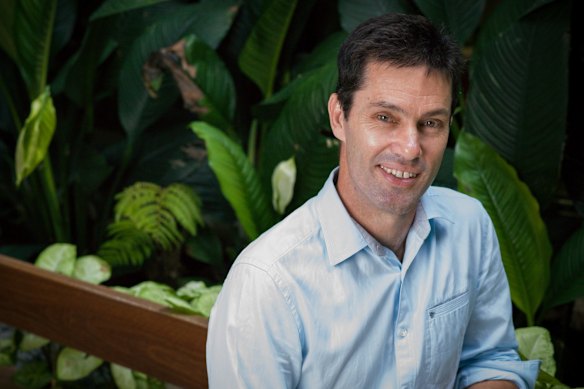
Professor David Whiteman says there is no robust evidence that supports full-body MRIs.Credit: Tony Phillips
It is a view shared by Professor David Whiteman, a cancer expert at the QIMR Berghofer Medical Research Institute in Brisbane.
He said patients should only engage in targeted screenings if they have symptoms, are deemed high-risk due to a family history, or are taking part in formal screening programs. He said national screening programs for breast, lung, cervical and bowel cancer were backed by rigorous evidence.
“The more you will look for things, the more you will find things and that gives rise to overdiagnoses, which can lead to overtreatment,” Whiteman said.
“The sensitivity of our technology is now so exquisite that you will find lots of things but not all of them are going to harm patients.”
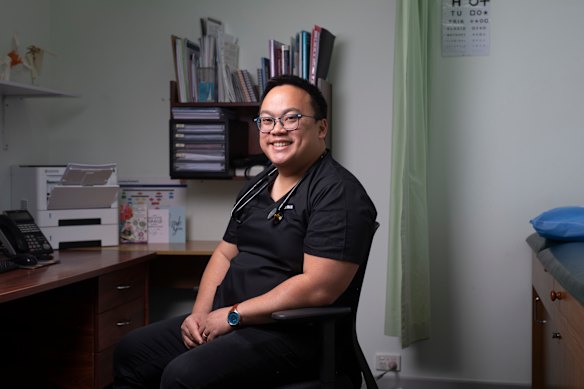
Dr Vu Tran says he’s upfront with patients about the pitfalls of full-body MRIs.Credit: Russell Shakespeare
Full-body scans are not covered by private health insurers and generally don’t provide a Medicare rebate.
Dr Rachel David, chief executive of Private Healthcare Australia, said that while the scans could sound appealing, “they often lead to false alarms, unnecessary follow-up tests, potentially harmful interventions like biopsies, and a lot of anxiety” for people without signs of illness.
“These scans are heavily marketed by companies that need to recover the costs of very expensive machines to turn a profit,” she said. “I would encourage anyone considering these scans to speak with an independent GP first about what’s actually recommended for their personal risk profile.”
OneMRI, co-founded by Dr Vu Tran, is tapping into growing consumer demand for proactive health screenings by offering full-body MRIs at 23 partner clinics. The scans, which take 45 to 60 minutes, cost just under $3000.
Tran, who is also the company’s chief medical officer, said he’s upfront with customers about the scans’ double-edged nature and takes patients through a detailed consent process.
The key risk is the high rate of incidental findings – abnormalities that often prove harmless but require extensive follow-up. Tran said about 25 per cent of patients who undergo full-body scans receive abnormal findings that turn out to be benign after further investigation.
About one-third of customers decide they don’t want to proceed with the scan after hearing about this pitfall.
Loading
“I need them to be aware that there’s a chance that we scan you and we find a lump in your liver, and that lump gives you a massive amount of anxiety, until we get to the bottom what’s causing it,” Tran said. “You end up getting extra scans and a biopsy ... only to find out that it was nothing.”
But, he said, about 3 to 4 per cent of the full-body scans detected cancers or other issues that needed treatment.
One GP, who did not want to be identified for privacy reasons, said he was concerned whole-body MRI screenings were shifting costs back onto Medicare, which funds the follow-up investigations.
“There are no evidence-based protocols, no mandated reporting standards and no governance structures,” he said of the whole-body scans.
“How many additional investigations are needed to look into findings from non-evidence based screenings?”
Loading
Dr David Badov is the medical director of HealthScreen, which has clinics in Melbourne and Sydney and offers targeted MRIs to assess asymptomatic patients for early signs of the top 20 cancers.
Badov said the business had scanned more than 1000 patients over the past six years, most of them aged over 40.
He said a man in his 40s recently went to a HealthScreen clinic after his best friend was diagnosed with incurable stage four kidney cancer. The MRI detected a lesion on his kidney, which prompted further investigation and a diagnosis of stage one kidney cancer.
“He had surgery, and he’s cured,” Badov said. “His life trajectory is completely different from what it would have been if he had not been proactive.”
While Darren Thorpe, now 64, was initially reluctant about getting a health check, he has no regrets. He underwent a prostatectomy in July 2023 and hasn’t required any follow-up treatment.
“We have three grandchildren,” he said. “If I didn’t pick this up, it could have been really problematic. I couldn’t have had this priceless time with them.”
Start the day with a summary of the day’s most important and interesting stories, analysis and insights. Sign up for our Morning Edition newsletter.
Most Viewed in National
Loading