3 months ago
18
3 months ago
18
Opinion
November 25, 2025 — 12.05pm
November 25, 2025 — 12.05pm
The most effective sanctions yet on Russia’s oil exports since the start of the war in Ukraine are set to become irrelevant if Donald Trump pressures Ukraine into accepting a peace plan that might have looked quite differently had they been in place earlier.
Last Friday, sanctions on two of Russia’s biggest oil companies, Rosneft and Lukoil, came into effect. Between them, those two companies can produce about 5.3 million barrels of oil a day, or more than half of Russia’s oil exports.
From the moment those sanctions were announced, Chinese and Indian buyers of Russian oil – by far the biggest buyers since the 2022 invasion – halted their purchases, fearful of being caught up in retaliations that could deny them access to the US dollar-denominated global financial system.
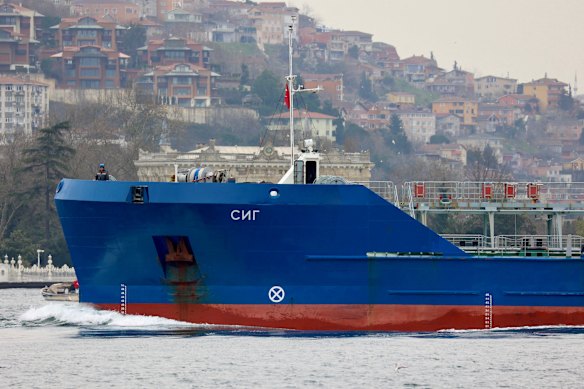
An estimated 50 tankers from Russia’s ‘shadow fleet’, carrying about 48 million barrels of oil, are now stranded at sea.Credit: Reuters
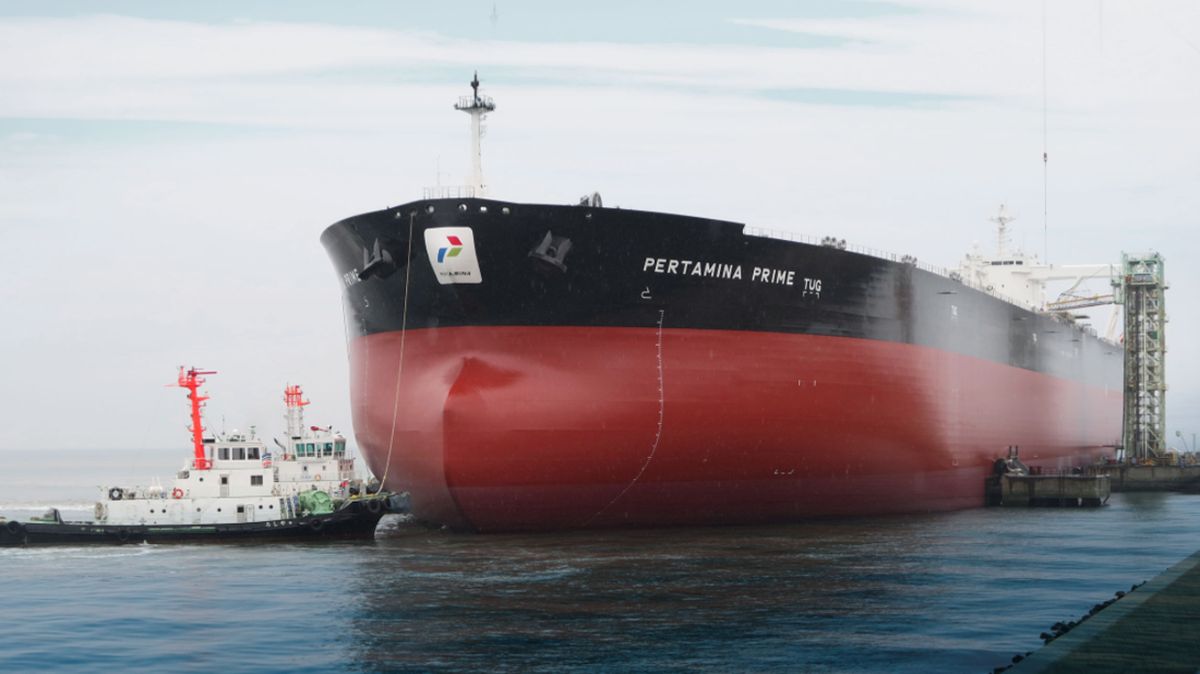
An estimated 50 tankers from Russia’s ‘shadow fleet’, carrying about 48 million barrels of oil, are now stranded at sea, unable to land their cargoes. JPMorgan has estimated that about a third of Russia’s seaborne oil exports is now in tankers effectively being used as floating storage.
Depending on how prepared the US is to police those sanctions - particularly whether it is prepared to sanction Chinese refineries – and how quickly Russia can (as it has done throughout the war) reshape its supply chains to disguise the origins of its shipments (there’s been a surge in ship-to-ship transfers at sea), the sanctions could take a big bite out of Russia’s oil revenues.
If Trump gets his peace deal, we may never know if more decisive action earlier might have produced a different and, for Ukraine, better result.
With oil and gas contributing about 40 per cent of Russia’s budgeted revenues, that in turn could have a material impact on the funding of a war that has already stretched the country’s finances and completely reshaped its economy into one dominated by its military spending and the production of military supplies, weapons and equipment.
Russia’s economy is struggling under a massive bout of stagflation. According to the International Monetary Fund, it’s growing at less than 1 per cent, while inflation is 8 per cent. Military spending accounts for about 40 per cent of Moscow’s budget, effectively absorbing all the oil and gas revenues.
Even before the sanctions came into effect on Friday, their October 22 announcement and China and India’s reactions to it were hitting Russia’s oil revenues.
When the sanctions were unveiled, the Brent crude oil price was around $US66 a barrel, with that of Russia’s flagship product, Urals crude, trading at around $US57.5 a barrel. Last week, with the Brent price around $US65 a barrel, the Urals price sank as low as $US36.61 a barrel.
Loading
According to Reuters, Russia’s revenues from oil and gas this month may be 35 per cent lower than they were a year ago.
If sustained and effectively policed, the sanctions will undermine Russia’s ability to prosecute the war effectively – and potentially cause deeper economic pain and breed social unrest in the regions outside Moscow and other military centres, where the war efforts are centred.
None of this will matter, of course, if the latest attempt to wrangle a peace deal – one that is likely to be tilted towards Vladimir Putin’s demands – is successful. It would be inevitable that all sanctions on Russia would be lifted as part of any deal.
Equally, an even more potent set of proposed bipartisan sanctions that have been sitting in the US Congress since April might never be enacted.
Those sanctions, which include tariffs on countries that knowingly engage in the exchange of Russian petroleum products and/or uranium of 500 per cent of the value of the transactions, have been held up in Congress while Trump has pursued his peace deal. Trump has said he will sign the bill if the latest peace talks fail.
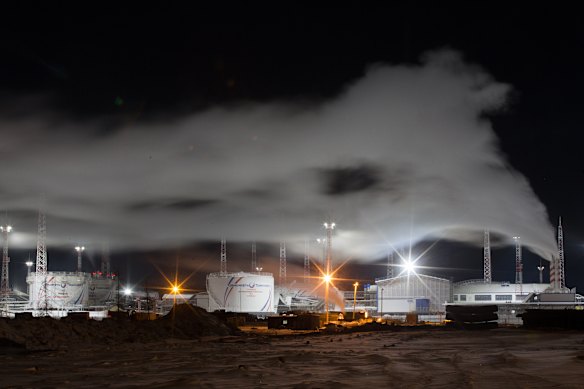
Oil silos on the Russkoye heavy crude oil field, operated by Rosneft - one of Russia’s two main producers - in East Siberia.Credit: Bloomberg via Getty Images
The US sanctions represented a significant change in the West’s response to the invasion, targeting end-customers rather than just the price of Russia’s oil.
Until then, the G-7 had imposed a $US60-a-barrel price cap on Russia’s oil exports, buttressed by sanctions targeting the financing and insurance of the transporting of Russia’s oil exports. Russia was able, to a large degree, to circumvent those sanctions by acquiring its own shadow fleet of tankers and providing its own insurance arrangements.
The G-7 targeted the price, rather than the flow, of Russia’s oil because the West was concerned that any interruption to Russian supply – nearly 10 per cent of global supply in 2022 – would create another oil shock, sending prices rocketing and causing economic distress at a moment when, emerging from the pandemic, economies around the world were still weak and suffering from the big spike in inflation generated by the pandemic’s impact on global supply chains.
Loading
The intent of those sanctions was to use the price cap to reduce the revenue Russia received from its oil and gas sales without choking off the flow – the cap was set at a level that left an incentive for Russia to keep producing and selling its oil.
At the time, indeed until relatively recently, the OPEC+ cartel had been keeping oil supplies tight, having withdrawn about 6 million barrels a day of production capacity from the market. In the months after the invasion, before the price cap was introduced, the oil price soared to more than $US120 a barrel.
Since then, China and India have absolutely gorged on Russia’s discounted oil. Before the sanctions, India, the world’s third-largest oil consumer, imported about 2.5 per cent of its oil from Russia. In the last financial year, that percentage was almost 36 per cent.
While there might be a stigma associated with any purchase of Russia’s oil – the “Blood Oil” series this masthead has been running says that there is – the intent of the original sanctions was to keep Russia’s oil flowing to the rest of the world, which they did.
It’s interesting that China, India and Turkey (all with strong relationships with Russia) were the major beneficiaries - but the sanctions’ deliberate focus on price rather than flow makes it difficult to be overly critical of them rather than of those who designed the regime that encouraged their purchases.
That, of course, changes now that the new US sanctions are in place.
This year, OPEC abandoned its efforts to ration supply, returning more than 2 million barrels a day to the market.
Supply now exceeds demand, the price has trended down from more than $US80 a barrel early in the year to around $US63 a barrel, and there is now a glut of oil within the market that looks like continuing well into next year.
Loading
It’s that glut which enables the US to try to throttle Russia’s oil sales without a fear of massive price impacts.
There’s also still a lot of OPEC capacity – particularly Saudi capacity – on the sidelines that could be brought back if required to keep prices under control. Trump and his family are, of course, close to the Saudis.
Had the US been prepared to wield the big sticks in its sanctions’ armoury, targeted Russia’s customers earlier and backed the sanctions with enforcement, the West’s sanctions would have been far more effective and Russia’s capacity to fund the war could have been severely constrained.
If Trump gets his peace deal, we may never know if more decisive action earlier might have produced a different and, for Ukraine, better result.
The Market Recap newsletter is a wrap of the day’s trading. Get it each weekday afternoon.
Most Viewed in Business
Loading