3 months ago
10
3 months ago
10
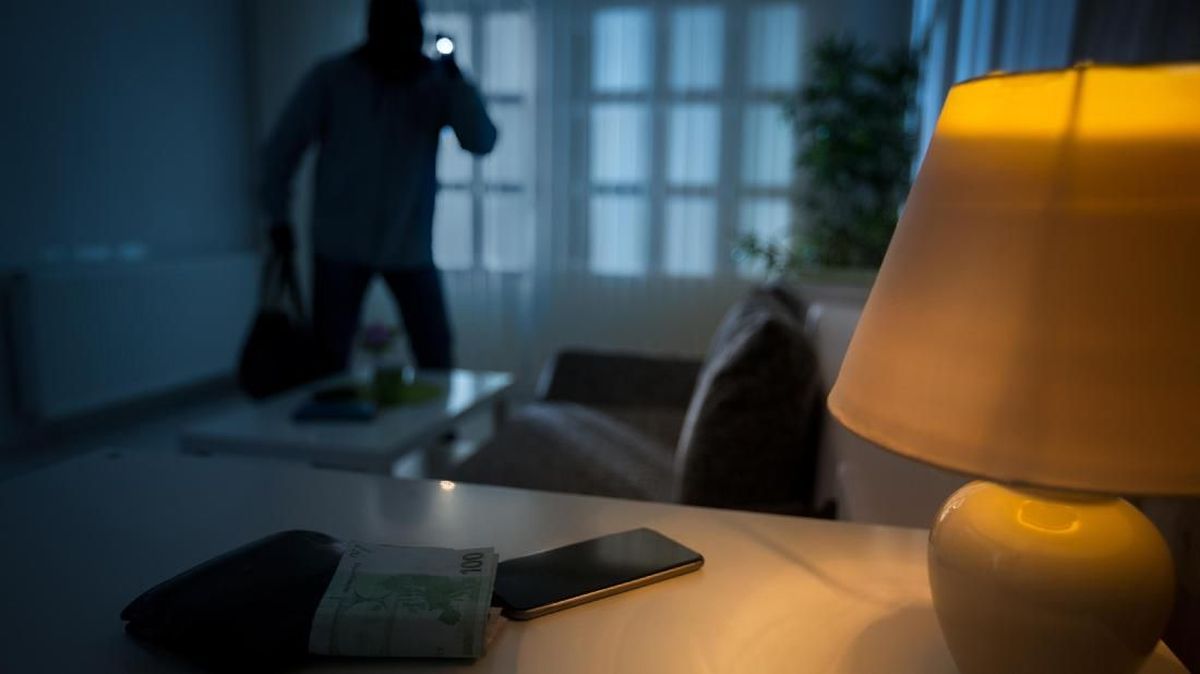
Before Amanda Jones goes outside to feed her cats in the morning, she checks the live feed from the security cameras keeping watch around her home. After breakfast, she checks the footage again and makes sure all the doors to her house are dead-bolted before heading to work.
If she pulls into the car park at work and spots a vehicle she doesn’t recognise, she immediately drives off, phones her employer and asks them to check it out. When she’s not going to work, she carries a taser and a can of mace in her handbag, and travels with a loaded Glock 9mm pistol in her car.
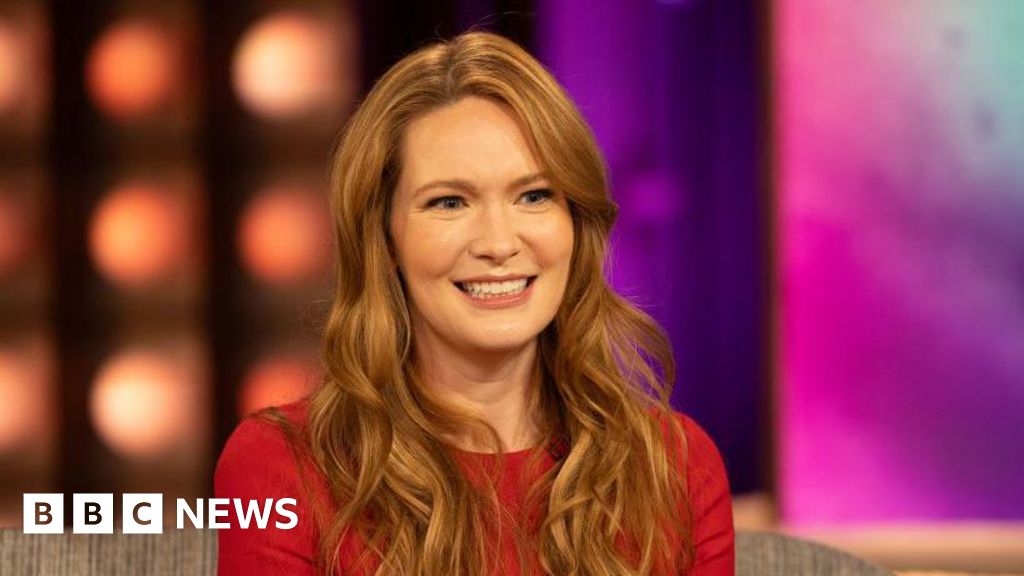
Jones is no gang member. She’s not a criminal turned police informant or a fugitive on the run. She’s a 47-year-old librarian who teaches tweens at the school she attended as a child in the southern US state of Louisiana. “It’s horrible to live like this,” she says.
“This” all began one Saturday three years ago, when Jones opened an email that read: “Amanda, you are indoctrinating our children with perversion + pedophilia grooming … we gunna put ur fat evil commie PEDO ass in the dirt very soon bitch. You can’t hide. We know where you work + live … you have a LARGE target on your back. Click, click … see you soon …”
“I felt like my heart just dropped out of my body,” she recalls. “Hives, sweating, heart racing, trouble breathing.”
Days earlier, Jones had spoken out against censorship at her local public library and walked straight into the battle to ban books playing out across the US. Since then, she’s been the target of online abuse that has taken a toll on her health, she’s lost friends and been shunned in the town where she has lived her entire life. “I can’t even go into a store without getting called a groomer here,” she says. “I’ve been afraid to go to church for three years … I’m constantly looking outside at night if I hear noises … Nothing’s the same anymore.”
But her refusal to stop speaking out has transformed Jones from a small-town school librarian into a nationally acclaimed figure, celebrated by the star power of Oprah Winfrey. She was recently named in a list of “the world’s most influential rising stars” in Time magazine, where Sarah Jessica Parker described Jones as “a national voice for intellectual freedom and democracy”. Her story features in a documentary executive produced by Parker and her memoir has been optioned for a film.
“It’s just ridiculous,” says Jones, referring to all the accolades and attention. “I mean, I’m a school librarian.”
Librarians don’t often make headlines, but with Americans living in an era when thousands of books have been pulled off shelves, they’ve become foot soldiers in the country’s culture wars. Free speech advocates began sounding the alarm a few years ago, as more parents and conservative groups began asking school boards and public libraries to remove books they considered inappropriate.
Censorship is now “rampant”, according to PEN America, a free expression non-profit group that found almost 23,000 instances of books being removed from US public schools in the past four years. “Never before in the life of any living American have so many books been systematically removed from school libraries across the country,” the organisation states in a recent report. “Never before has access to so many stories been stolen from so many children.”
The American Library Association has found that most demands to censor books in school and public libraries now come from pressure groups, government entities, elected officials, board members and administrators.
Novels by international best-selling authors, including Stephen King, Judy Blume and Jodi Picoult, are among those that have been removed from school libraries. But titles featuring LGBTQ+ characters – and those that discuss race and include sexual references – are among the most banned books.
History is littered with attempts to control what people read, from the infamous book burnings in Nazi Germany to the Cold War era, when then senator Joe McCarthy led a campaign to remove titles deemed supportive of communism from US libraries. In today’s America, as Jones discovered, those who dare to stand between books and those wanting to take them off the shelves are increasingly finding themselves in the firing line. Librarians have been sacked for refusing to remove books and, in several states, they could now face criminal penalties if convicted of giving books considered harmful to children. “Now it’s not just, ‘Remove the books’,” says Jones. “It’s ‘Remove the books and destroy the librarians’. ”
Before she went to her local public library meeting in 2022, Amanda Jones was living what she calls her “little librarian life”. She had her dream job, sharing her love of books with students, and was raising her daughter with her husband in the house they bought next door to her parents in the town of Watson.
She decided to go to the meeting after hearing rumours that a library board member had been making comments about LGBTQ+ books and questioning the purchase of certain publications. She’d been following news about book bans across the country and felt a responsibility to speak out.
Loading
“I think that when you care about something, you should stand up for it,” says Jones, who was named School Librarian of the Year in 2021 by School Library Journal, an American publication. In her book, she writes: “I have taught queer kids who grew up and took their own lives due to the loneliness of ostracisation … I’ll be damned if I’m going to stand in silence while we lose another kid because of something our community has done to make them feel less-than.”
When her turn at the microphone came, she spoke about how censoring books would affect LGBTQ+ students. “All members of our community deserve to be seen, have access to information and see themselves” in libraries, Jones said. She didn’t think her speech was particularly remarkable, and more than 20 other people also spoke against censorship that night, but the backlash against Jones was eviscerating.
Posts appeared online, accusing her of fighting to keep pornographic materials in the children’s section of the public library. On social media, she was called a paedophile; a photo of Jones with a target around her head was posted; her home and school address were disclosed. “The most hurtful thing was the meme of me saying that I advocate the teaching of anal sex to 11-year-olds,” she says. “Half of my community still believes that.”
Her experience, she says, is not unique. After media outlets picked up her story, she was inundated with calls and emails from librarians who have been harassed and abused online and in person after opposing book bans. While book bans are more common in southern, Republican-controlled states such as Florida and Texas, Jones says librarians across the country have been targeted. “This has happened to hundreds of librarians,” she says. “I’ve had friends who’ve had tyres slashed, they’ve had [far-right group] Proud Boys show up at their door. Same story, different state. I’ve spoken to librarians in Brooklyn, in San Diego, in Chicago, that this has happened to.”
‘Now it’s not just, “Remove the books,” it’s “Remove the books and destroy the librarians.” ’
Amanda JonesLibrarians have also complained that they have been fired after refusing to remove books authorities have deemed inappropriate for children. In Texas, Suzette Baker filed a wrongful termination lawsuit in which she accused local officials of firing her because she refused to remove books that focused on race and LGBTQ+ characters. In a settlement reached earlier this year, Baker received a US$225,000 payment, but had to agree to never again work as a librarian in her local county.
“It’s really sad,” says Jones, dark brown hair hanging just below her shoulders. “Most of us feel that it’s a calling and it’s what we were born and meant to do.”
The American Library Association is increasingly hearing from librarians who fear for their safety after being harassed. Sam Helmick, its president, has spoken to librarians who are afraid to walk to their cars after work. For some, the strain has become too much. “Folks are leaving the profession,” Helmick says.
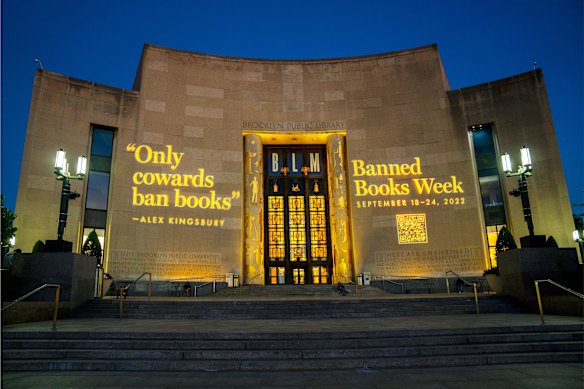
The Books Unbanned scheme devised at the Brooklyn Public Library allows any American aged 13 to 21 to borrow e-books, regardless of where they live.Credit: Alamy Stock Photo
Adding to the pressure for librarians in some parts of the US is the possibility that they could be fined and even sent to prison if found guilty of handing out books considered “harmful” for children. In Indiana, for instance, librarians convicted of giving minors “obscene” or “harmful” material can be imprisoned for up to two and a half years and fined up to $US10,000. Helmick has heard of cases where school leaders have ordered librarians to remove books that are not even on the banned list, but titles they fear could prove controversial. “That’s the chilling effect,” Helmick says.
But the book bans have also inspired a counter movement. Several Democrat-led states have passed legislation designed to make it more -difficult to remove books, and librarians have devised ways to ensure young people can still access the books they want. Brooklyn Public Library created the Books Unbanned program, which allows anyone aged 13 to 21 to borrow e-books, regardless of where they live in the US.
For Amanda Jones, life is now a hectic whirlwind of speaking engagements, advocacy and teaching. She has travelled to 30 US states and three other countries in the past two years; co-founded a free speech organisation in her home state and leads another group that aims to protect local libraries from censorship. Amid it all, she’s celebrating her 25th year at her local school – and the fact that no books have been taken off her library shelves.
Loading
For the past three years, Jones has been trying to sue Citizens for a New Louisiana, the group she says is responsible for much of the derogatory abuse online, its executive director, Michael Lunsford, and Ryan Thames, whom she says accused her of teaching sex acts to children. After lower courts blocked her earlier attempts to sue for defamation, the Louisiana Court of Appeal, First Circuit ruled in October that she had a right to a trial. In early November, Jones agreed to settle her lawsuit against Thames in exchange for $1 in damages, her share of the court costs and an apology. (Her case against Lunsford, who has denied defaming Jones, is ongoing.)
She still speaks at library board meetings in her hometown but takes precautions. Someone walks her to her car after meetings, then drives behind her to make sure she gets home safe.
Jones has been overwhelmed by hundreds of messages of support from former students but doesn’t paper over the impact of her ordeal. She takes anti-anxiety medication, suffers panic attacks and her hair is falling out. Even still, she has no regrets about speaking out and no intention of shutting up. She’s even had a permanent reminder tattooed on the inside of her wrist: the letter “P” to the power of three.
“It stands for, ‘Use your power and privilege for purpose,’ ” she says. “I have been given a power and I am privileged: a white, straight, cisgender woman … it would be a waste of a platform if I didn’t speak out. They’re never going to silence me.”
To read more from Good Weekend magazine, visit our page at The Sydney Morning Herald, The Age and Brisbane Times.