2 months ago
17
2 months ago
17
When Anthony Albanese squared off against Andrew Bolt on Channel 10 a decade ago, he offered some sobering commentary about an expenses crisis that had scandalised federal politics.
“The public are sending us a message. To me, it is symptomatic of the conflict that’s there that many Australians feel towards politicians,” the future prime minister said. “I think that if we, as politicians, expect respect from the Australian public, clearly we’ve got to respect them.”
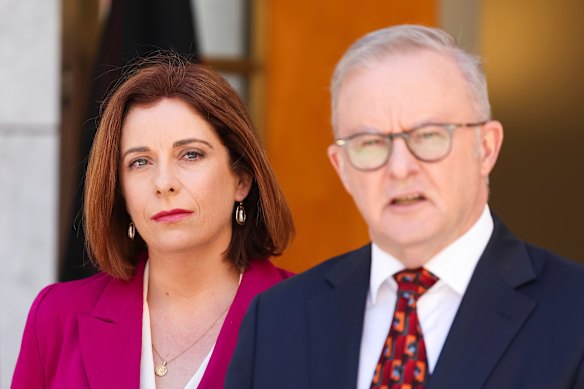
Tough spot … Minister for Communications and Sport Anika Wells with Prime Minister Anthony Albanese.Credit: Alex Ellinghausen
In August 2015, then-prime minister Tony Abbott announced a review of parliamentary entitlements as his government was on the defensive. Bronwyn Bishop’s decision to charter a $5227 helicopter to fly from Melbourne to Geelong for a Liberal Party fundraiser – and then attempt to justify it – had detonated weeks of ridicule and outrage. Few were left untouched as MPs’ travel bills from the previous years were combed through during a slow winter break.
But what began as Bishop’s poor political judgment had, even Albanese admitted, become something bigger: a symbol of a system that no longer made sense to the people funding it.
Abbott’s response was to promise a fundamental rewrite of the rules. Its oversight would be independent. It would be comprehensive. And, crucially, it would address what he admitted were “rules that lacked clarity and transparency”. It was a rare moment in federal politics where the prime minister and the public seemed in furious agreement. Few Australians could explain the entitlements system; even those operating inside it struggled.
Loading
The travel dilemma
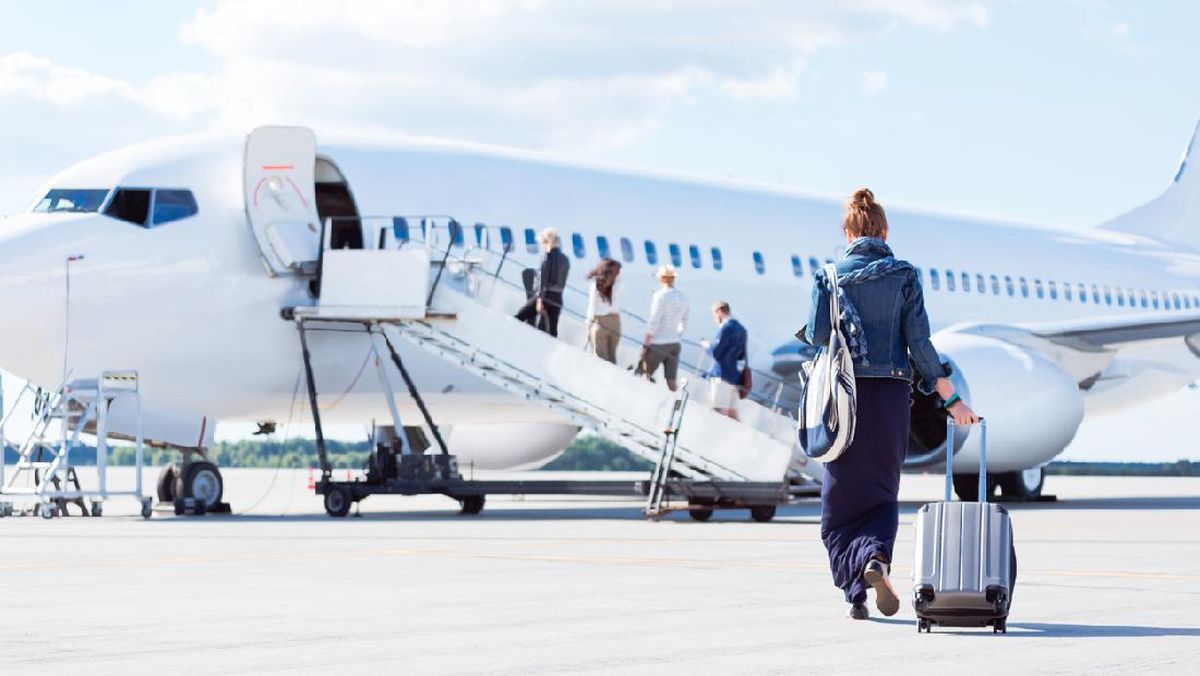
Travel – where most controversies arise – sat at the centre of the reform effort that would set the current rules, implemented by the Turnbull government. Few areas of parliamentary life are harder to manage. MPs from the eastern suburbs of Sydney or Melbourne face vastly different demands to those representing Gippsland, the Pilbara or western NSW. Ministers travel constantly; party leaders even more. Some MPs drive thousands of kilometres; others hop between three cities in a week. Every trip, flight cost and overnight allowance is a line item on the public ledger.
For the vast majority of MPs, travel is simply part of the job. Ministers and office-holders carry additional burdens, while regional and remote representatives spend almost as much time in transit as they do anywhere else. Yet because taxpayer-funded travel is visible and emotive, even the perception of indulgence can be politically poisonous. Business-class allocations, COMCAR rides and annual caps that feel generous by everyday standards. The rules require that each use be justified and publicly reported, yet even defensible travel often struggles to escape the shadow of scandal.
A jolly family reunion
That tension – between the reality of the job and public sensitivity – sits at the heart of one of the most controversial features of the system: family reunion travel.
To outsiders, the idea of taxpayer-funded flights for spouses and dependent children can appear like a holdover from Canberra’s more indulgent days. A minister already earns around $400,000 a year. A backbencher’s base salary is nearly $240,000. But the justification goes to what the review called the “compact” between voters and their representatives.
Family reunion travel rules
The obligations of MPs when determining whether they can claim family reunion expenses.
- Dominant purpose: Under family reunion rules, an MP’s family can accompany or join them at Commonwealth expense while they are conducting parliamentary business. Travel must be for the “dominant purpose” of facilitating the family life of the parliamentarian.
- Value for money: MPs are required to use public resources for parliamentary business in a way that achieves value for money. MPs can have family members travel to Canberra under a cost-based limit per year, and can claim up to three return business-class airfares for family to travel elsewhere in Australia.
- Good faith: MPs need to act ethically and in good faith when using, or accounting for, public resources. They must not seek to disguise personal or commercial business as parliamentary business.
- Personal responsibility and accountability: An MP is personally responsible and accountable for their use of public resources and should consider how the public would perceive their use of these resources.
- Conditions: An MP must not make a claim, or incur an expense, in relation to a public resource if they have not met all of the conditions for its provision.
Under the current rules, family members may travel to join or accompany a parliamentarian when the MP is away from home for the dominant purpose of parliamentary business. The dominant purpose for the family’s travel, in turn, must be to support the MP’s family life. For most, this means spouses and children flying to Canberra during sitting weeks or meeting the MP elsewhere in Australia when duties take them interstate. The support is tightly capped: an annual allowance roughly equivalent to a set number of return fares to Canberra, plus three Australia-wide trips that a family may share for duties beyond parliament.
The 2015 review clarified these rules. Chaired by former Finance Department secretary David Tune and head of the Remuneration Tribunal John Conde, the panel found that being a federal MP is a job unlike any other in the country: long hours, irregular weekends, no maternity leave, constant travel and weeks at a time spent thousands of kilometres from home.
They argued that unless the system provided some accommodation for family life, parliament risked limiting itself to those who could afford lengthy separations — hardly the representative mix Australians expect.
“Even when they are at home in their electorates, parliamentarians are rarely off-duty and need always to be prepared to respond to constituents’ representations – there is no such thing as an uninterrupted trip anywhere, and certainly not, for example, to the shops or their own children’s sporting events,” the review found.
The Tony Burke precedent
Tony Burke, now Home Affairs Minister and Leader of the House, was one of those caught up in the 2015 scandal. He dug in his heels, stressing he’d followed all rules, amid revelations that as environment minister, he used “family reunion” travel rules to charge taxpayers $12,707.65 for business class tickets, accommodation, car hire and allowances so his family could join him at Uluru in April 2012.
Loading
But in December 2020, Burke repaid his family’s costs, around $8600, saying while they were within the rules it “did not meet community expectations”.
In doing, he has laid down a marker for Sports and Communications Minister Anika Wells, whose expenses have been subject to a week of media scrutiny.
Arguably thanks to Burke, it’s now up to Albanese and Wells to determine where community expectations lie. And how much respect they should show them.
Read more on Wells’ expenses
Most Viewed in Politics
Loading