3 months ago
26
3 months ago
26
Since the Bondi massacre, Anthony Albanese has confessed to confidants that he has been shocked, wounded even, by the harsh criticism he has received from his political opponents. John Howard castigated the prime minister for lacking moral leadership two days after the attack; Josh Frydenberg told him to give the job to someone else if he didn’t want to do it; Sussan Ley demanded he recall parliament early.
Albanese’s frustration, kept mostly private until now, bubbled over during the first question time of the year as the opposition repeatedly pressed him to apologise to the Jewish community and accept personal responsibility for the attack. After a month in a defensive crouch, denied the bipartisanship he felt he deserved, Albanese decided now was the time to fight back.
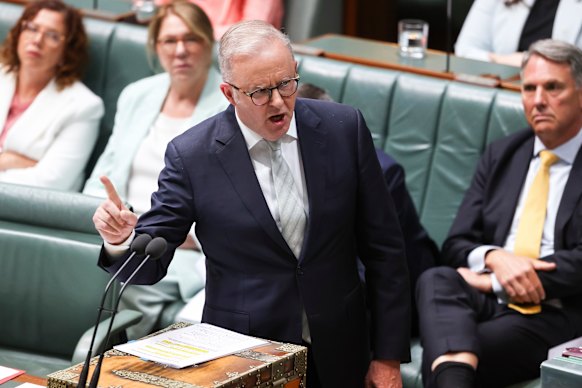
Prime Minister Anthony Albanese during question time on Tuesday.Credit: Alex Ellinghausen
“When Port Arthur happened, the parliament came together – no one saw that as a political opportunity,” Albanese said on Tuesday.
“When the Bali bombings occurred, people did not see that as an opportunity for politics; people saw that as the need for the national interest to be put first.
“I am devastated, as all Australians are, at what has occurred. I am sad that every government has not done better on antisemitism, including mine. What I won’t say though, is that antisemitism began when my government was elected.”
Loading
The circumstances leading up to Bondi, of course, are different to past atrocities (Port Arthur, for example, was a mass shooting but not a terror attack). And it is not only the Coalition that has been critical of Albanese. Victims’ relatives and survivors have expressed anger at his government, and polls show the Australian public at large has been underwhelmed by his response to the attack.
Pointing out that Coalition politicians warned about rising antisemitism in 2018, as Albanese did on Tuesday, is unlikely to persuade them otherwise. He would have been well advised to avoid attacking the Morrison government for failing to appoint a special envoy for antisemitism before the October 7 attacks, a charge that felt like a petty, unconvincing attempt to deflect criticism of his own government.
Asked repeatedly to say sorry, the prime minister accepted Ley’s challenge – albeit not in the fulsome way the opposition leader was demanding. Apologising for taking 25 days to call a royal commission was a step too far.
“I repeat that I am sorry that this occurred, and occurred on my watch. As prime minister, something I’ve said consistently, privately, publicly,” Albanese said.
In response to another question, he replied: “As I have said, I am sorry that this occurred, sorry for the grief and pain the Jewish community in our entire nation have experienced. Our responsibility is to turn that grief, pain and anger into meaningful action.”
On this score – meaningful action – Albanese ended the two-day emergency sitting of parliament satisfied he had achieved most of what the government wanted. And pleased he had opened up new lines of attack against his opponents on the right and left.
Albanese bowed to reality over the weekend by conceding he would need to split his sweeping omnibus bill into two and drop a controversial new racial vilification hate speech offence from the legislation. The past two days of parliament have vindicated that approach, even though demands from the Labor caucus and crossbench for new anti-vilification laws will continue beyond this week.
The government’s gun control measures passed with the support of the Greens, meaning non-citizens will no longer be able to legally own firearms. Albanese will be able to berate the opposition for voting against these measures, which are overwhelmingly popular with the public.
As for the new hate speech laws, designed to crack down on extremist groups and radical preachers, the Liberal Party backed them after securing some tweaks to the legislation. The Coalition’s failure to reach a unified position on the bill, with the Nationals abstaining from voting in the House, highlighted the divisions plaguing the opposition, which feels spooked by the surging popularity of Pauline Hanson’s One Nation.
Loading
As for the excision of the racial vilification clause, Albanese can blame his conservative opponents and (accurately) accuse them of hypocrisy for opposing a key recommendation of Jillian Segal’s report on antisemitism after insisting it be implemented in full. And he can accuse the Greens of failing to take national security seriously.
The aftermath of Bondi has been a searing experience for Albanese, who appeared rattled by the tragedy, took too long to call a royal commission and overplayed his hand by trying to rush an overstuffed omnibus bill through parliament.
By contrast, this week has showcased his pragmatism, negotiating skills and command of parliamentary process. He practised the art of the possible and stabilised his footing, opening an opportunity to move onto more favourable political ground in the weeks ahead.
Most Viewed in Politics
Loading