What to know about canceled flights across the U.S.:
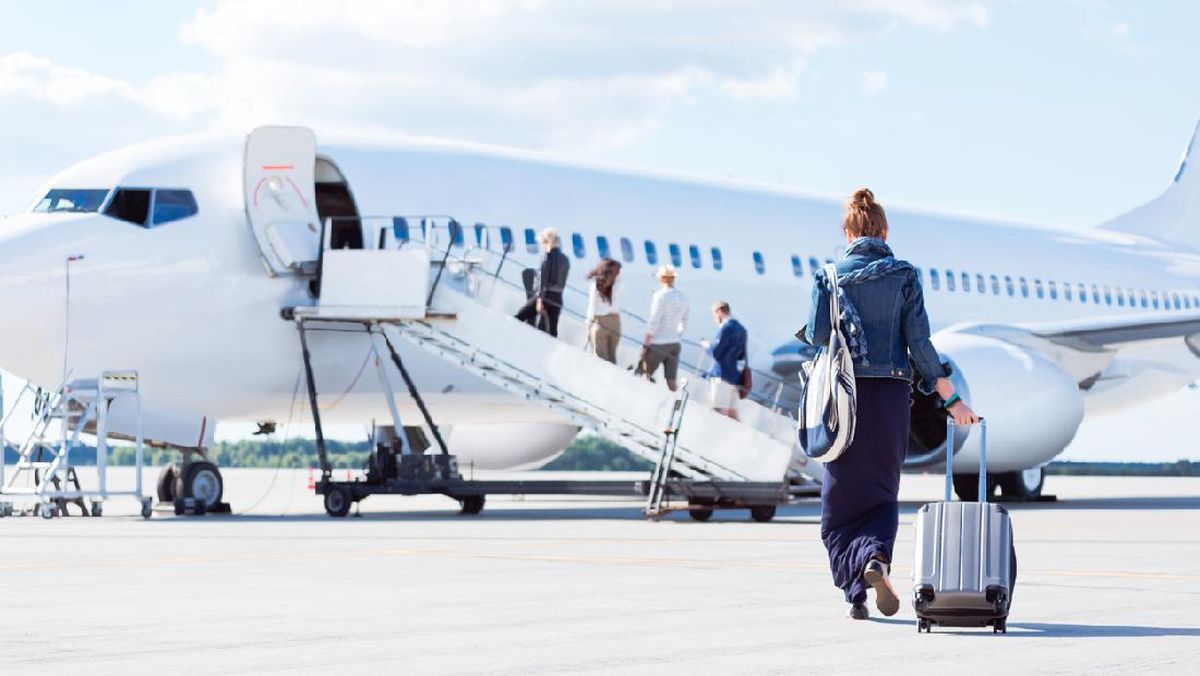
- Airlines are expected to cancel 4% of their flights at 40 of the busiest airports in the U.S. on Monday to comply with an order from the Federal Aviation Administration amid the government shutdown.
- Officials said the FAA order was an effort to address strain on the national airspace system as the agency dealt with a shortage of air traffic controllers.
- Over 1,600 flights were already canceled as of Monday morning.
- The FAA wants airlines to increase the cancellations at the 40 airports to 6% by Tuesday and ultimately ramp up to 10% by Friday.
Travelers turn to buses and trains to avoid flight delays, cancellations
At Atlanta's Greyhound station, Sandro Martinez was one of many airline passengers who hit the road to get home.
Martinez flew to Atlanta from Newark, New Jersey, and planned on taking another flight to Greenville, South Carolina.
But with his connecting flight uncertain, Martinez decided to play it safe and finish his trip by bus instead.
"I did not want to take the risk," he said.
Over 1,600 flights canceled as of Monday morning
Over 1,600 flights were canceled within, into or out of the U.S. on Monday morning, according to flight-tracking website FlightAware.
More than 2,700 flights were delayed.
Only 4 air traffic controllers worked at Atlanta's airport Saturday, transportation secretary says
Transportation Secretary Sean Duffy said only four air traffic controllers worked Saturday at Atlanta's airport, which is known as the busiest in the world.
Duffy told CNN that 18 of the 22 controllers at Hartsfield-Jackson Atlanta International Airport didn't come to work Saturday. Across the country, 81 controllers in total didn't work that day, Duffy told CNN.
Over 5,500 flights canceled since FAA order took effect
Over 5,500 flights were canceled since the FAA's order took effect, according to FlightAware.
According to the flight tracker, 2,953 flights were canceled Sunday. Saturday saw 1,566 cancellations, and 1,025 flights were scrubbed Friday, when the order took effect.
Kathryn Krupnik contributed to this report.