3 months ago
28
3 months ago
28

February 20, 2026 — 5:00am
The week I’m diagnosed with ovarian cancer, our cat disappears. The two events sit in my mind, leaning against each other like dominoes. I can’t touch one without feeling the other tilt.
Meg (or Megabite – as in “ouch” ) was a stray who never quite shed her mystery, but in the five years we had her, she’d wrapped herself firmly around our hearts as well as our ankles. She’d also carved out a pocket in our lives and, when she left one sunny Sunday morning and failed to return, the air in that pocket seemed to go with her.
Our youngest – her true owner – and I moved through the house like somnambulists, each room a fresh reminder of her absence. We joined lost animal social-media groups, begged friends to keep an eye out, and papered the neighbourhood in missing posters (only to later find them torn and forlorn in the gutters). As a final gesture, we left the garage door ajar, hoping she might slink home in the night – no questions asked.
In the days following her disappearance, my upcoming surgery loomed large. A few weeks earlier, tests had confirmed a tumour on my left ovary. The oncologist avoided the “c” word and a full hysterectomy was mentioned. I took the ovarian cancer pamphlets home and, after a cursory glance, quietly spirited them away.
With the cat leaving without warning, I felt my own footing give way. Now, writing this, I can’t help seeing her disappearance as a prologue to something I couldn’t – or wasn’t ready to – name. But maybe that’s why, or how, something else found its way in.
On the morning of my surgery, I’m met by a team of specialists as expertly trained in the fine art of small talk as lifesaving procedures. There’s a steady stream of “darling”, “honey” and “you’re doing great”, and I half expect the anaesthetist to high-five me when he finally gets the epidural needle into my spine.
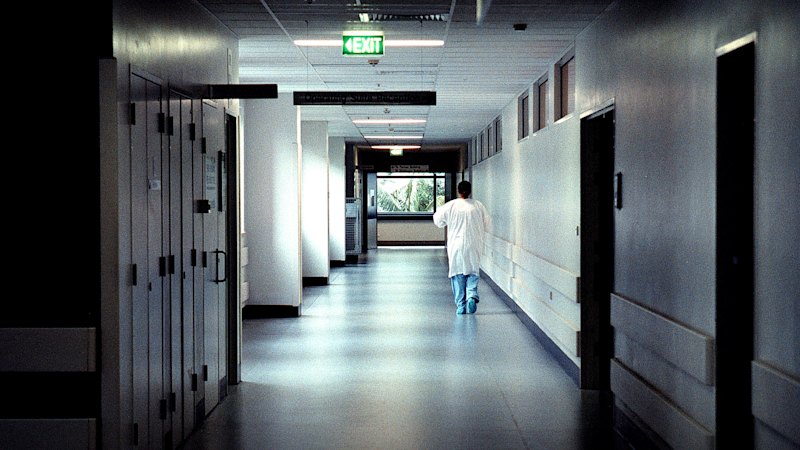
Post-op, I’m wheeled into a shared room. When the surgeon comes to tell me that I’ve had a full hysterectomy because they found “high-grade ovarian cancer” (which I’m careful not to interrogate), I’m strangely calm. It’s only when the sunny-natured nurse pulls back my curtain and asks: “Are you OK?” that I lose the ability to speak or breathe. The decision is made to move me to a private room. I’m so grateful I could plant a kiss on each of the nurse’s peachy cheeks.
It’s in the familiarity of my own bedroom, several days after surgery, that I’m undone by the uncertainty and overwhelmed by all the information (some of it far from helpful), even though I’m physically recovering well.
Recovering quickly can have its drawbacks, as I discover when I’m in the Emergency department a few days later after having surrendered to an urge as unstoppable as a labour contraction – the urge to bust a few moves – which causes a bleed. In the waiting room, names are called. Then more names. When my time to be seen finally comes, Dr Kerry gives me a kind smile, a gentle rebuke and the all-clear.
“We see a lot of this after major surgery, usually women doing too much,” she says. “Maybe lay off the dancing … at least the dancing-dancing.” (Was that a wink?) Again. I’m surprised by a wave of kindness; the casual kind that says: “We’ve got you”.
Over the next week, the texts, calls, flowers, meals, cards and visits begin to feel like an answer to a question I didn’t know I’d asked. Every gesture reaches out to steady me, to keep me upright, yet something inscrutable keeps pressing back.
I can’t help seeing her disappearance as a prologue to something I couldn’t – or wasn’t ready to – name.
Since coming home from the hospital, I’ve listened out for the scrape of Meg’s paws on my floorboards. Some nights, I swear I hear her meowing to be let in – calling from somewhere deep inside my psyche.
“Could my cat have known I have cancer?” I Google. Apparently, cats, with their keen sense of smell often sense biological changes, but they’re meant to become clingier, not take off. One night, while scrolling, something catches in the back of my throat. I zoom in on grainy images taken by kind strangers, searching for something familiar – that mottled patch that always made it look like Meg was wearing a knitted beanie.
Is that it in the photo? Or just a trick of an unforgiving night? I’m doing it again, scrolling to outrun my thoughts while I wait for my post-surgery results.
When the call comes late one afternoon, the dam bursts again. “We found cancer in both ovaries and fallopian tubes,” the surgeon says. I swallow, then remember to breathe. “It’s been removed and was found early enough so we classify it as stage 1C.” And there it is – yes, relief.
Ahead of me lie more tests, several rounds of chemotherapy, the loss of hair, next-level exhaustion, and possible peripheral neuropathy. Having recently read up on stoicism, I lean on its philosophy as I learn to let go, knowing I can’t control what’s ahead of me any more than I can conjure the real Meg out of grainy iPhone photos.
So I wait – for my cat, for clarity, a comforting text or hug, or the results that might tilt the day one way or another. And, in between, I try to stay with the tension itself, alert not only to what’s gone, but also to what’s emerging in this strange half-shadow, half-light.
Get the best of Sunday Life magazine delivered to your inbox every Sunday morning. Sign up here for our free newsletter.