3 months ago
19
3 months ago
19
By Clive Crook
December 30, 2025 — 5.00am
Ten years ago I praised a book by Mervyn King, former governor of the Bank of England, on the subject of “radical uncertainty”. Back then, I agreed with King that radical uncertainty – the kind that statistical analysis can’t deal with – was a pressing issue for financial regulators. After the extraordinary year just ending, the challenge is no longer so confined.
Over the past 12 months, the US has seen every norm of economic policy – trade policy, fiscal policy, monetary policy – blithely tossed aside. At the same time, the US economy stands at the bleeding edge of what might be as consequential an economic revolution as the transition from farming to manufacturing, or from manufacturing to services – except that the AI revolution could happen much faster. I’ve been writing about economic policy for more decades than I care to remember. Never have I witnessed anything remotely like this past year’s surge of disruption.

The US economy stands at the bleeding edge of what might be as consequential an economic revolution as the transition from farming to manufacturing, or from manufacturing to services.Credit: Getty Images
Where will it lead? Everybody who claims to know is either lying or deluded. That’s the point of radical uncertainty. The models that guide expert predictions rest on data that has never encountered shifts like these – certainly not all at once. Measures of risk based on established patterns are essentially useless.
If the economy crashes next year, it will be the most over-determined collapse ever seen, with far too many causes to choose from. (Talk about abundance.) Yet far from crashing, maybe the economy is on the cusp of a productivity revolution, powerful enough to overwhelm every choice, good or bad, that President Donald Trump’s administration and its successors might make. Nobody knows. This is as radical as uncertainty gets.
Current confusion over the state of the US economy seems emblematic. In the past few days, official statistics have told us that America’s economy is powering ahead (in the third quarter, gross domestic product grew at an impressive annual rate of 4.3 per cent) even as unemployment appears to be going up (leading the Federal Reserve, concerned about a possible downturn, to cut another 25 basis points from its policy rate earlier this month).
Loading
Perhaps AI is creating this strange conjunction – boosting growth and productivity while causing the demand for labour to cool. Yet that seems unlikely. AI is certainly capable of transforming the workplace, but it’s early days. The boom is certainly in the numbers for investment (all those data centres cost money) but the effects on jobs and productivity, for the moment, are just guesswork. The numbers would be hard to interpret even if the ones we have were to be trusted, but they aren’t. Thanks to the US government shutdown, official statistics are still in disarray.
Here’s what we do know.
First, decades of conventional wisdom on international trade have been dumped. Formerly, trade was about competition, efficiency, comparative advantage and mutual gain. Now it’s about who exploits whom. The US, dismayed by imaginary decades of technological backwardness and economic underperformance, is refusing to be held back any longer. “Reciprocal tariffs”, or something, will restore some semblance of global economic justice. Henceforth, trade won’t be purportedly “free” or “fair”. It will be managed by experts in Washington to deliver maximum advantage to the US – on pain of international sanctions, up to and including withdrawal from long-standing alliances.
Second, there’s no longer any such thing as fiscal policy. America’s politicians will continue to fight about taxes and government spending – about who gains and who loses when either side prevails – but public borrowing and public debt are now politically irrelevant. Neither party believes that the effect of any given policy on the budget deficit is even worth mentioning.
Loading
Do I exaggerate? The US economy is at or close to full employment and growing at a good clip – yet the budget deficit is roughly 6 per cent of gross domestic product. Public debt stands at 100 per cent of GDP (the highest for 60 years) and is set to keep rising. Not that long ago, policymakers worried about fiscal room for manoeuvre – that is, the government’s ability to stimulate the economy by ramping up borrowing in a downturn. The point is not that most politicians believe “fiscal space” is unlimited, which would be bad enough. It’s that they no longer even think about it.
Third, monetary policy as we know it is also on the chopping block. The conventional wisdom – until recently, as secure as the ideas that free trade is good and fiscal responsibility is a thing – held that central-bank independence has worked. Monetary policy acts with a lag and politicians are preoccupied with the short term, so a politically directed central bank introduces a bias towards higher inflation: it will choose the more popular course (lower interest rates) even though it knows that the delayed, therefore politically irrelevant, result will be higher prices.
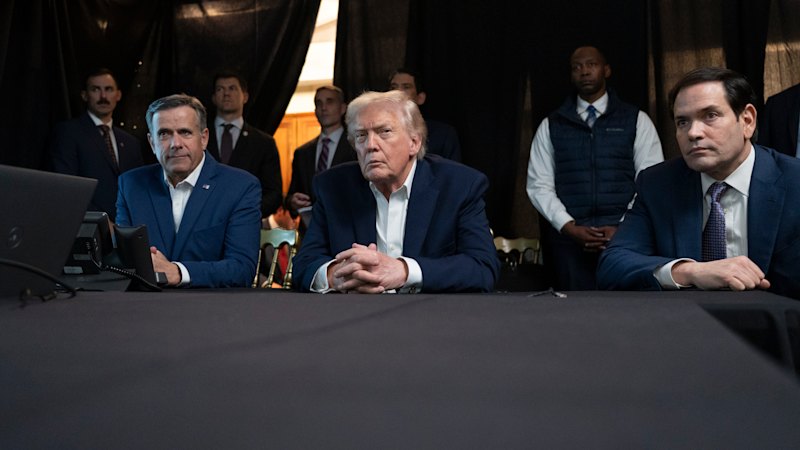
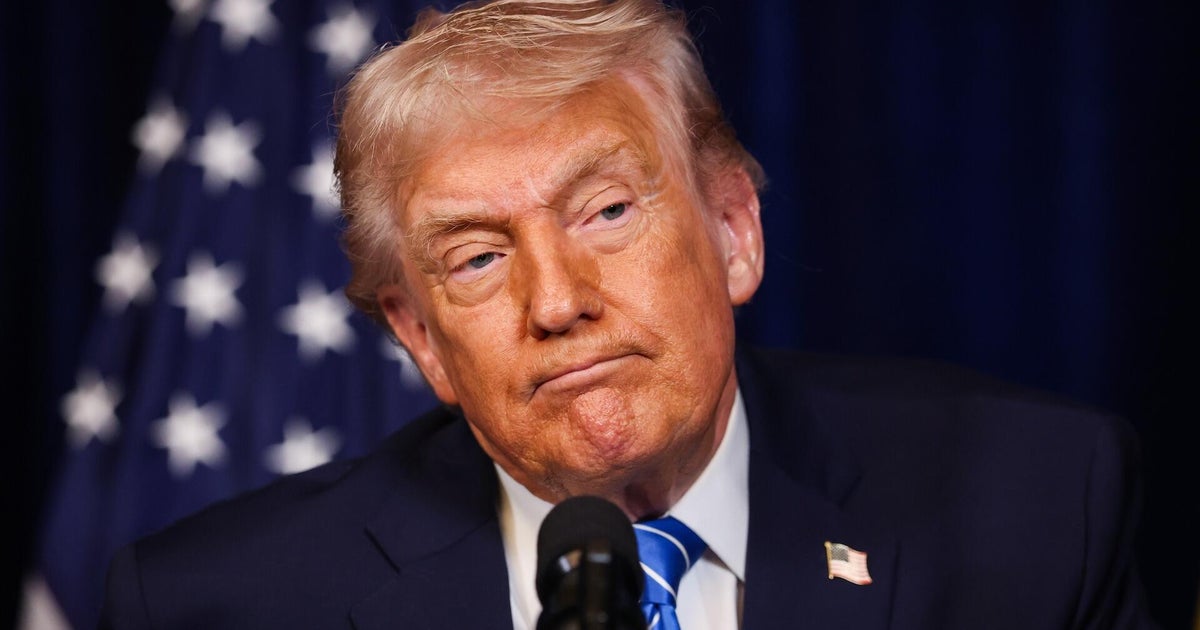
The Trump administration has already moved to politicise the Federal Reserve – placing a White House official (Stephen Miran) on its policymaking committee, attempting to remove another governor by bringing accusations of mortgage fraud, and berating its leadership at every opportunity. Chair Jerome Powell is due to step down in May and the president will soon name a successor. He’s expected to choose a political follower. And Treasury Secretary Scott Bessent just said that once inflation is back to 2 per cent, the Fed should review its inflation target. Instead of aiming to keep prices rising at 2 per cent a year, it should perhaps adopt a target range, such as 1.5 per cent to 2.5 per cent, or 1 per cent to 3 per cent.
Bessent’s objection to the current target is apparently that “decimal-point certainty is just absurd”. That’s odd, given that the Fed evidently doesn’t see itself as bound by any such precision. Inflation has exceeded the 2 per cent target for five years and the Fed doesn’t expect it to get all the way back until 2028. (Anyway, wouldn’t the bounds of any target range still involve, you know, decimal-point precision?) What matters is the obvious risk that the ceiling of any range would become, in effect, the new target – 2.5 per cent or 3 per cent, not 2 per cent. This perception, together with a less independent Fed, would plausibly cause expected inflation, and in due course actual inflation, to rise.

Perhaps the US can glide by the shattering of the consensus on trade, fiscal and monetary policy that served it so well for decades.Credit: AP
The US economy is an amazingly resilient creature. Over the coming months, it will need to be. Perhaps it can glide by the shattering of the consensus on trade, fiscal and monetary policy that served it so well for decades. Perhaps the new norms will be fine after all, or the old ones, post-Trump, will rise from the dead. Given the advent of AI, maybe none of that matters, and the economy will go from strength to strength regardless. Investors are gambling heavily on the promised golden age, without a clue what it means.
Bloomberg
The Business Briefing newsletter delivers major stories, exclusive coverage and expert opinion. Sign up to get it every weekday morning.
Most Viewed in Business
Loading