3 months ago
8
3 months ago
8
Can Castle Hill challenge Moore Park’s Entertainment Quarter as a venue to attract international acts? Will the ICC be turned into an enormous video-gaming hub for 10,000 esports players and fans? Should 18- to 25-year-olds get cheap deals for live gigs?
These are among the ideas to boost Sydney’s entertainment scene that will be discussed at next month’s Sydney Summit, hosted by the Committee for Sydney with the support of the Herald.
Committee for Sydney culture policy lead Matt Levinson said as the city grows, it was essential to make sure communities had access to “the things that make life great and bring us together”.
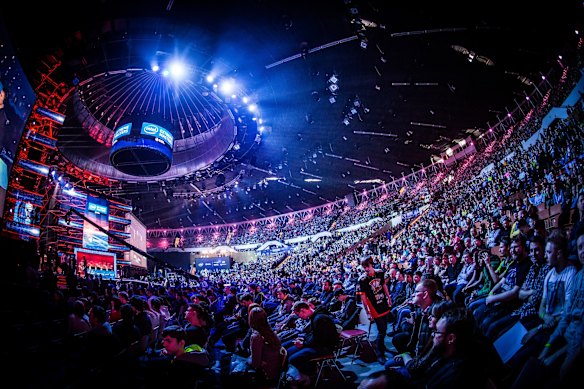
An esports event in California: Could Sydney’s ICC be turned into a venue for similar events?
“That’s what’s brilliant about these four great ideas for getting us out of the house,” he said. “From bringing young people back to live music and getting rid of the obstacles neurodivergent people face, to investing in two major destination venues.”
Gig pass for young people
The Live Music Venues Alliance (LVMA) has an idea that could change the face of Sydney’s live music scene: MyGigPass.
Beau Neilson, an alliance member and owner of Newtown venue The Vanguard, said the pass would let Sydneysiders aged 18 to 25 join a mailing list that from next month would provide access to cheap deals for live gigs.
Participating venues are invited to share offers to a wide range of live performances, including new acts, domestic and international artists, and all genres.
The 2025 Push Young Australian Music Audiences Report revealed a large proportion of young people were avoiding gigs because of the cost.

Beau Neilson, owner of music venue The Vanguard on King Street, Newtown, says the gig pass should encourage young fans and support emerging artists.Credit: James Brickwood
Neilson also blamed the pandemic. “I feel that COVID has changed the way young people engage with the world,” she said. “They don’t like going to unfamiliar venues.”
MyGigPass would also support up-and-coming musicians by ensuring reliable crowds, helping build a generation of performers that can support Sydney’s live music industry into the future.
The program is funded through the LMVA, which was established in 2025 to help venues collaborate.
“The venues are working together rather than competing for the same audience,” she said. “Which hasn’t really been done before.”
A stadium for Castle Hill
The projected population growth for north-western Sydney is “astronomical”, says Hills Shire Mayor Michelle Byrne. That’s why the council wants to build a stadium at Castle Hill.
“This is a community … who already have to travel long distances to attend major sporting and entertainment events,” Byrne said.
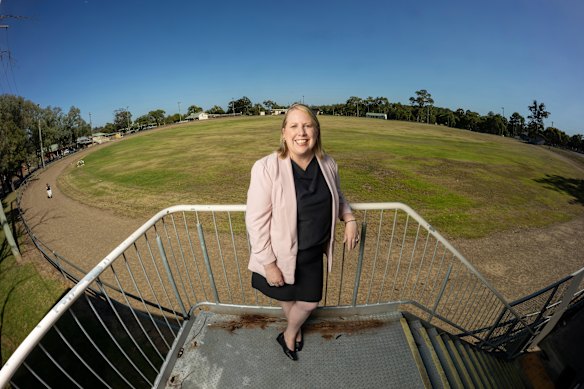
Hills Shire Council Mayor Michelle Byrne is pitching the idea of using the Castle Hill Showground as the site of a new stadium. Credit: Sitthixay Ditthavong
“So, a local stadium based in north-west Sydney would provide access, liveability and quality of life while reducing the pressure on transport networks into the CBD and Olympic Park.
“This would not be a mega-stadium proposal. I think modern stadiums are increasingly mid-sized … They’re multi-use venues that are designed to integrate with surrounding communities.”
For Byrne, state and federal funding as well as extensive community consultation would be essential for what is still “just an idea”. “I think it’s always important … that scrutiny is appropriately applied for any major infrastructure idea.”
The Hills Shire Council has identified Castle Hill’s showground as the perfect site for such a stadium. “It’s centrally located and it’s appropriately zoned,” Byrne said. “And it also has access directly to Hills Showground metro station as well.”
Sensory map
For Dr Fatemeh Aminpour, an inclusive design researcher at the University of NSW, Sydney is becoming “denser, louder and more complex”. This makes it difficult for those who are neurodivergent.
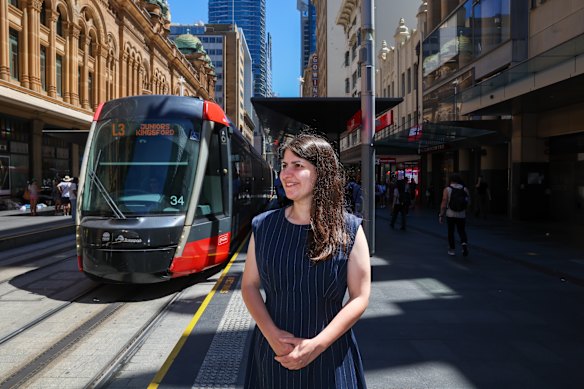
Dr Fatemeh Aminpour wants to make Sydney more neuroinclusive via a crowdsourced sensory map of the city.Credit: Edwina Pickles
“Our cities haven’t caught up,” Aminpour said. “People are expected to adapt to environments that we never design with sensory or cognitive diversity in mind.”
This can interfere with neurodivergent Sydneysiders’ ability to enjoy our city, including its entertainment opportunities.
Her big idea to make Sydney more neuroinclusive takes the form of a crowdsourced sensory map of the city.
“The map will show how noisy a place is … how crowded it gets, how visually intense it is, what people usually do there,” Aminpour said. Not only would this mean neurodivergent people could “plan their day with confidence”, but it would allow local and state governments to “create cities more inclusive for everyone”.
“This will help with maintenance priorities, retrofit decisions, wayfinding, signage improvement, crowd management,” Aminpour said. “It complements existing accessibility frameworks, but it doesn’t replace them.”
Some cities across the globe, such as London, Singapore, New York and Barcelona, have begun to experiment with sensory mapping, Aminpour said, but “Sydney has the chance to lead globally in this area, not just by trialling it, but also by embedding it into how the city plans, builds and upgrades.”
Esports hub
Kordamentha’s Scott Langdon said esport, professional video-gaming watched by growing audiences across the world, is a major gap in Australia’s sports ecosystem.
Langdon suggests building an “Esports Playport” at Darling Harbour’s ICC. This would involve refitting one of the centre’s rooms into a “10,000 person stadium”, complete with tiered seating, LED screens, side rooms for gaming practice and broadcasting, and high-speed internet.
“The Playport would put Sydney on the international esports map, bringing tourism and an audience that we don’t currently have to our doorstep,” Langdon said. “It’s not just about gaming, it’s a hub for cutting-edge technology and immersive media, AI, broadcast innovation.”
Loading
The benefits could include “upward of $40 million per year” in economic activity, and creating jobs, stimulating investment and bringing in thousands of tourists.
It would also be a way to nurture home-grown esports talent, the first step towards making Australia a serious player in one of the world’s fastest-growing sports. “From bedroom gamers to international champions, we want Playport to be the launchpad for Australia’s esports stars to lead, innovate and inspire,” Langdon said.
Langdon argued that this would make Sydney a world-leader in esports entertainment.
“Obviously, other cities have … esport facilities,” Langdon said, “but I don’t think anyone in the world could have a facility that’ll be as state-of-the-art.”
The Sydney Summit is on Friday, February 6, at the ICC.
Get news and reviews on technology, gadgets and gaming in our Technology newsletter. Sign up to receive it every Friday.