3 months ago
58
3 months ago
58
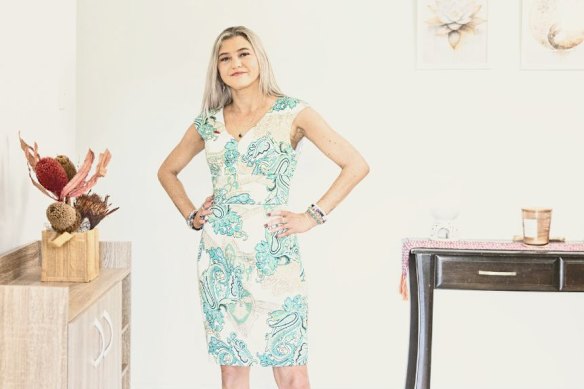
A few years ago, a 34-year-old who thought she wouldn’t live to 35 went for broke. She flew from Brisbane to Sydney to wait for an organ transplant.
Courtney Young had lived with diabetes most of her life. Diagnosed at 15, she’d struggled with managing the chronic illness. The knock-on effects over time meant her kidney and pancreas were now failing. She’d been on a waiting list for new ones for about four years; two transplants had fallen over at the last minute.
By 2020, as the pandemic struck, “I was on the edge of life every day,” Young recalls. The dual transplant was available only in Sydney and Melbourne, and her home state was shutting its borders. It was “sort of like the end of the road”, she says. “I remember my mum’s partner at the airport was like, ‘So what’s plan B?’ And we looked at each other and I said, ‘There is no plan B. I have to come back with a transplant.’”
In Sydney, she rented a place close to Westmead Hospital and started dialysis, a treatment that does the kidneys’ job for them. After a week, she got a call. A deceased donor was being brought to the hospital. Young would soon have a new kidney, a new pancreas and, hopefully, a new life.
Young is among the 21,000 people estimated to have received organ transplants from donors who have died since a national program began in 2009. For every person who donates their organs, up to seven people can be helped. In 2025, 1438 people in Australia received a lifesaving organ transplant from a total of 557 deceased donors.
Young nicknamed her new kidney Harold and her new pancreas Phoenix. Her body can now produce insulin, she no longer feels nauseated daily, and she has started a career as a social worker. She’s written to the family of her donor – which recipients can do through the government’s organ donation awareness program DonateLife – but has yet to hear back. “It took me a while to write my letter because, you know, I also think they lost a very special human that day too. So it’s not just my day of joy. It is a day of sorrow for someone.”
Most Australians support the idea of organ donation, surveys show, yet most of us still choose to go to the grave with our organs and tissues intact. Meanwhile, about 2000 Australians are on a waiting list for an organ transplant. So, why do people choose to donate, or not? What is the transplant process? And what does it feel like to live with someone else’s body part inside you?
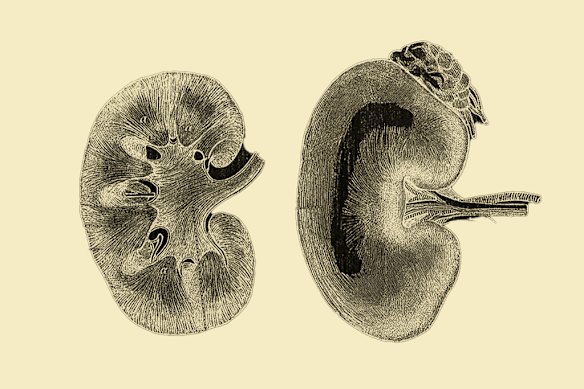
Who invented organ transplants (and are pigs the future)?
Skin grafting to treat burns was described in an Egyptian manual from 1550BC, and in ancient India, the surgeon Sushrata was said to use skin flaps to rebuild noses. The first modern skin transplant was in 1869, by Swiss surgeon Jacques-Louis Reverdin, who used tiny shavings, or “pinch grafts”, of healthy skin to help heal wounds.
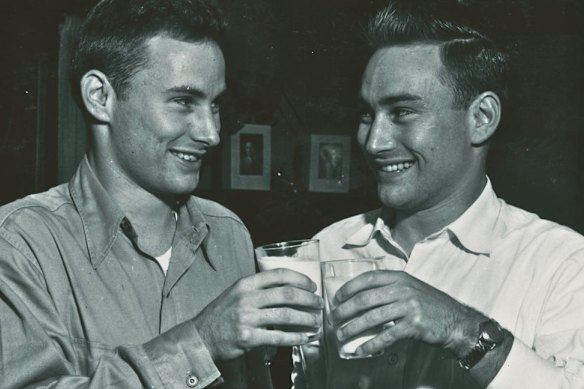
The first successful kidney transplant from one live human to another was in 1954, between identical twins in Boston. The recipient, 22-year-old Richard Herrick, went on to marry (the nurse who had looked after him) and have two children, dying eight years later from the effects of his pre-transplant kidney disease, while his twin donor, Ronald, lived to 79.
Seventy years later, doctors at the same hospital performed the world’s first successful transplant of a pig kidney (with its genes edited) into a human, a 62-year-old man with kidney disease. The procedure raised hopes that xenotransplantation – moving organs or tissues from one species to another – would help solve the world’s shortage of human organs for transplants (a shortage that has led to a thriving black market in body parts, the UN says, with illicitly transplanted organs flowing from the poor to the rich).
There are plenty of exciting breakthroughs: heart pumps made of polyurethane and titanium, lab-grown organs, entire face transplants. But even if alternatives to human organs become widely available, high costs might limit access. Intensive care specialist Helen Opdam, who is also the national medical director of Australia’s Organ and Tissue Authority, says people will rely on the generosity of deceased donors for some time yet.
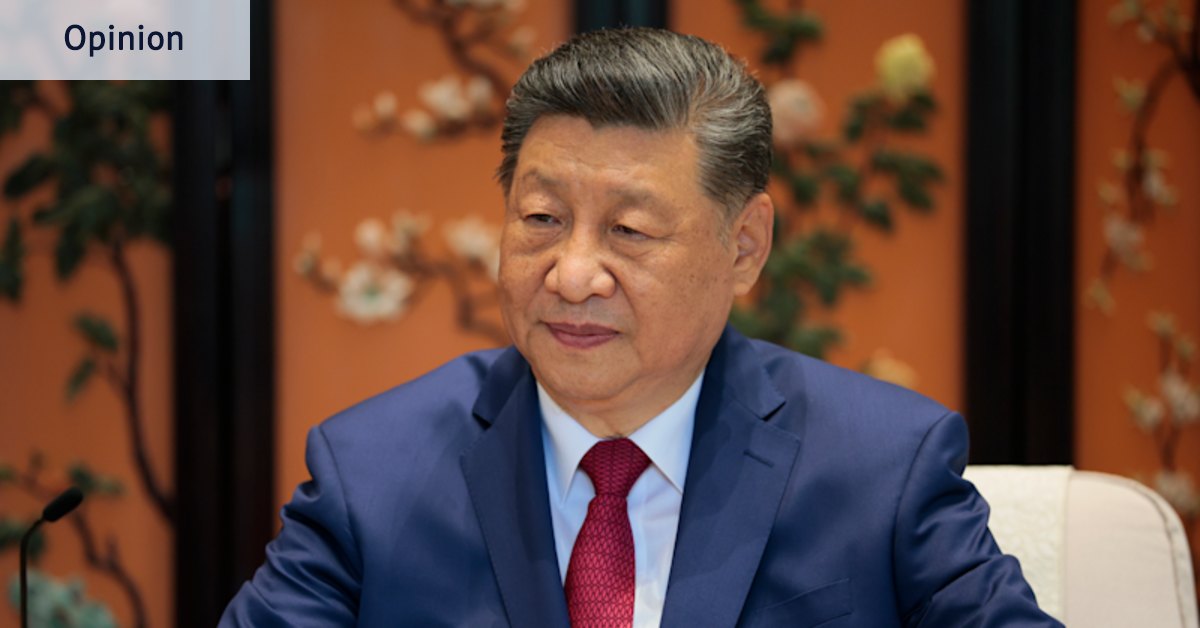
And what of the notion that new organs are a key to eternal life? When Chinese leader Xi Jinping chatted with Russian President Vladimir Putin at Tiananmen Square in 2025, body parts were on their minds. “Biotechnology is continuously developing,” Putin’s interpreter told Xi. “Human organs can be continuously transplanted. The longer you live, the younger you become and even achieve immortality.” Xi responded, “Some predict that in this century humans may live to 150 years old.”
Asked about Xi’s contention, Opdam is diplomatic. “I don’t think that’s going to be the mechanism that people will live beyond 100,” she says. “But this notion that some people get access to healthcare and opportunities that others don’t, that is absolutely real throughout the world, isn’t it?”
What’s it like to donate a kidney?
Kidneys, the fist-sized organs that clean blood and filter waste through urine, are the most in-demand human organ, accounting for 64 per cent of all transplants across 90 countries in 2024. In Australia, about 14,000 people are on dialysis, relying on a machine to do their kidneys’ work. “You’re sitting in a chair for four or five hours, connected to a machine, three days a week,” says registered nurse Roxanne Perry of Kidney Health Australia. “You don’t get holidays from that. It’s ongoing life support.”
The number of patients needing dialysis has doubled in Australia in the past 20 years and services are at capacity. “Some people are lucky enough to have their kidney transplants for 30 years, and they’re still performing really well,” Perry says. “But it’s a form of treatment, and not readily available – there is no cure for kidney disease.” Eighty-one per cent of transplanted kidneys work five years after surgery.
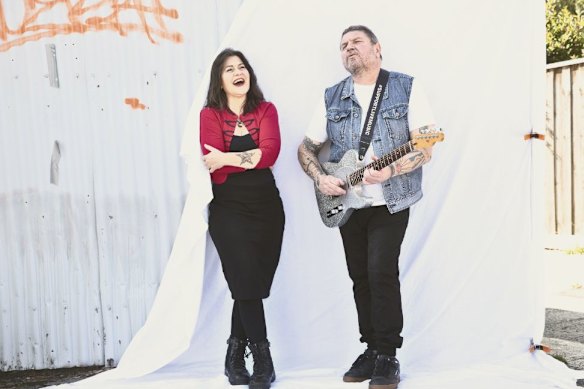
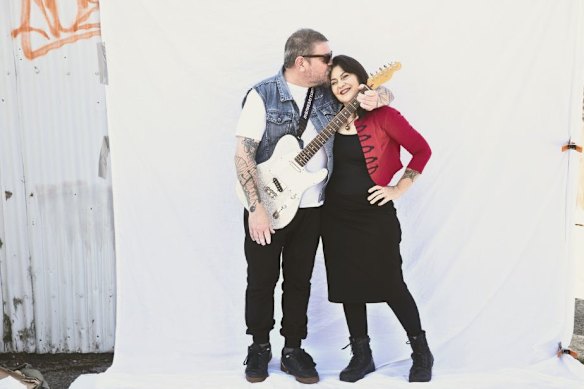
Melbourne musician Fiona Maynard has one kidney and her husband, James Lomas, has three. Like hundreds of Australians each year, Fiona chose to donate a kidney because a loved one needed it – and humans can survive with only one.
In 2021, Lomas’ kidneys stopped working. He was diagnosed with Goodpasture syndrome, where the immune system attacks the kidneys and lungs. (“One of the doctors told me it’s akin to winning the Tattslotto – something like one in 2 million people get it,” Lomas says). His lungs were spared, but the disease tanked his kidneys within 10 days of him developing flu-like symptoms. After six months of chemotherapy (to “burn out” or kill the disease) and a year of dialysis (every second day, for 5½ hours), he was placed on the waiting list for a kidney.
People who receive a kidney from a live donor rather than a dead one tend to live much longer, for various reasons, including that the transplant can be performed before the patient’s kidney function deteriorates. When Maynard learnt this, she was in. “The thing I felt was there’s always a chance that it mightn’t work but, for me, as a carer and someone who loves him, I wanted to do anything and everything I could. I didn’t want to leave any stone unturned.”
‘You can have them give you something ... to give you a life again. That seems like a second chance, to me.’
Kidney recipient James LomasLomas, who was 51, had reservations about accepting his wife’s kidney. “It’s a horrible feeling that you have something that can be solved, and you’re requiring someone else to solve it, one way or another,” he says. “You can’t have someone give you something from their body to take away your bowel cancer. But you can have them give you something – either a liver, kidney, heart, whatever – to give you a life again. That seems like a second chance, to me.”
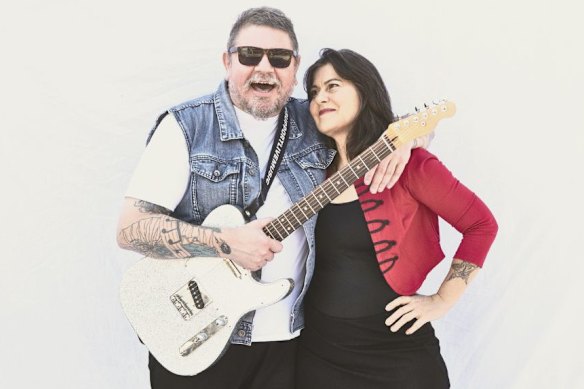
Still, for Maynard, the process was gruelling, she tells us: six months of medical tests, including for cancer and transmissible diseases, chest X-rays, CT angiograms, and so on. She also had a “friendly and lovely” talk with a psychologist to assess her ability to deal with the stresses of such a major operation. Yet donation day was a happy one. “On the day when I actually went in and saw all the people with all their bright eyes and that clever intense look of purpose, I just felt like I was in the safest place on Earth,” she says. “And after the surgery, I woke up and they said, ‘We’ve got your kidney, and your husband’s going into surgery now.’”
‘It’s a lot of work to get ready for the transplant, and it can be all-consuming, so when it’s done and it works, I was at a loose end.’
Kidney donor Fiona MaynardMaynard, who was then 56, stayed in hospital for five days, Lomas about seven. She felt up and down after the surgery, physically and emotionally. “It’s a lot because you see that you’ve saved someone’s life and then there’s a bit of a letdown, and you’re kinda like, ‘Well, how can I save more lives?’” she says, with a laugh. “It’s a lot of work to get ready for the transplant, and it can be all-consuming, so when it’s done and it works, I was at a loose end.”
Still, she has no regrets. Lomas is now well. “I was one of the really awesome stories,” he says, “had the transplant, worked straight away, never set foot in dialysis again.” He still has his original kidneys – removing them is considered more traumatic for the body than leaving them in – plus the new one, in his abdomen. In most people, one kidney is more active than the other; Maynard’s less active kidney was the one given to Lomas. She marvels at what’s happened since: “They showed on the ultrasound scan how it had grown two centimetres just a year of being inside him.” Her remaining kidney has to work harder now and is “doing what it needs to do”.
Like all organ recipients, Lomas takes medication to ensure his body does not reject the donated kidney, and antibiotics. He says his new kidney belongs to both him and his wife. “I consider it ours.”
How are organs extracted and donated?
More than half a million Australians give blood. Some 540 donate breast milk. In both cases, the body replenishes supplies. Organ donations are, of course, a one-time event. Some 35 per cent of Australians – about 8 million people – have agreed to become organ donors, with 147,969 signing up in 2025, 15 per cent lower than in 2024. Australia’s donor rate per million population is 20.2, below the national target of 25.
Globally, Australia ranked 21st for donation from deceased organ donors in 2024. Spain’s rate of donors per million population is 53.95, making it the gold standard. Its citizens are presumed to consent to organ donation, although families must also agree.
A big pool of potential donors helps to offset the narrow circumstances in which a major organ transplant is feasible: donors need to die in an intensive care unit or emergency department, where they will be on a ventilator. That adds up to about 1670 people of the 89,000 people who died in Australian hospitals in 2025, or 2 per cent.
Donation can happen in two different ways, says Opdam, an associate professor who is based at the Austin Hospital in Melbourne. “The most common is brain death donation that occurs when a person is declared legally dead by irreversible brain function loss, with organs recovered while on artificial support. So, yes, the person is on a ventilator with a beating heart when the organ-donation operation begins. Donation after circulatory death occurs when life support is withdrawn and death is declared after the heart stops, with fast organ recovery crucial.”
When someone is dying in ICU, and their organs might be suitable for donation, organ donation specialists (typically, nurses who work with DonateLife) will check whether the patient has registered as a donor and will seek formal consent from their family. They will request personal health information, such as lifestyle choices that could provide insights into any risk of transmissible diseases or infection.
‘We don’t actually proceed with donation in Australia unless it’s fairly certain that there’ll be an organ transplanted.’
Intensive care specialist Helen OpdamIn 2025, of 1500 families who were approached, 790 agreed to donate, which lines up with a national consent rate of 53 per cent. DonateLife says that when a patient is registered for donation, about eight in 10 families agree to go ahead; the number halves if they don’t know whether their family members wanted to be a donor. Families might say no because they think their loved one has been through enough, Opdam tells us, or they don’t like the idea of it, or because of cultural and religious practices, although she says among the major religions “the gift of life to another person would take priority over burying the person whole or keeping the body intact”.
Meanwhile, donation specialists and hospital transplant teams check wait lists for a potential match. The heart, lungs, liver and pancreas are matched by blood group, organ size, level of need and geographical location while kidneys are matched by blood group and tissue compatibility. The recipient is summoned to hospital to prepare for surgery. “We don’t actually proceed with donation in Australia unless it’s fairly certain that there’ll be an organ transplanted,” Opdam says.
Once extracted, the organs are flushed with special fluid to clear them of blood, bagged carefully and transported in an Esky-type container with ice to a transplant hospital, fast. The heart can stay out of the body for between four and six hours, and the liver needs to be transplanted within eight to 12 hours, although the kidneys survive up to 24 hours without deteriorating. Machine perfusion devices can extend these time periods, but not for days.
Eyes and other tissues – heart valves, bone, tendons, ligaments, skin – are not as susceptible to damage from loss of blood flow so can be removed some time after the heart and circulation has stopped, including from people who have died outside a hospital, Opdam says. In 2025, 1677 Australians donated their eyes after death; 332 donated their tissues, ranging from heart valves to skin to bone marrow. These lower-profile donations do everything from restore sight to help reconstruct bones and repair burns. When the White Island volcano erupted in New Zealand in 2019, the Victorian Tissue Bank and the Organ and Tissue donation service in Sydney each sent 10,000 square centimetres of donor skin to help burn victims.
‘I’m always extraordinarily grateful that someone gave part of themselves to me. They live in me.’
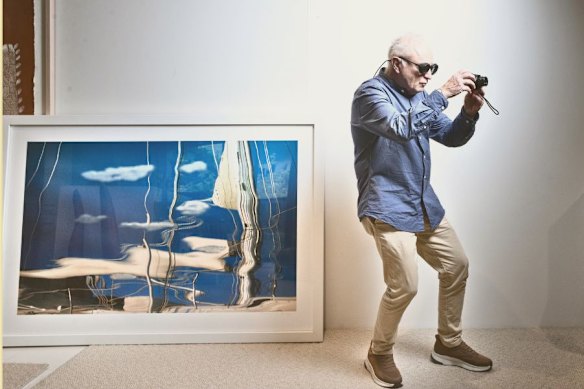
Cornea recipient Ralph KerleOne of Australia’s oldest living corneal transplant recipients, fine art photographer Ralph Kerle, has keratoconus, when the cells in the eye’s surface disintegrate and the cornea, the transparent top layer, instead of being spherical becomes pointed. Forty years ago, he began to slowly lose his sight, then blindness set in when his hard contact lenses scarred the surface of his eye.
In 1983, Kerle had a corneal transplant in his right eye. “There was a call to say that, ‘You will be admitted to hospital tomorrow, and we’re going to operate.’” When he woke up post-op and saw a clock on the wall, it felt like a miracle. “The transplant is 44 years old, and the patient was in his 60s, so I see the world through the eye of a 110-year-old person.”
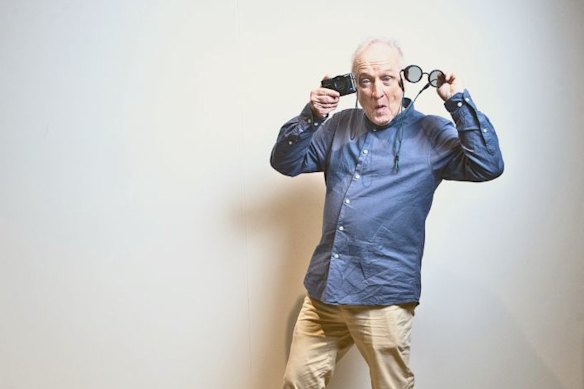
Strictly speaking, it’s only the cornea that is donated, so the rest of the eye is Ralph’s – “It’s like a skin graft, in a way,” he explains – and given all the body’s cells turn over, there’d be none that were there on the day of transplant. In any case, the keratoconus in Kerle’s left eye has stabilised and, without a specialised “contact” lens, he’s got 20 per cent vision. In the “new” eye, he’s got 60 per cent vision, which he boosts with a contact lens and reading glasses. Kerle plans to donate his organs when he dies. “I’m always extraordinarily grateful that someone gave part of themselves to me,” he says. “They live in me.”
‘You get the organ because you’re the best match, you’re the sickest person, you’ve been waiting the longest time.’
Intensive care specialist Helen OpdamOrgan donation is a system that relies on community trust: prospective donors must believe that medical staff will always try to save their lives, that they will be treated with dignity during death and donation, and recipients will be chosen based on need, rather than wealth or connections. Opdam says if you need a transplant in Australia, you have a very reasonable chance of receiving one. “And you can’t say that for all parts of the world. You don’t get the organ because you’re an educated white man at all. You get the organ because you’re the best match, you’re the sickest person, you’ve been waiting the longest time.”
How does it feel to have a change of heart?
Brendan Ryland was terrified at the prospect of receiving a heart transplant. He was diagnosed with cardiomyopathy, a disease of the heart muscle, when he was just six weeks old, but his health rapidly improved when he was three and stayed that way – until he was 19. “They found two blood clots in my lungs, and a blood clot the size of a golf ball in my heart,” he says. The cardiomyopathy had returned. Doctors said Ryland would probably need a transplant at some stage.
He returned to university and sport (although instead of AFL, he played touch footy). He asked to be removed from the transplant list. He didn’t want a new heart – and any call from a random number after 5pm sent him into a panic. “I was petrified that I had to go do this thing. I was terrified,” he recalls.
‘I was turning over in my head, is the risk and reward worth it?’
Heart recipient Brendan RylandWhy was that? “I don’t know 100 per cent, to be honest, other than I was doing really well physically. And when I was three years old, I turned a corner, so in the back of my mind, I thought I could do it again. And I was turning over in my head, is the risk and reward worth it? You read this stuff about getting a transplant, and it’s the worst-case scenario, people not making it, and all these medications are going to make you sick.”
Organ transplant survival rates vary: 70 per cent of heart and lung recipients are still alive five years on, 87 per cent of liver recipients, 92 per cent for intestine recipients, and 94.3 of those with a new pancreas. (A study of the world’s first 50 face transplants showed 85 per cent of recipients were alive five years later).
In any case, when he was 26, Ryland had a heart attack. “That was when I knew the reality of the situation,” he says. “There was no other road but a transplant to make me live a longer life. So then it wasn’t fear any more because I accepted my fate.”
It took a year before he got the call at 9.46 on a Saturday morning in 2015. A kind-sounding woman said the hospital had a heart waiting for him. Ryland’s loved ones gathered around him: five friends and his mother, who flew to Sydney from Bright in country Victoria.
![“I got emotional at the start [of a race] thinking how lucky I was to do it.”](https://static.ffx.io/images/%24zoom_0.738%2C%24multiply_0.7725%2C%24ratio_1.5%2C%24width_756%2C%24x_0%2C%24y_0/t_crop_custom/q_86%2Cf_auto/5403ed211706921488cb089c859433fe5bcc59ad)
The days after the transplant now seem like snapshots in time. “I don’t remember long periods of time, but I just remember little moments. I remember my family coming in and cousins coming in, and I remember asking for a can of Coke. That’s all I wanted,” he says.
But Ryland’s transplant journey wasn’t over. His original heart was enlarged by disease; his new heart was much smaller and the sac surrounding it filled with fluid, which took an operation to drain. Ryland ended up in hospital for four weeks, and a further two weeks in temporary housing as he adapted to life as a heart transplant recipient. “I was, essentially, changing one chronic illness for another. It still just took a little bit to get used to,” he says.
He’s in good health now, thanks to a regime of medication and lots of exercise, including 20-kilometre trail runs, and he thinks about his donor – a man with a young family – every day, especially when he works out. “The race the other morning, I got emotional at the start thinking how lucky I was to do it,” he says.
‘I guess I still think it’s his. Maybe I’m a custodian of it, and it’s there helping me.’
Brendan RylandBefore his transplant, Ryland was told that most organ recipients do not contact their donor or donor family. “I was just so blown away. How can you not have reached out to your donor?” In the end, it took him 10 years to write the letter. “I remember three months after [the transplant], I started writing this massive note to them. But in the back of my mind, I was like, well, all of this has to be anonymous, so this can’t go.
“And so then I kept doing drafts and going back to it, and I think the situation was so big that it became a little bit more overwhelming than it needed to be. So it was the 10-year anniversary that spurred me to do something. I just wrote a much more simple version, saying thank you and I really appreciate it, a quick update of who I was and what I was doing with my life post the transplant.” The donor’s family wrote back straight away.
So, does Ryland think of the heart as his own, his donor’s, or a bit of both? “I guess I still think it’s his. Maybe I’m a custodian of it, and it’s there helping me.”
How does it feel to donate a loved one’s organs?
Kerri Daw knows what it’s like to see a loved one wait for an organ transplant – then end up donating their other healthy organs. Daw’s daughter Laura is among the small number of people who became a recipient and donor at the same time.
Laura Benham was a teacher and mother of two in the Victorian town of Swan Hill when she developed a cough that was eventually diagnosed as idiopathic interstitial lung disease with pulmonary fibrosis. (The latter condition has been in the news recently in reports about Norway’s Princess Mette-Marit who, at 52, is likely to need a lung transplant.)
‘Why can’t we share them with someone else who’s going to get a better life out of it and has been suffering for many years?’
Kerri Daw, whose daughter Laura donated her liver and kidneys after she died following a lung transplantAfter 13 months on a waiting list, Laura received a call from the Alfred Hospital in Melbourne alerting her that lungs had become available. “She was very positive, very calm,” Daw recalls. The left lung went in, and the right, then things went downhill. Laura, aged 41, suffered a stroke and was declared brain dead. “When we spoke with the doctors, they couldn’t say exactly what it was,” says Daw, who calls it a “freak” occurrence.
Despite their shock and grief, Laura’s family told doctors they wanted to follow Laura’s wishes to become an organ donor, and her kidneys and liver went to people on the waiting list. “As a family, the organs are no good to us,” Daw says. “Why can’t we share them with someone else who’s going to get a better life out of it and has been suffering for many years?”
The standard way to sign up as an organ donor in Australia is to fill in a form, albeit very brief, on the DonateLife government website. Daw believes Australia should bring back the system of printing someone’s organ-donation wishes on their drivers’ licence, as is done in South Australia, where 74 per cent of residents are registered as organ donors, the highest level in the country. Says Daw: “Say there’s a car accident or something, by the time they discover that you’re a donor, maybe your organs have to have deteriorated. So if it’s on the licence, they can say, ‘You’re a donor, let’s get it started.’”
Get fascinating insights and explanations on the world’s most perplexing topics. Sign up for our weekly Explainer newsletter.