2 months ago
43
2 months ago
43
When Swedish pop musician Robyn came out of her long-term relationship, it felt like she had “been on this long journey into space, far beyond my limits, and I was crashing back into Earth, myself and my body”.
What was waiting for her was something she’d wanted her whole life: motherhood. In 2022, aged 42, she gave birth to her first child via IVF and sperm donation. “Being pregnant is like you’re a spaceship for this other human being that’s about to come alive,” she says.
On her first album in eight years, Sexistential, the artist born Robin Carlsson explores sex, fertility and motherhood in an era where software mediates romance and science can bypass the traditional path to parenthood. It’s the latest act of self-determination from a woman who, alongside producer Klas Ahlund, set the synthesised, high-emotion template for everything from Taylor Swift’s 1989 and Lorde’s Melodrama to the devil-may-care world of Charli XCX’s Brat. She’s arguably the most influential pop musician of the 21st century.
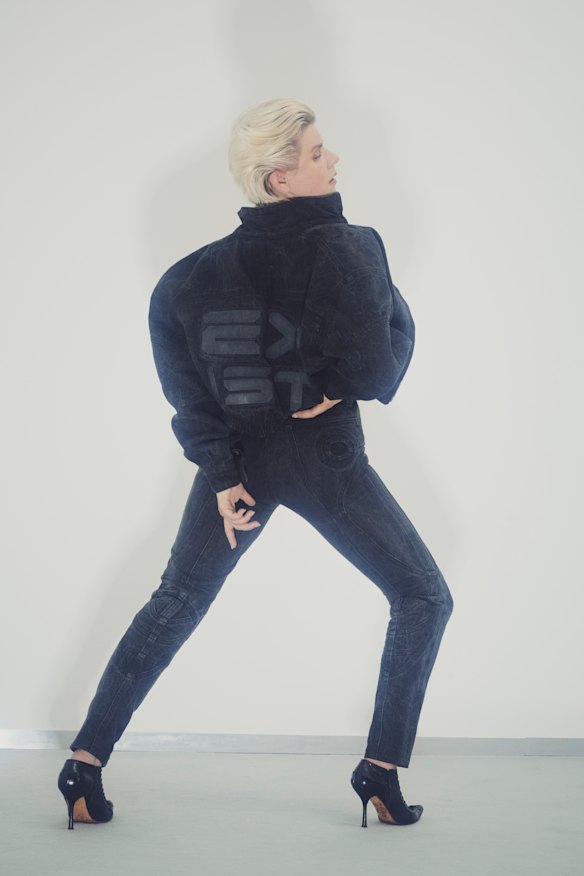
Carlsson had always wanted to become a parent, but finding the right time was a different story. “For me, it was really uncomplicated to become a parent,” she says. “How to become a parent, what happened before I became a mother, was a complex thing.”
Like many future parents, but perhaps more so for those whose physiological window is almost closed, Carlsson questioned her motivations for wanting a child. She wondered whether it was for purely altruistic reasons, to bring a new life into the world for the child’s sake alone, or for more selfish reasons.
“I’ll tell you what my therapist said: having children is a native need within human beings, and it shouldn’t be questioned. It’s like questioning [why] we exist, which you can do to a certain point. But I think just embracing and feeling okay that we’re here, no matter if we understand why or not, is really beautiful,” Carlsson says.

“You don’t [need] children to have a complete life. But if you want to have children, that in itself doesn’t need to be questioned. You can question your ability to be a good parent, and you can work on it and you can be self-critical in so many ways, but the actual need is not something that should be up for discussion. Which I think is a beautiful stance.”
On the album’s title track – written about having one-night stands 10 weeks into her pregnancy – Carlsson lays out a tongue-in-cheek manifesto: “F--- a app. F--- a single mum (shit is existential). F--- a Plan B, baby. F--- a therapist.” It’s almost certainly the only pop song to reference the Adam Sandler comedy, You Don’t Mess with the Zohan.
“Have sex with a single mum. That’s great,” she laughs over Zoom, effortlessly chic in a camo fleece. “For the record, I don’t mean ‘f--- a therapist’ in the sense that I don’t believe in therapy. I think therapy is really good. But there’s a point where you feel, ‘I can’t think about it any more… I just have to live, and hopefully, it works.’”
Carlsson is sympathetic to anyone who decides to become a parent later in life, or who may be struggling or unable to have a child for medical, social or financial reasons.
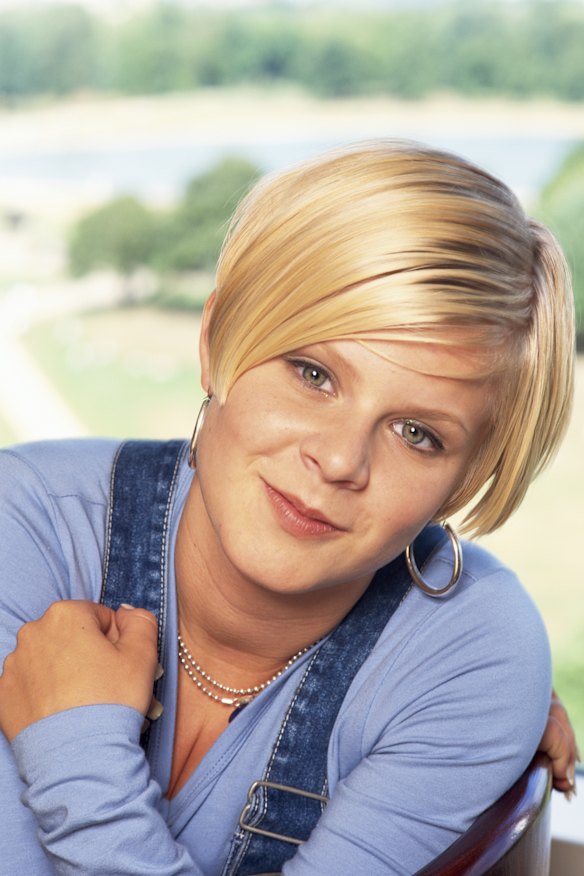
“It’s not just women. I think all people who decide they want to be parents, and then have to work for it, kind of have to approach it in a very different way. You’re aware of all the risks and all the possibilities that it may not happen.” When it did for her, it came with other benefits, such as navigating loneliness, an emotion that has often surfaced in her music.
“When you’re a parent you don’t have to negotiate your loneliness in the relationship,” she says. “Of course, my son should be totally independent from my needs. But you can’t erase the fact that [by] having children, you create a family and a place that is a home. I think, in that sense, you become a better dater because you’re not depending on it to solve your life.”
Finding a way to make that home when she was younger, on the road and trying to create a career in music, was a more difficult proposition. The choice she made set her on a life-changing trajectory. Carlsson signed with Ricochet Records in 1993 when she was just 14 and released her debut album of pop-R&B, Robyn Is Here, in 1995. In 1999, her second album, My Truth, arrived with a level of candour that RCA Records found unmarketable: the track Giving You Back detailed an abortion she’d had the year prior. When the US label requested she cut the song for the American market, Carlsson refused and the US release was shelved.
“I was really scared of the idea of becoming a single parent. I always tried to avoid that,” she says. “And then somehow that’s kind of where I ended up anyway. Which is funny.”
But Carlsson has spent decades building the infrastructure for exactly this kind of independence. After meeting the indie Swedish electronic producers The Knife in 2003, she bought herself out of her record contract. In 2005 she founded her own label, Konichiwa Records, a move that gave her the total artistic autonomy she craved. The gamble paid off: her self-titled fourth album – released on her own fledgling label – yielded the UK no. 1 single With Every Heartbeat, a collaboration with the producer Kleerup.
Sexistential is Carlsson’s seventh full-length album, and it required characteristic patience from her fans. It has been nearly eight years since 2018’s Honey, which itself followed an eight-year gap after 2010’s Body Talk – a trilogy of short albums anchored by the contradictory, ecstatic loneliness of her beloved club anthem Dancing on My Own.
“I think I was always writing about [parenthood] in some way,” she says, recalling the Body Talk Pt. 1 track Fembot, written as she was entering her thirties and again contemplating parenthood. “I was already thinking about the functions of my body, what it was meant to do and how that was relating to age and the life I was living. How to get those things to work [together] was always difficult for me to understand because I didn’t feel like I wanted to embrace a totally conventional life. But I always felt really conventional in my way of relating to motherhood.”
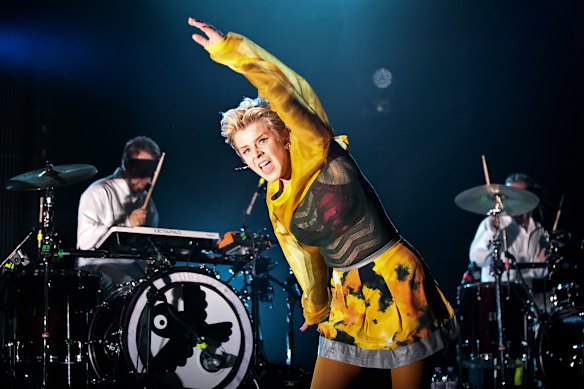
Duality has always existed in Carlsson’s music. Dancing on My Own was a song about feeling lonely in a crowd; Call Your Girlfriend is a slice of ecstatic infidelity in which Carlsson convinced her new love to dump their partner (gently). Sexistential’s dualities are intimate and abstract: the deeply personal, physical experiences of Carlsson’s pregnancy and motherhood weighed against the mechanical and technological feats that made them possible.
“When you do IVF, there’s also a technological aspect, the mystery is gone. You know exactly when it has to happen and when it hasn’t happened. There are dates and even hours you can relate it to,” says Carlsson, who once again had to reject the shame imposed by a culture she’s often steps ahead of to create the life she desired. “I felt like there was so much stigma around being a single parent, this feeling of failure. It’s not a weird thing at all any more; there’s so many different kinds of families.”
Sexistential contains one song specifically recorded for her son, a rework of her 2002 track Blow My Mind. Viewed from the outside, it looks like a merging of her past and present lives. Now 46, she’s able to weigh her decision to postpone pregnancy as a teenager against where she finds herself now.
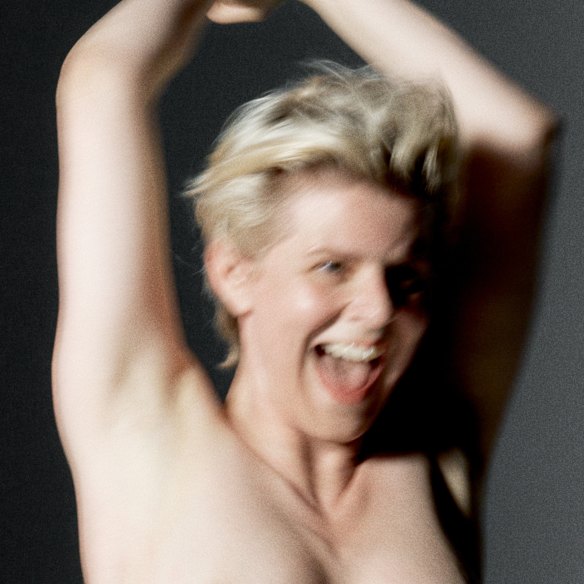
“It was a better time for me to become a parent. It gave me a lot of freedom to explore things before I had my son. And then there’s this other way of looking at it, which is, if I’d had him earlier, I would have more time with him,” Carlsson says. “That’s not even bittersweet. That’s just bitter. But because I waited, I was able to enjoy it a lot more and I’m a lot more present now.”
Carlsson intentionally infused Sexistential with these philosophical “dualities”, big and small. The album opener Really Real is about the disparate perceptions on either side of a failing relationship. Its pounding kick drum, suspenseful arpeggiated synths, and vocal snippets of a soothing conversation between mother and daughter are interrupted by a breakdown of fractured electric guitars.
“That song’s about the way anxiety feels. Maybe the definition of feeling crazy. It’s not a desired state to be in, but it’s a part of being human,” she says.
On Dopamine, Carlsson attempts to map the blurry border where free will ends and the body’s chemistry takes over. Talk to Me is about intellectually induced physical climax. Both of those singles are up there with Carlsson’s best club cuts. Elsewhere, there’s wild production flourishes on the effervescent Sucker for Love and the thick funk of It Don’t Mean a Thing. The album’s rapturous closer, Into the Sun, channels the dark existentialism from which Carlsson was writing into a triumphant blast through the solar system.
“We’re here on this rock in space, and we basically don’t know why. That’s just mind-blowing to me,” says Carlsson. “The feeling of that loneliness and the fact that we’re going to die, these huge existential things that all human beings have in them all the time… That outside perspective is very hard to combine with the intimate feelings of, like, how your day is going to become meaningful, that you’re hungry and that you want a hug.”
The new album zooms in and out, from the physiological to the psychological, between innate humanity and technological adaptation.
“[Life is a] constant contradiction between this very big and existential world and this mundane, simple place that we’re all in,” says Carlsson. “These two experiences are constant. That was really obvious to me when I made this album.”
Sexistential feels like a record for a specific, jarring moment in human history – an era of strange contradictions, where billionaires negate the climate gains of their electric vehicle fleets by building massive data centres, or look toward colonising barren planets while the living one we inhabit is breaking.
“Even Elon Musk, who seems to be doing everything to make the world more chaotic, wants to have children,” says Carlsson. “You can also debate whether or not to have a kid at this time. The world is so crazy. Making the decision to not have a child: I totally understand it, I don’t think it’s wrong. But even if the world ends, the experience of being alive is worth it, you know?”
Robyn’s Sexistential is out now. She will perform at Sydney’s Qudos Bank Arena on November 21 and Melbourne’s Rod Laver Arena on November 24.